


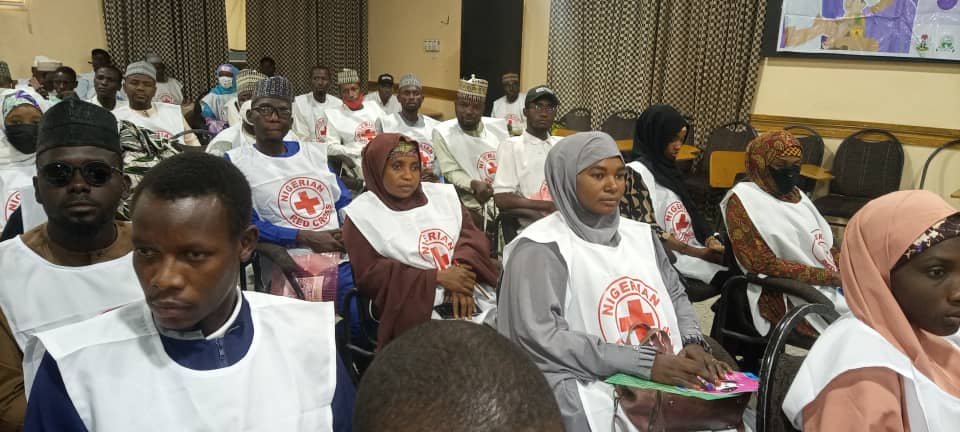
The Nigerian Red Cross Society (NRCS) on Monday in Abuja inaugurated the Africa Zero Hunger Initiative, aimed at strengthening nutrition efforts and supporting vulnerable Nigerians facing food insecurity and malnutrition nationwide.
Laylah Outhman, NRCS Malnutrition Ambassador, stated in her keynote that recent reports indicate about 25 million Nigerians experience food insecurity annually, with children under five particularly vulnerable to stunting and wasting.
Represented by Mrs. Gbubemi Uba, NRCS General Manager, Fundraising and Resource Mobilization, Outhman said malnutrition is not merely a health issue but a developmental crisis affecting education, productivity, and national economic growth.
She explained that the initiative is both symbolic and practical, designed to ensure every Nigerian child receives at least one nutritious meal daily while promoting community-driven, low-cost, sustainable interventions to combat hunger.
“Nigeria is blessed with fertile land, abundant resources, and resilient people, yet millions, especially children and mothers, continue to suffer from hunger and malnutrition. This initiative seeks to address this challenge immediately,” she said.
The ambassador highlighted that NRCS previously inaugurated mothers’ and papas’ clubs to teach families nutrition skills, noting that empowering mothers strengthens households and, consequently, contributes to national stability and development.
Outhman urged government agencies to integrate the mothers’ club model into national nutrition policies and encouraged private-sector investment in food fortification, school feeding programmes, and community nutrition interventions across Nigeria.
She also called on donors, partners, and media organizations to support and scale the NRCS model, amplify success stories, and recognize that ending hunger requires collective responsibility from all Nigerians.
Mrs. Gloria Kunyenga, Programme Coordinator, International Federation of the Red Cross (IFRC), commended NRCS for launching the zero hunger campaign, emphasizing collaboration as essential to reaching malnourished communities across Nigeria and Africa.
Kunyenga highlighted that more than 282 million people in Africa are undernourished, calling for climate-smart, community-driven solutions, strengthened partnerships, and government support to address malnutrition and its socioeconomic impacts at the source.
Dr. Abubakar Kende, Secretary-General of NRCS, explained that the programme addresses the cyclical nature of shocks and crises through early action, long-term development, rehabilitation of water points, livelihood recovery, and nutrition-sensitive, climate-smart agricultural practices.
Kende added that integrating anticipatory and shock-responsive social protection mechanisms ensures communities are prepared for climate and socioeconomic shocks, safeguarding sustainable livelihoods and building resilience against hunger and malnutrition nationwide.
The inauguration attracted several partners, including the British Red Cross (BRC), reinforcing multi-stakeholder collaboration to achieve the initiative’s goal of ending hunger in Nigeria.
