


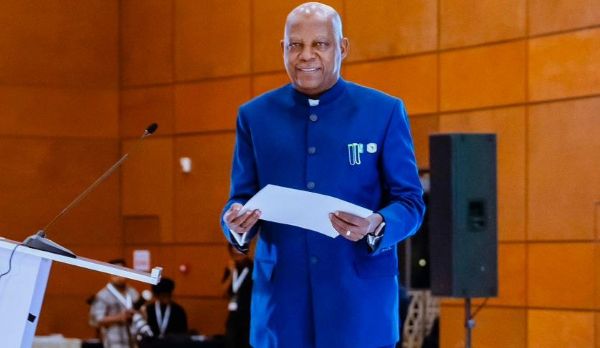
Nigeria has urged African countries to strengthen domestic health systems and shift from reliance on foreign aid toward self-sufficiency, as part of a broader push for health security sovereignty across the continent.
Vice President Kashim Shettima made the call on Friday at a high-level side event titled “Building Africa’s Health Security Sovereignty,” held on the margins of the 39th Ordinary Session of the Assembly of Heads of State and Government of the African Union in Addis Ababa, Ethiopia.
Representing President Bola Tinubu, Shettima said Nigeria was ready to work with other member states to translate health sovereignty into measurable outcomes.
“Nigeria stands ready to collaborate with every member state of our Union to make health security sovereignty measurable in factories commissioned, laboratories accredited, health workers trained, counterfeit markets dismantled, and insurance coverage expanded,” he said, according to a statement issued by his media aide, Stanley Nkwocha.
He urged African leaders to prioritise capacity building and cooperation, stressing that the continent must respond to vulnerability with resilience and dignity.
The vice president cautioned against the risks posed by global health emergencies, referencing lessons from the COVID-19 pandemic when supply shortages left African countries struggling for vaccines and oxygen.
“Health security is national security, and in an interconnected continent, national security is continental security. A virus does not carry a passport. A counterfeit medicine does not respect a border. A pandemic does not wait for bureaucracy,” he said.
Shettima — a former governor of Borno State — outlined measures Nigeria is adopting to address health challenges under Tinubu’s administration. These include boosting local pharmaceutical manufacturing, expanding domestic health financing, and strengthening regulatory oversight through initiatives such as the Nigeria Health Sector Renewal Investment Initiative and the Presidential Initiative to Unlock the Healthcare Value Chain.
He noted that the health sector renewal initiative, launched in December 2023, secured more than $2.2 billion in commitments tied to measurable outcomes. It aims to renovate over 17,000 primary healthcare centres nationwide, train 120,000 frontline health workers, and expand insurance coverage through reforms driven by the National Health Insurance Authority.
“We prioritise this because we believe that sovereignty must rest on financial protection as much as on infrastructure,” he said.
