


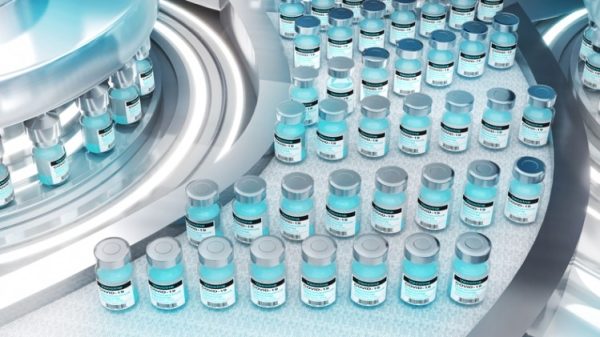
Nigeria is moving closer to achieving end-to-end vaccine manufacturing as Innovative Biotech Nigeria advances plans to establish a fully integrated vaccine production facility, the company’s CEO, Dr. Simon Agwale, has confirmed.
Agwale, Chairman of the Technology Working Group and Vice Chairman of the African Vaccine Manufacturing Initiative (AVMI), made the disclosure in an interview with reporters on Thursday in Abuja.
The project, under development for nearly two decades, aims to cover the entire vaccine value chain, including research and development, active pharmaceutical ingredient production, and downstream formulation and fill-and-finish operations.
“Most vaccine facilities in Africa only perform formulation or packaging after importing active ingredients. Our objective is to establish a fully integrated, end-to-end vaccine manufacturing company in Nigeria,” he said.
He revealed that the company currently has several vaccine candidates in development, including those for Lassa fever, HIV, and Ebola, while also licensing commercially available vaccines for local formulation, fill, and finish processes. These include vaccines used in Nigeria’s routine childhood immunization programme, as well as vaccines for typhoid and outbreak-prone diseases such as meningitis, aimed at strengthening public health and national immunization efforts.
Agwale explained that creating a fully integrated vaccine manufacturing facility requires investment exceeding $100 million, with the African Export–Import Bank (Afreximbank) funding detailed feasibility studies to guide the project.
“The studies cover technical and financial feasibility, process design, environmental impact assessment, capital and operational expenditure, and proposed investment and equity structures, ensuring the facility is viable, sustainable, and compliant with international standards,” he said.
He noted that the environmental impact assessment for the proposed site at Abuja Technology Village has been completed, and the project is now awaiting certification from the Federal Ministry of Environment to proceed with construction. Once certification is obtained, the R&D phase will begin, followed by construction of a modular manufacturing facility in Europe, which will be assembled on-site in Nigeria to enable full end-to-end production.
Agwale said that if funding were immediately available, the facility could be completed within 18 months, with an additional four months needed for qualification, validation, and regulatory testing before vaccine production could officially begin.
He emphasized that the initiative would enhance national health security by enabling a rapid local response to pandemics and outbreaks, reducing dependence on international supply chains, and improving Nigeria’s preparedness for future health emergencies.
“During COVID-19, Nigeria relied heavily on global goodwill for vaccine access. Local production will ensure timely availability, allowing a faster, independent response to pandemics and other disease outbreaks,” he said.
Agwale also highlighted the economic and educational benefits of the project. It is expected to create high-technology jobs, generate foreign exchange through exports, and reduce Nigeria’s reliance on imported vaccines. A significant portion of locally produced vaccines will be exported to other African countries and global markets, enhancing Nigeria’s reputation as a hub for vaccine manufacturing in Africa.
“The initiative will also serve as a practical training and innovation platform for Nigerian students and researchers, providing hands-on experience in vaccine manufacturing, regulatory science, diagnostics, and other essential areas of biotechnology,” he added.
