


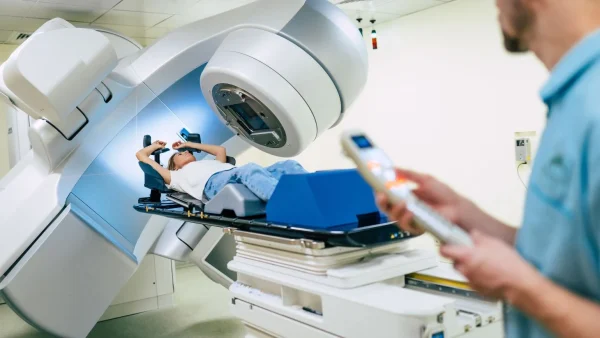
The Federal Government has acknowledged that Nigeria is yet to fully leverage the benefits of nuclear medicine in diagnosing and treating cancer and other critical diseases.
This was disclosed on Friday by the Minister of State for Health and Social Welfare, Dr. Iziaq Salako, during a workshop in Abeokuta. The event was organised by the National Nuclear Medicine Technical Working Group to support the development of a National Nuclear Medicine Policy and Guidelines.
Salako expressed concern over the increasing burden of cancer in the country, noting that between 60 to 70 percent of Nigerians personally know someone affected by the disease.
He said the government is actively implementing programmes that span prevention, treatment, and control, including the construction of six cancer centres of excellence—one in each geopolitical zone.
“One critical healthcare approach that we have not properly explored is nuclear medicine,” he said. “Despite Nigeria’s pool of human capital in nuclear medicine and our collaboration with the International Atomic Energy Agency, we are not yet taking full advantage of its potential in diagnosing and treating diseases, especially cancer.”
The minister added that nuclear medicine offers powerful tools for early detection and treatment, including screening services that can identify cancer at the precancerous or early stage—key for effective control and prevention.
To address the gap, the Ministry of Health inaugurated a technical working group in February 2025, composed of leading professionals in the field. The group’s mandate is to guide the integration of nuclear medicine technologies and services into Nigeria’s healthcare system.
Earlier, the Chairman of the National Nuclear Medicine Technical Working Group, Dr. Kehinde Ololade, said the group was established to develop clear guidelines and policies for applying nuclear medicine in Nigeria.
Also speaking at the event, Ogun State Commissioner for Health, Dr. Tomi Coker, stressed the urgency of exploring nuclear medicine as a means to reduce cancer-related illness and death. She added that cancer can no longer be ignored in national health planning.
