


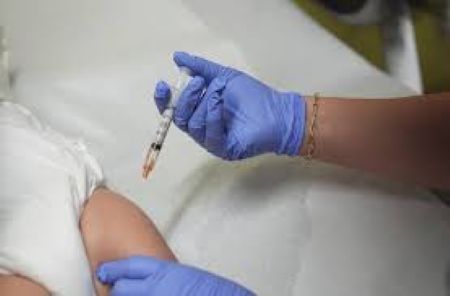
A new review by the World Health Organization (WHO) has reaffirmed that there is no evidence that childhood vaccines cause autism, following an assessment of more than 25 years of global scientific research.
The review, conducted by the WHO Global Advisory Committee on Vaccine Safety (GACVS), found no causal link between vaccines and autism spectrum disorder (ASD), including vaccines containing preservatives such as thimerosal or aluminium-based adjuvants.
The findings, published on Thursday, come amid renewed debate in the United States after comments by US Health and Human Services Secretary, Robert F. Kennedy Jr., reviving long-debunked claims about a possible link between vaccines and autism. In March, Kennedy directed the US Centers for Disease Control and Prevention (CDC) to carry out a review on the issue, which is yet to be concluded. In November, he also ordered changes to vaccine-related language on the CDC website.
Previously, the CDC website stated that “studies have shown there is no link between receiving vaccines and developing autism spectrum disorder.” The revised wording now claims that the statement “vaccines do not cause autism” is “not an evidence-based claim,” a change that triggered widespread criticism from vaccine experts.
Another section of the CDC website, however, maintains that research does not show any link between thimerosal in vaccines and autism, noting that the mercury-based preservative was removed from nearly all childhood vaccines decades ago. Some influenza vaccines may still contain thimerosal, also known as thiomersal.
Aluminium salts, commonly used as adjuvants in vaccines such as hepatitis A, hepatitis B, diphtheria, tetanus and pertussis (DTaP), and human papillomavirus (HPV), were also reviewed. The WHO committee found no evidence linking aluminium adjuvants to autism.
The WHO review was released alongside a press briefing by WHO Director-General, Dr Tedros Adhanom Ghebreyesus.
“Over the past 25 years, under-five mortality has dropped by more than half, from 11 million deaths a year to 4.8 million, and vaccines are the major reason for that,” Tedros said at the briefing, organised with the UN Correspondents Association (ACANU).
“Vaccines are among the most powerful, transformative inventions in the history of humankind,” he added, noting that they protect against around 30 diseases, including measles and cervical cancer.
While acknowledging that vaccines, like all medical products, can cause side effects, Tedros stressed that autism is not one of them.
The expert committee reviewed 31 new studies from multiple countries published over the past 15 years, examining possible associations between vaccines, including those containing thiomersal or aluminium, and autism. It was the first such review since 2012.
“The committee concluded that the evidence shows no link between vaccines and autism,” Tedros said. “This is the fourth such review, following similar assessments in 2002, 2004 and 2012, all of which reached the same conclusion.”
WHO’s Director of Immunisation, Vaccines and Biologicals, Dr Katherine O’Brien, said numerous advisory bodies worldwide have consistently reached the same findings.
“Not only WHO, but many independent expert groups around the world have found no evidence of risk linking vaccines, thimerosal or aluminium to autism,” she said.
Responding to questions about pressure on the WHO to revise its position in light of the US stance, Tedros said the organisation remains guided by science.
“We disagree respectfully, because this is a science-based organisation, and science has to be respected,” he said.
Tedros also noted that pressure from member states is not new, adding that the WHO has faced similar situations involving several countries over the years.
