


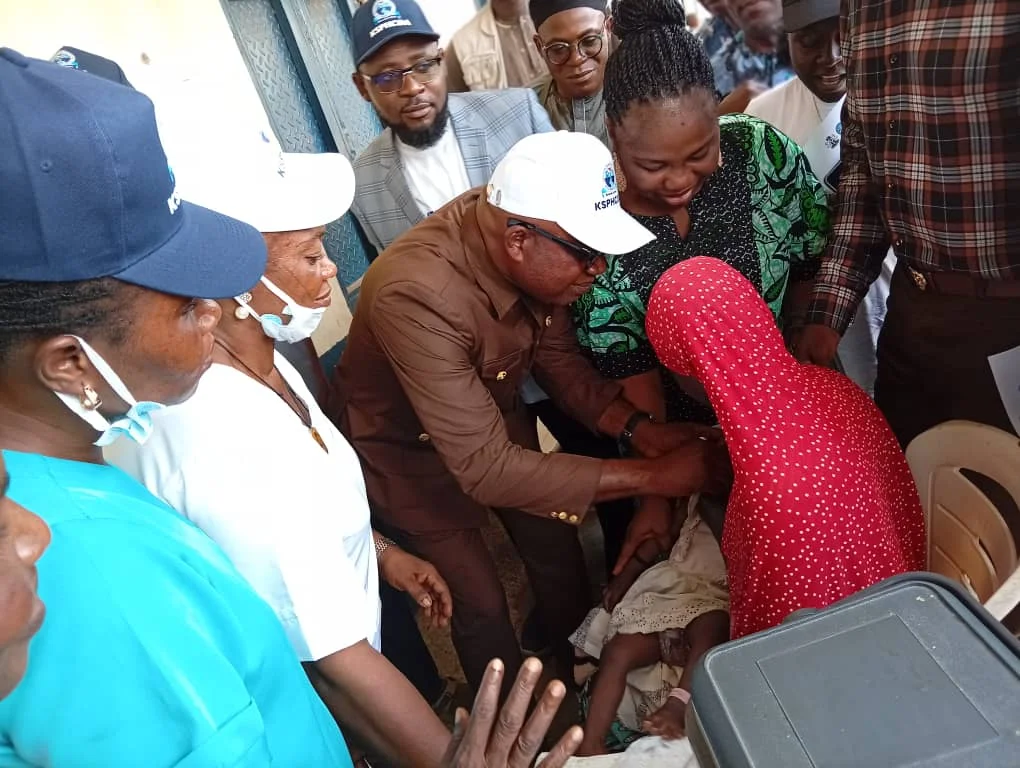
The Kogi State Government has launched the second round of the 2025 Maternal, Newborn and Child Health (MNCH) Week, aimed at reducing morbidity and mortality among mothers and children under five.
Speaking at the event on Tuesday, the Commissioner for Health, Dr. Adeiza Abdulazeez, reaffirmed the government’s commitment to improving health outcomes for women and children.
Represented by the Permanent Secretary of the ministry, Mr. Steve Momoh, the commissioner highlighted the state’s progress in revitalizing more than 80 Primary Health Care (PHC) centres. He added that an additional 88 facilities had been upgraded to enhance access to quality healthcare.
Abdulazeez emphasized the administration’s focus on strengthening the primary healthcare system, noting its crucial role in achieving universal health coverage and reducing maternal and child mortality rates.
He thanked Gov. Ahmed Ododo for his consistent support and acknowledged development partners, traditional leaders, and stakeholders for their contributions to improving healthcare delivery across the state.
“This initiative underscores the government’s commitment to building a healthier and more prosperous state, with accessible, equitable, and high-quality healthcare services for all citizens,” he said.
Earlier, the Executive Director of the Kogi State Primary Health Care Development Agency (KSPHCDA), Dr. Musa Mu’azu, highlighted the alarming 34 per cent stunting rate among children under five in the state, citing the 2023/24 National Demographic and Health Survey.
Mu’azu reaffirmed the agency’s commitment to addressing the challenge through strengthened nutrition programmes across PHC facilities and community outreach initiatives. He also expressed appreciation to the governor for prioritizing the health sector and acknowledged the support of partners and stakeholders in improving child health indicators.
According to him, MNCH Week will provide free healthcare services, including routine immunization, vitamin A supplementation, deworming, and health education for mothers and children aged 0–59 months. Health workers have been mobilized and trained to ensure equitable and high-quality service delivery throughout the exercise.
Representatives of development partners, traditional and religious leaders, and other stakeholders commended the initiative and pledged support to ensure its success.
The event was officially inaugurated with the administration of vitamin A supplements to children, as well as the distribution of free drugs and diapers to nursing mothers by Mr. Momoh on behalf of the commissioner.
