


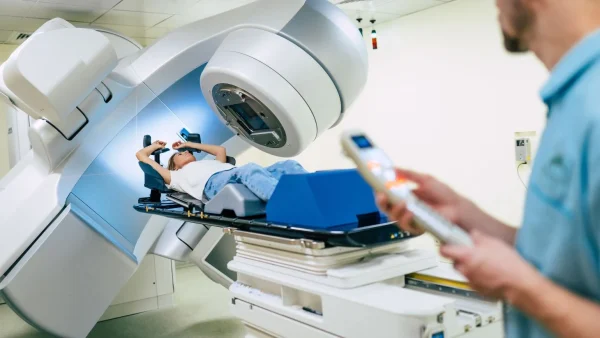
The Legislative Network on Cancer (LNC) has called for N5 billion to be allocated to the Cancer Health Fund (CHF) in Nigeria’s 2026 federal budget to expand access to cancer treatment for indigent patients.
The Chairman of the Governing Board of the National Health Insurance Authority (NHIA) and a founding member of the LNC, Senator Ibrahim Oloriegbe made the appeal on Thursday in Abuja during the second Legislative Summit on Sustainable Cancer Care Financing, which also marked the formal launch of the LNC.
Oloriegbe emphasised the urgency of increasing funding in light of Nigeria’s growing population and rising cancer cases.
“This is a key problem because of our population. So, the funding should increase,” he said.
Reflecting on his time as Chairman of the Senate Committee on Health in the Ninth Assembly, he noted that the CHF was introduced through the 2020 Appropriation Act and received N750 million in the 2021 budget. However, funding has since declined.
In his welcome address, the Director-General of the National Institute for Cancer Research and Treatment (NICRAT), Professor Usman Aliyu said cancer care remains largely inaccessible and unaffordable, especially in rural areas.
Represented by Professor Ali Gombe, he stated that the CHF is currently implemented through six Centres of Excellence, offering free treatment for patients with breast, cervical, and prostate cancers.
“Though the programme is not without challenges, close to 2,000 patients have benefitted since its inception in 2021,” he said.
Aliyu cited inadequate funding as the main constraint to expanding coverage to more cancer types and treatment centres.
He also noted the introduction of a Childhood Cancer Fund for the first time in the national budget, with N150 million allocated to the CHF and N50 million earmarked for pediatric cancer treatment in the 2025 budget.
He described the LNC as a vital step toward sustained legislative commitment and advocacy for increased cancer care funding.
Dr Iziaq Salako, Minister of State for Health and Social Welfare, stressed the high prevalence and late-stage diagnosis of common cancers such as breast, cervical, prostate, and colorectal.
Represented by his Senior Special Assistant (Technical), Dr Lolade Kehinde, he highlighted the challenges of limited awareness, poor screening access, and gaps in healthcare infrastructure.
He commended the launch of the LNC as a strategic move to integrate advocacy, legislation, and oversight into the national cancer control agenda.
“With your support, we can prioritise cancer prevention, strengthen policies on tobacco and alcohol control, HIV prevention, vaccination, and occupational health,” Salako said.
He also proposed exploring innovative funding sources, including taxes on sugar, alcohol, and tobacco.
Professor Emmanuel Ezeome, in a presentation titled “Breast Cancer Disease Burden in Nigeria,” attributed the rising incidence of breast cancer to population growth.
He said Nigeria recorded the highest increase in sub-Saharan Africa, with a 247 percent rise in breast cancer cases and a 184 percent increase in deaths between 1990 and 2019.
Ezeome called for investments in health infrastructure, including radiotherapy units, MRI and PET scan facilities, SPECT machines, and advanced laboratories, stressing the importance of early detection and effective treatment.
“We must channel our resources into meaningful health investments instead of ventures that don’t benefit public health,” he said.
Representative Amos Gwamina, Chairman of the LNC and House Committee on Health Institutions, reaffirmed the National Assembly’s commitment to prioritising cancer financing in the 2026 budget.
“We are going to do everything possible to ensure that funds are appropriated, monitored, and implemented. Oversight will be key,” he stated.
He also pledged support for strengthening the NHIA and reducing out-of-pocket healthcare expenses for patients.
Ladi Hameed, General Manager of Roche Pharmaceuticals Nigeria, added that building a structured cancer care system would benefit the broader healthcare sector.
“We won’t build hospitals only for cancer. The infrastructure can be used to treat many other diseases. If we get cancer care right, we will be solving several problems at once,” he said.
The LNC is envisioned as a national platform that brings together lawmakers, government agencies, private sector actors, and civil society to tackle Nigeria’s growing cancer burden.
