


In one of the Niger state Internally Displaced Persons Camp (IDPs) Camps, women carry more than the burden of accessing necessities such as food and healthcare. They also struggle against period poverty.
At the IDP Camp in Gwada town of Shiroro local government area of the state, women and girls of reproductive age, face significant challenges regarding their menstrual hygiene.
Twenty year old Grace John has lived at the Central Primary School, which serves as home to over 1,000 women and children seeking refuge having been displaced by constant attacks by armed bandits, for over four years.
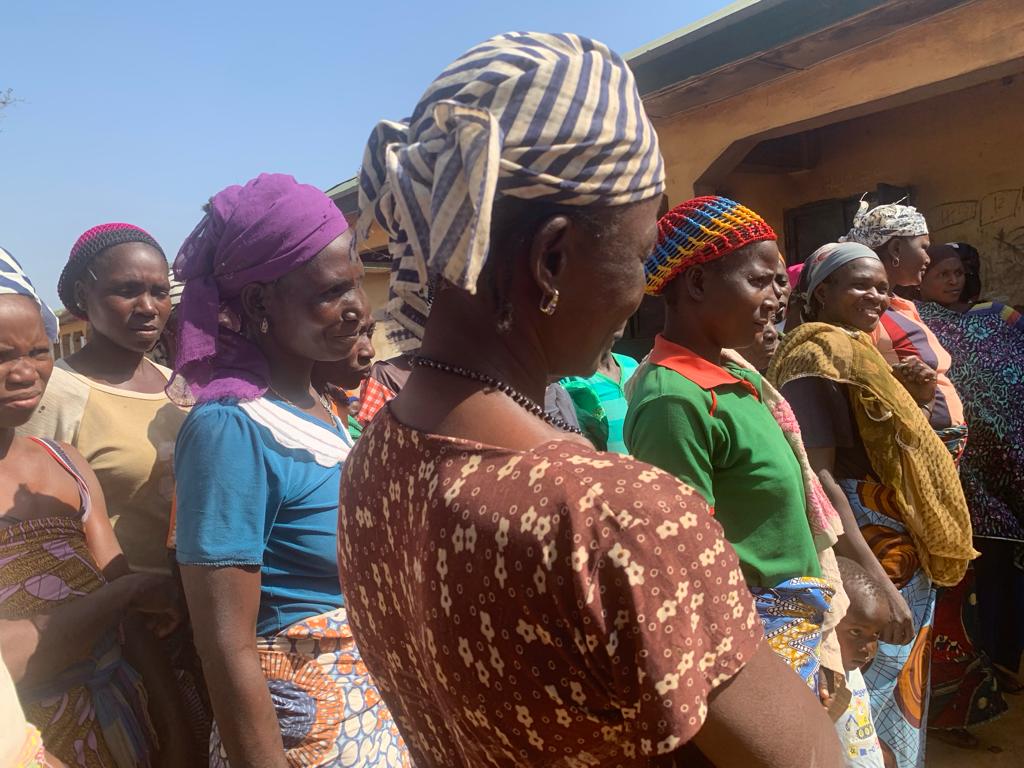
When she arrived at the camp, she was one among the many teenage girls living at the camp.
In late 2018, the residents of her village, Kaure in the local government area unanimously agreed to seek safer grounds over incessant attacks by bandits.
She told ASHENEWS that in time past prior to banditry, her parents made a decent living as farmers but have now been displaced from their settlements by those terrorists.
Back in her village, her parents were able to afford the cost of buying sanitary pads. But since their unplanned relocation, she has resorted to using rags during her period.
During the early days of their displacement, food and other relief materials, including toiletries came in abundance.
The government, individuals, and non-governmental organizations trooped into the camp to donate generously to the displaced families.
Grace recalled how she was receiving packs of disposable sanitary pads when she first arrived at the camp, but that was a one-off deal.
“I was given disposable sanitary pads by some people who came to give us food and other items when we first came to this camp. It’s been four years and no one has given us since then.”
Like many of the nearly 200 women in this camp, menstruation come with challenges for Grace one of which is the lack of affordable menstrual products.
The cost of purchasing menstrual products for girls like Grace is one which they can’t meet, because they depend on their parents who are barely making ends meet in displacement.
This financial burden has forced Grace like many other women at the camp, to resort to the use of rags in place of more conventional options, at the risk of infections and discomfort.
“I use rags like many of the women here. We don’t have money to buy always (she says referring to a popular brand of sanitary pads).”
“We buy them if we have money. Many of the women here use rags. We dry them in the rooms because we don’t want other people to see them,” she told ASHENEWS.
The use of rags as alternatives to conventional sanitary pads could prove to be a hassle for these women.
Leaks are frequent, making the women to live in a state of anxiety about whether their clothes have been stained from the leaks.
Such menstrual leaks can be embarrassing in a society where they are treated with utmost confidentiality, as a thing of shame rather than a natural occurrence.
Statistics
The UN Refugee Agency (UNHCR)’s 2022 report on forced displacement observed that 108.4 million people were forcibly displaced worldwide in 2022.
Currently, the UNHCR estimates that women and girls account for 52 percent of all the IDPs.
The International Organization for Migration’s Displacement Tracking Matrix (DTM) identified a total of 1,087,875 IDPs in 180,307 households in Nigeria’s north-central and north-west zones as of October 2022.
More than half of the local government areas in Niger state have been affected by banditry, leading to the humanitarian crisis in many of these areas.
Speaking during a high-level dialogue meeting on peace and security between the UNDP and the Niger state government, the state governor, Mohammed Bago said that 16 out of the 25 local government areas of the state were affected by insecurity.
Also, the World Bank estimates that on any given day, more than 300 million women worldwide are menstruating.
Put together, 500 million of them lack access to menstrual products and adequate facilities for menstrual hygiene management (MHM).
In 2021, Nigeria’s former minister of Women Affairs, Pauline Tallen told Nigerians that about 37 million women and girls of reproductive age lacked essential menstrual hygiene services and products.
The Minister who was speaking at a press briefing to commemorate that year’s World Menstrual Hygiene Day, said that more women may not be able to afford the cost of purchasing menstrual hygiene products as a result of a rise in the importation tariff.
Living conditions in the camp
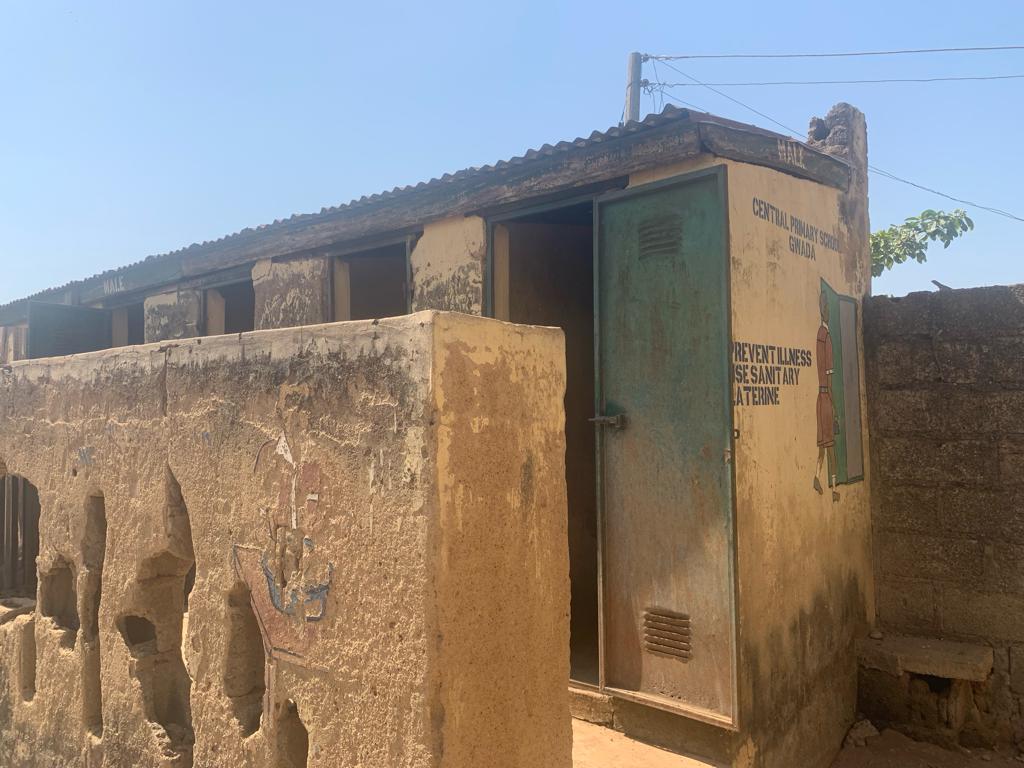
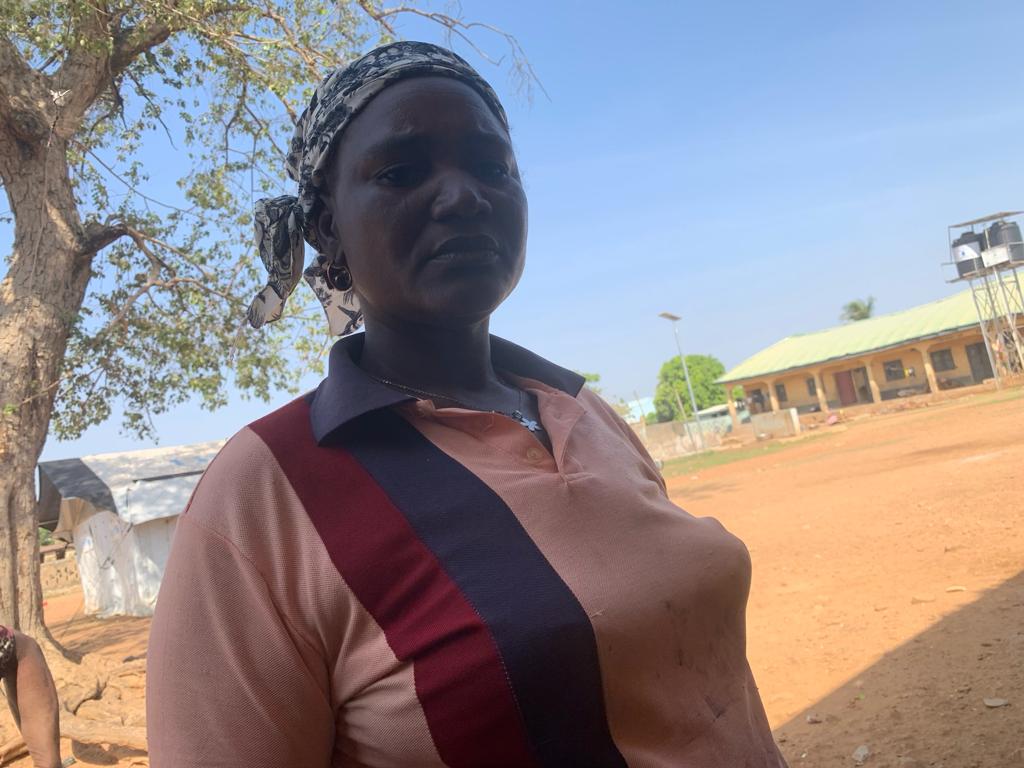
The Gwada IDP camp is situated at the Central Primary School, Gwada. Until recently, the entire school was designated as a shelter for displaced persons.
But when ASHENEWS visited the camp, it was observed that the school had been divided into two sections: one allocated for pupils while the IDPs use a section as shelter.
The camp has running water provided by a solar-powered borehole and about a dozen toilets.
However, the availability of these two does not fully offset the menstrual hygiene needs of displaced persons.
‘No privacy’
Not only did displacement come with a loss of livelihood for them, but these women also lost an important source of comfort: their privacy.
Many of the occupants of the camp are forced to share a single room due to the shortage of available spaces.
This causes inconvenience for many adult women and girls who aside from other necessities require privacy.
Forty-six-year-old Teni Hassan has lived at this IDP camp for four years.
According to the mother of six, the lack of privacy makes managing menstruation difficult for women in the camp.
Mrs Hassan told ASHENEWS that anytime she needs to change during her menstrual periods, she has to look for the perfect opportunity because she does not want to be seen by her husband or the other men around.
“We can’t stop menstruation from coming; so we have to manage the situation. We don’t have privacy. For me, when I try to change inside the room and I hear footsteps approaching, I will have to quickly start running because I don’t want them to see me.
“When we first came here, we had over 30 people sharing one room. It’s hard for us to get privacy. As a result, men slept outside while we slept in the rooms with the children.
“This is not ideal but we have no choice. We have to make do with what we have.”
A lack of privacy not only hampers the right of women to dignity and privacy but may also expose them to harassment in some cases.
The use of rags or other such alternatives could cause infections and discomfort but some women like Mrs Hassan say this is their only choice amidst stiff economic conditions in displacement.
She says that the constant hunger and struggle for survival make sanitary products the least of women’s worries.
“I was forced to leave my house unprepared. My farm was my source of income. Back here, I don’t have a farm. Since we don’t have money, we have to resort to working on other people’s farms.
“When you see us eating, we must work for others. Our children don’t go to school. We have to choose carefully, how we go about spending the little money we have, and even though uncomfortable, we have to resort to the use of rags.”
‘Stigma and discrimination’
For an occurrence so natural, society has found a way to ascribe menstruation with shame.
When this reporter posed the question about menstruation, most of the women broke into laughter and turned away.
Most women find it awkward to talk about menstruation even with their peers due to the stigma and discrimination attached to it.
Sure that the men were not within hearing sight, Teni says that she, like most women cannot afford sanitary pads due to lack of money.
“This is a general probe here. Nobody in this camp will tell you a different story. We are struggling to survive. No donations seem to be coming in these days like before and there is no work for us to do to earn money.”
“I want it if I can get it for free. I just can’t use the meager money I make to buy pads. I can’t afford it, food comes first,” she maintained.
‘Rising economic hardship’
Teni Luka is another displaced person who fled her home four years ago over incessant violence in her community.
She first sought refuge at the IDP camp in Gwada in 2018.
Teni recounts the countless times she has been duped into working for free just to secure a means of livelihood.
“People come in here with a promise to pay us after we are doing work on their farms. After working for the entire day, they later tell us that they have to go and sell the harvested crops before they can get the money they will pay us.”
Displaced persons at this camp are living from hand to mouth, and with the increasing prices of basic commodities, the cost of female sanitary pads has nearly doubled.
Sanitary pads cost an average of N600 per pack, with some women needing more than a pack for the entire duration of their menstruations.
Sparing at least N1,000 per month to purchase sanitary pads is a luxury for these women who in many cases are struggling to cater to large families with no tangible source of income.
A day job at the farm earns them between N500 and N1,000.
This would mean spending more than their daily earnings to purchase sanitary products.
Speaking on the lack of privacy in the camp, she said “When the day breaks, we quickly take a bath and rarely in the afternoon. And then in the evening.
“The hardest thing for us is where to dry it. When you wash it, you find it hard to dry it outside.
“Sometimes, when we have money, we go to the market to buy disposable pads because of this stress of hiding. But money is no longer forthcoming.”
Faith Obadiah has also spent four years at the camp.
The mother of two was a food vendor before she was displaced by bandits.
Speaking on the use of rags as alternatives to sanitary pads, Faith says “If we don’t go to the farm, where will we get food? To even go to the hospital, is a luxury.
“Where will we get money to buy pads.”
‘Cultural Taboos’
In Nigeria, women nurse the fear that their inability to properly handle their monthly flow could come with dire consequences.
In many areas, rags or sanitary pads must be disposed of with utmost caution as it is believed to be used for diabolical purposes.
Faith, in her conversation with this reporter, convened this fear.
“I can never dry them outside because of shame. Also, it is dangerous to do this. This is an alien environment, it is risky to dry them outside when you don’t know the type of people you are living with.”
Statistics obtained from the management of the camp revealed that there are 72 adult males, 139 women, and 170 children.
These occupants have sought shelter at this camp for nearly four years, with all of them depending on relief materials donated by the government and other nonprofit organizations for food and other essentials.
However, these displaced persons are facing a pressing need for food and medical supplies. According to them, access to aid from donors has run short for months now with many of them finding it hard to get jobs with little to no skills in a new environment.
Families prioritize their meager earnings on food over even health care.
The women in the camp told ASHENEWS that both men and women struggle for the only available job, which is working on people’s farms to make a living.
Call for urgent action
The use of rags by these women highlights the gap in the availability of menstrual hygiene management for displaced women and girls.
Proper menstrual hygiene management is an integral part of their physical health, which should not be neglected.
Rags as an alternative has many implications. They leave women prone to reproductive health risks and also comes with the risk of stress and great discomfort.
A research project in menstrual hygiene funded by Elrha’sResearch for Health in Humanitarian Crises (R2HC) Programme recommends that stakeholders must make adjustments and improvements to a range of sectoral interventions including Water Sanitation and Hygiene (WASH), Protection, Reproductive Health, Education, Non Food Items (NFIs) and Shelter.
These adjustments include the provision of sanitary pads, working on measures such as improving the safety, privacy, and dignity with which women and girls can live in emergency contexts. Therefore, they are helpful for overall quality of service provision and lead to improved outcomes which are expected for all the aforementioned sectors.
The guide takes into cognizance the importance of coordination and partnership between parties, which include the government, due consultation with women and girls before decisions are taken, adequate communication and attention to cultural norms, and sensitivity to menstrual hygiene management.
These women, silently suffer from these challenges due to society’s backwardness and inability to recognize the most basic needs of women and girls, especially those in already vulnerable situations.
In times of humanitarian crisis, governments and their partners majorly focus on supporting displaced persons with relief materials which are mainly food and medical supplies.
The menstrual hygiene needs of women usually then become secondary, due to a lack of understanding of the far-reaching implications of its neglect.
Periods aren’t just a minor inconvenience but are an integral part of the lives of women and girls.
Society must therefore change its approach to menstruation rather than making them a burden for women and girls.
Also, addressing menstrual poverty not only promotes gender equality but also helps to tackle gender-based violence while also empowering the health and well-being of women and girls.
