


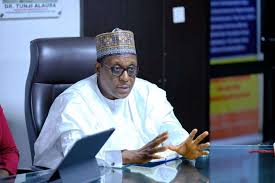
The Coordinating Minister of Health and Social Welfare, Prof. Muhammad Pate, says ongoing reforms are restoring confidence in Nigeria’s health system while addressing longstanding grievances of health workers.
Pate made this known on Sunday in a broadcast posted on his verified X handle, @muhammadpate, where he reflected on decades of challenges faced by health professionals and highlighted progress recorded in the last two and a half years.
He acknowledged that for years, health workers served Nigerians under difficult conditions with limited recognition, noting that successive governments failed to provide an enabling environment for the sector’s best talents to thrive.
“Under the compassionate leadership of President Bola Tinubu, we acknowledge that successive governments did not always provide the enabling environment for our best talents to thrive,” he said.
Pate said poor implementation of past commitments led to widespread dissatisfaction among health workers, particularly members of the Nigerian Medical Association (NMA), the Joint Health Sector Unions (JOHESU) and the National Association of Nigerian Nurses and Midwives (NANNM).
According to him, this informed the administration’s deliberate focus on cultivating industrial harmony through constructive engagement with stakeholders and direct attention to both legacy and emerging challenges.
“In spite of recent disruptions by a small segment of health workers, the overwhelming majority of Nigeria’s capable health workforce has continued to report for duty, serving our people with dedication, care and innovation,” he said.
The minister said that while not all inherited challenges had been fully resolved, unprecedented progress had been achieved under President Tinubu’s leadership through transparent negotiations with health sector unions.
He disclosed that the retirement age for clinically skilled health workers had been increased from 60 to 65 years, outstanding arrears from 2023 to date had been paid, and a new hazard allowance was currently being processed.
Pate added that over ₦10 billion owed under the 2025 Medical Residency Training Fund had been fully settled.
He also said salary relativity adjustments under the Consolidated Health Salary Structure (CONHESS) and the Consolidated Medical Salary Structure (CONMESS) were being assured and institutionalized.
The minister explained that other longstanding demands of the three major health sector union blocs were being addressed through Collective Bargaining Agreement negotiations convened by the Secretary to the Government of the Federation.
According to him, the process involves union leadership and relevant government officials and is progressing towards a conclusion acceptable to health workers and the citizens they serve.
Pate said data showed growing public confidence in the health system despite what he described as “minor industrial distractions by a very small minority,” noting that over 90 per cent of union demands had already been met.
He revealed that Nigeria recorded an average of 10 million hospital visits across all levels of care in the second quarter of 2024, rising to nearly 40 million visits by the second quarter of 2025.
“This represents almost a fourfold increase,” he said.
Pate also cited figures from the Central Bank of Nigeria showing a 52 per cent reduction in foreign exchange accessed for external medical tourism since the inception of the administration in 2023.
He added that health facilities across the country were witnessing increased patronage by foreigners seeking medical care in Nigeria, signalling a gradual reversal of outbound medical tourism.
The minister said citizen perception surveys conducted between 2023 and 2025 showed rising confidence in the health system, with overall system confidence at 55 per cent, confidence in government’s ability to manage health emergencies at 67 per cent, and patient satisfaction at 74 per cent.
“As we continue building systems that serve all Nigerians regardless of status or income, we are healing a once-fractured ecosystem and restoring public trust,” Pate said.
He added that the progress recorded in the health sector demonstrated Nigeria’s capacity to turn crisis into opportunity, transform liabilities into assets, and place citizens at the centre of national renewal.
