


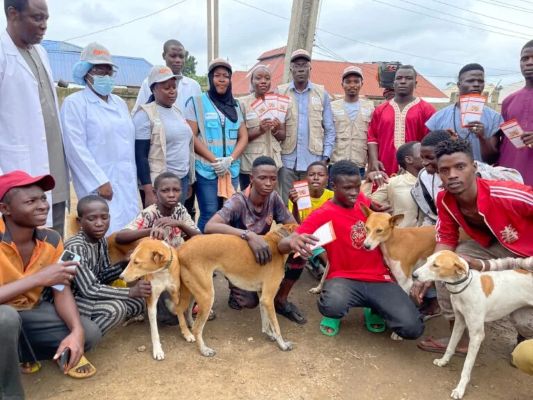
Barnabas Malle, Commissioner for Agriculture, Animal Husbandry, and Cooperatives, disclosed this to reporters in Gombe on Thursday.
Gombe Targets 50,000 Dogs for Rabies Vaccination to Protect Public Health
The Gombe State government has set a target to immunize 50,000 dogs against rabies as part of efforts to safeguard both animal and public health. The initiative is a key component of a broader campaign aimed at eradicating rabies by 2030.
Rabies, a deadly virus transmitted primarily through the saliva of infected animals, is usually spread to humans through dog bites. The virus causes inflammation of the brain and spinal cord, leading to fever, aggression, paralysis, and hallucinations. While vaccination can prevent rabies transmission, immediate wound care and post-exposure prophylaxis (PEP) are essential for treating infections.
Malle said the state government has been conducting annual mass dog vaccinations, as dogs account for over 95 percent of rabies transmission in humans. “Vaccinating dogs remains the most effective way to prevent the spread of rabies to humans,” he noted.
The commissioner revealed that Gombe has the highest rabies burden reported to the Federal Ministries of Agriculture and Health, prompting collaborative efforts to combat the disease. Currently, more than half of the state’s dog population—around 25,000 dogs—are vaccinated annually.
He added that the federal government has supplied 2,000 vaccine doses to support the ongoing exercise at veterinary clinics across the state.
“In Gombe, there is a large dog population in areas such as Billiri, Kaltungo, Shongom, Dukku, and Nafada, where hunters frequently move with dogs. The ministry is working to ensure all dogs are vaccinated to protect residents’ health,” Malle said.
He further stated that the state procured large quantities of the vaccine last year, and additional doses this year are expected to inoculate over 25,000 more dogs. “With the current efforts, by 2026, almost all targeted dogs will be vaccinated, accompanied by proper surveillance,” he added.
The ministry is also educating dog owners and hunters about the dangers of rabies, emphasizing that ending the disease is a shared responsibility. Global initiatives aim to eradicate rabies by 2030.
Malle noted that the high cost of rabies vaccines has driven federal and development interventions. “A single dose costs N7,000, which many rural residents cannot afford,” he said.
He urged dog owners to present their dogs for vaccination, stressing that immunized dogs are crucial to preventing the spread of rabies to humans.
