


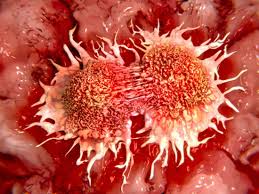
Global health leaders are set to unveil a new roadmap aimed at reducing global cancer deaths by 25 per cent and ensuring 60 per cent of cancers are detected early by 2035.
The Union for International Cancer Control (UICC) announced the upcoming World Cancer Declaration 2025–2035 during a virtual news conference on Thursday. The declaration will be launched at the World Cancer Leaders’ Summit, scheduled for November 18–20 in Melbourne, Australia.
Organised by the UICC and hosted by Cancer Council Victoria, the summit—held under the theme “Bridging Divides, Building Futures”—will bring together more than 400 global leaders in cancer control, health systems, and development from over 80 countries.
Co-hosts include the Victorian Comprehensive Cancer Centre (VCCC) Alliance, Monash Partners Comprehensive Cancer Consortium, and the McCabe Centre for Law and Cancer, with collaboration from the World Health Organization (WHO), International Agency for Research on Cancer (IARC), and the International Atomic Energy Agency (IAEA).
UICC President Ulrika Årehed Kågström said the declaration introduces a “5×5×5 by 2035” framework—five global targets, five domains for national action, and five guiding principles focusing on equity, evidence, collaboration, sustainability, and accountability.
“It’s about closing the gap between what we know works and what is actually being delivered—especially for communities long denied access to timely, quality cancer care,” Kågström said.
The roadmap urges governments to strengthen national cancer control plans, improve registries, boost early detection and screening, and expand access to essential medicines and palliative care. It also promotes public awareness to combat stigma and encourage healthy lifestyles.
According to IARC, nearly 20 million new cancer cases were recorded globally in 2022, resulting in 10 million deaths. Without stronger interventions, cases could rise to 30.5 million and deaths to 18.6 million by 2050—most in low- and middle-income countries (LMICs).
Kågström emphasized that cancer control now requires “collective leadership and sustained political will across all sectors and regions.”
IARC Director Dr. Elisabete Weiderpass added that the new declaration provides a science-based, adaptable framework to address inequities in cancer care.
Among expected speakers are health ministers from Brunei, Egypt, Tonga, and Australia’s Victoria State, alongside representatives from WHO, IARC, and IAEA. Other confirmed participants include Dato’ Dr. Saunthari Somasundaram (Malaysia), Belinda Chan (Fiji), and Prof. Eric Bouffet (Canada).
Todd Harper, CEO of Cancer Council Victoria, said the biennial summit offers a vital platform to translate global commitments into “tangible improvements for patients and families.”
The 2025 summit will also explore AI and innovation in cancer care, financing national cancer plans, gender-based inequities, and culturally safe services for Indigenous and underserved communities.
The World Cancer Declaration 2025–2035 marks a shift from previous pledges toward measurable, equity-driven progress in global cancer control.
