


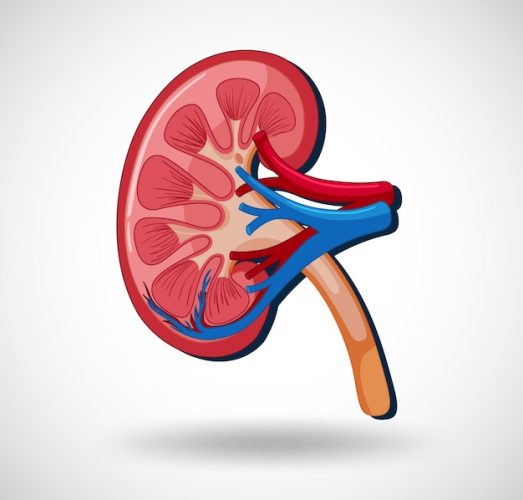
Acute kidney failure (AKI) occurs when your kidneys suddenly become unable to filter waste products from your blood. When your kidneys lose their filtering ability, dangerous levels of waste may accumulate, and your blood’s chemical makeup may get out of balance.
This can happen within a few hours or a few days. For most people, AKI develops within 48 hours, but sometimes it can take as long as 7 days.
This replaces an older term “acute renal failure” (or ARF) which you may still see or hear occasionally.
Acute kidney injury (AKI) can range from minor loss of kidney function to complete kidney failure.
AKI normally happens as a complication of another serious illness. It’s not the result of a physical blow to the kidneys, as the name might suggest.
This type of kidney damage is usually seen in older people who are unwell with other conditions and the kidneys are also affected.
It’s essential that AKI is detected early and treated promptly.
Without quick treatment, abnormal levels of salts and chemicals can build up in the body, which affects the ability of other organs to work properly.
If the kidneys shut down completely, this may require temporary support from a dialysis machine, or lead to death.
Acute kidney failure can be fatal and requires intensive treatment. However, acute kidney failure may be reversible. If you’re otherwise in good health, you may recover normal or nearly normal kidney function.
AKI can also affect children and young people.
Signs and Symptoms:
The signs and symptoms of AKI can differ depending on many factors like the cause, severity, and your other health conditions. If symptoms do happen, they may include one or more of the following:
→ Making less urine (pee) than usual or no urine
→ Swelling in legs, ankles, and/or feet
→ Fatigue or tiredness
→ Shortness of breath (trouble breathing)
→ Confusion or mood changes
→ High blood pressure
→ Decreased appetite (low desire to eat)
→ Nausea/drowsiness
→ Feeling sick or being sick
→ Diarrhea
→ Dehydration
→ Flank pain (pain on the side of your back – between your ribs and hips)
→ Chest pain or pressure
→ Seizures or coma (in severe cases)
In some cases, AKI causes no symptoms and is only found through other tests done by your healthcare professional.
Even if it does not progress to complete kidney failure, AKI needs to be taken seriously.
It has an effect on the whole body, changes how some medicines are handled by the body, and could make some existing illnesses more serious.
AKI is different from chronic kidney disease, where the kidneys gradually lose function over a long period of time.
Causes:
AKI can have many different causes. Many people get AKI when a related disease or condition puts extra stress on your kidneys. Another common cause for AKI is when your body is reacting to an urgent or emergent health concern (such as heart surgery or COVID-19 infection). Lastly, AKI can be caused by medications or other substances that you may consume.
Usually, AKI happens because of a combination of factors. This is especially true for older adults who are at higher risk given their age.
Most cases of AKI are caused by reduced blood flow to the kidneys, usually in someone who’s already unwell with another health condition.
This reduced blood flow could be caused by:
→ Low blood volume after bleeding, excessive vomiting or Diarrhea, or severe dehydration
→ The heart pumping out less blood than normal as a result of heart failure, liver failure or sepsis
→ Certain medicines that reduce blood pressure or blood flow to the kidneys, such as ACE inhibitors, certain diuretics or NSAIDs
AKI can also be caused by a problem with the kidney itself, such as inflammation of the filters in the kidney (glomerulonephritis), the blood vessels (vasculitis), or other structures in the kidney.
This may be caused by a reaction to some medicines, infections or the liquid dye used in some types of X-rays.
It may sometimes be the result of a blockage affecting the drainage of the kidneys, such as:
→ An enlarged prostate
→ A tumour in the pelvis, such as an ovarian or bladder tumour
→ Kidney stones
Who’s at risk of acute kidney injury?
You’re more likely to get AKI if:
→ you’re aged 65 or over
→ you already have a kidney problem, such as chronic kidney disease
→ you have a long-term disease, such as heart failure, liver disease or diabetes
→ you’re dehydrated or unable to maintain your fluid intake independently
→ you have a blockage in your urinary tract (or are at risk of this)
→ you have a severe infection or sepsis
→ you’re taking certain medicines, including non-steroidal anti-inflammatory drugs (NSAIDS), such as ibuprofen, or blood pressure medicines, such as ACE inhibitors or diuretics; diuretics help the kidneys get rid of extra fluid from the body, but may become less helpful when a person is dehydrated or suffering from a severe illness
→ you’re given aminoglycosides – a type of antibiotic that’s usually only given in hospital; these medicines are only likely to increase the risk of AKI if you’re dehydrated or ill
How common is kidney failure?
Kidney failure affects over 750,000 people in the United States each year. It affects around 2 million people worldwide.
What happens when kidney failure starts?
There are kidney disease stages according to your estimated glomerular filtration rate (eGFR).
Your eGFR is a calculation of how well your kidneys filter substances. A normal eGFR is about 100. The lowest eGFR is 0, which means there’s no remaining kidney function.
The stages of any kidney disease include:
– Stage I. Your GFR is higher than 90 but below 100. At this stage, your kidneys have mild damage but still function normally.
– Stage II. Your GFR may be as low as 60 or as high as 89. You have more damage to your kidneys than in stage I, but they still function well.
– Stage III. Your GFR may be as low as 30 or as high as 59. You may have mild or severe loss of kidney function.
– Stage IV. Your GFR may be as low as 15 or as high as 29. You have severe loss of kidney function.
– Stage V. Your GFR is below 15. Your kidneys are nearing or at complete failure.
Complications:
AKI can cause a build-up of waste products in your blood and make it hard to keep the right balance of fluid and minerals in your body. It can also cause permanent damage to your kidneys, leading to chronic kidney disease (CKD). Without treatment, AKI can also affect other organs such as the brain, heart, and lungs. So, it is important to know what to watch for and how to lower your risk.
The most serious complications of acute kidney injury include:
→ high levels of potassium in the blood – in severe cases, this can lead to muscle weakness, paralysis and heart rhythm problems
→ too much fluid in the body, which can cause build-up of fluid in the arms and legs (oedema) or in the lungs (pulmonary oedema)
→ acidic blood (metabolic acidosis) – which can cause nausea, vomiting, drowsiness and breathlessness
→ chronic kidney disease
Diagnosis:
If your healthcare professional suspects AKI, they will perform an assessment to identify its potential cause (or causes). This may include performing a physical exam, reviewing your medical conditions and medication use history in the past week (including over-the-counter products and herbal supplements), asking about recent events and experiences (e.g. symptoms, water intake, recreational drug use, relevant travel), and ordering blood and/or urine tests.
Some of the most common tests used to check for AKI, include:
→ Serum (blood) creatinine – a blood test used to check how well your kidneys are filtering this waste product from your blood
→ Estimated glomerular filtration rate (eGFR) – this is calculated based on your serum (blood) creatinine level, age, and sex to estimate your kidney function
→ Blood urea nitrogen (BUN) – similar to creatinine, this test can be used to measure another waste product in your blood to see how well your kidneys are filtering the blood
→ Other blood tests, such as sodium, potassium, and bicarbonate (to see if anything is out of balance)
→ Urine output – your healthcare professional may track how much urine (pee) you pass each day, especially if you are having AKI in the hospital
→ Urine test (urinalysis) – a general urine test may be used to find more clues about the cause of AKI
→ Imaging tests, like an ultrasound, may be helpful in some cases
→ Kidney biopsy – in some less common situations, your healthcare professional may need to look at a tiny piece of your kidney under a microscope to get a better idea about the cause
Management and Treatment:
Kidney failure treatment depends on the cause and extent of the problem.
Treatment for a chronic medical condition can slow down the progression of kidney disease. If your kidneys gradually stop working, a healthcare provider may use a few different methods to track your health and maintain kidney function as long as possible. These methods may include:
– Regular blood tests.
– Blood pressure checks.
– Medication.
If you’re in kidney failure, you need treatment to keep you alive. There are two main treatments for kidney failure.
Dialysis:
Dialysis helps your body filter blood. There are two types of dialysis:
– Hemodialysis. In hemodialysis, a machine regularly cleans your blood for you. Most people get hemodialysis three to four days a week at a hospital or dialysis clinic.
– Peritoneal dialysis. In peritoneal dialysis, a provider attaches a bag with a dialysis solution to a catheter in your abdominal lining. The solution flows from the bag into your abdominal lining, absorbs waste products and extra fluids and drains back into the bag. Sometimes people can receive peritoneal dialysis at home.
Kidney transplant:
A surgeon places a healthy kidney in your body during a kidney transplant to take over for your damaged kidney. The healthy kidney (donor organ) may come from a deceased donor or a living donor. You can live well with one healthy kidney.
Can a person recover from kidney failure?
Yes, you can recover from kidney failure with proper treatment. You may need treatment for the rest of your life.
How long can you live with kidney failure?
Without dialysis or a kidney transplant, kidney failure is fatal. You may survive a few days or weeks without treatment.
If you’re on dialysis, the average life expectancy is five to 10 years. Some people can live up to 30 years on dialysis.
If you have a kidney transplant, the average life expectancy if you receive a kidney from a living donor is 12 to 20 years. The average life expectancy if you receive a kidney from a deceased donor is eight to 12 years.
What medications are used to treat kidney failure?
Depending on the cause of your kidney disease, a healthcare provider may prescribe one or more of the following medications:
– Angiotensin-converting enzyme (ACE) inhibitor or angiotensin II receptor blocker (ARB). These medications help lower your blood pressure.
– Diuretics. These help remove extra fluid from your body.
– Statins. These help lower your cholesterol levels.
– Erythropoietin-stimulating agents. These help build red blood cells if you have anemia.
– Vitamin D and calcitriol. These help prevent bone loss.
– Phosphate binders. These help remove extra phosphorus in your blood.
Preventing acute kidney injury:
Those at risk of AKI should be monitored with regular blood tests if they become unwell or start new medicine.
It’s also useful to check how much pee you’re passing.
Any warning signs of AKI, such as vomiting or producing little pee, require immediate investigation for AKI and treatment.
People who are dehydrated or at risk of dehydration may need to be given fluids through a drip.
Any medicine that seems to be making the problem worse or directly damaging the kidneys needs to be stopped, at least temporarily.
Acute kidney failure is often difficult to predict or prevent. But you may reduce your risk by taking care of your kidneys. Try to:
→ Pay attention to labels when taking over-the-counter (OTC) pain medications. Follow the instructions for OTC pain medications, such as aspirin, acetaminophen (Tylenol, others), ibuprofen (Advil, Motrin IB, others) and naproxen sodium (Aleve, others). Taking too much of these medications may increase your risk of kidney injury. This is especially true if you have pre-existing kidney disease, diabetes or high blood pressure.
→ Work with your doctor to manage kidney and other chronic conditions. If you have kidney disease or another condition that increases your risk of acute kidney failure, such as diabetes or high blood pressure, stay on track with treatment goals and follow your doctor’s recommendations to manage your condition.
→ Make a healthy lifestyle a priority. Be active; eat a sensible, balanced diet; and drink alcohol only in moderation — if at all.
