

• Home
  • Agric
  • Sci & Tech
  • Health
  • Environment
  • Hausa News
  • More
    • Business/Banking & Finance
    • Politics/Elections
    • Entertainments & Sports
    • International
    • Investigation
    • Law & Human Rights
    • Africa
    • ACCOUNTABILITY/CORRUPTION
    • Hassan Gimba
    • Column
    • Prof. Jibrin Ibrahim
    • Prof. M.K. Othman
    • Defense/Security
    • Education
    • Energy/Electricity
    • Entertainment/Arts & Sports
    • Society and Lifestyle
    • Food & Agriculture
    • Health & Healthy Living
    • International News
    • Interviews
    • Investigation/Fact-Check
    • Judiciary/Legislature/Law & Human Rights
    • Oil & Gas/Mineral Resources
    • Press Freedom/Media/PR/Journalism
    • General News
    • Presidency
  • About Us
    • Contact Us
    • Board Of Advisory
    • Privacy Policy
    • Ethics Policy
    • Teamwork And Collaboration Policy
    • Fact-Checking Policy
    • Advertising
  • Media OutReach Newswire
    • Wire News
  • The Stories
Facebook Twitter Instagram
Trending
  • First batch of 9,000 Nigerian pilgrims land in Madinah
  • PETAN chairman urges Africa to harness resources for energy future
  • Association urges faster energy transition
  • World press freedom day lecture highlights media’s role
  • Kogi rescues all victims from abduction
  • Guinness has deep Nigerian roots
  • Lagos signs 10-year primary health care compact
  • Benue children stunted as malnutrition worsens — Nutrition officer
Facebook Twitter Instagram YouTube
AsheNewsAsheNews
  • Home
  • Agric

    Lagos resident lament soaring tomato prices

    May 6, 2026

    FG unveils 2025–2030 revised national gender policy on agrifood systems

    May 6, 2026

    High fertiliser prices threaten 2026 farming season in Bauchi

    May 5, 2026

    Haruna pledges education, agriculture focus in Nasarawa bid

    May 5, 2026

    FG reaffirms commitment to rural roads, market access

    May 4, 2026
  • Sci & Tech

    UBA, MTN MoMo, RedTech unveil cardless payment solution

    May 6, 2026

    Uganda unveils first homegrown biotech livestock vaccine, targets regional leadership

    May 3, 2026

    Samsung revenue jumps 43% in Q1

    May 1, 2026

    AfricaX summit to support commercialisation of innovations

    April 30, 2026

    FUTA don advocates people-centred engineering for sustainable industrial growth

    April 30, 2026
  • Health

    Lagos signs 10-year primary health care compact

    May 7, 2026

    Benue children stunted as malnutrition worsens — Nutrition officer

    May 7, 2026

    Lagos faces 500-year doctor shortage without urgent action — Commissioner warns

    May 7, 2026

    Lagos unveils 10-year primary healthcare financing plan

    May 7, 2026

    Enugu invests N439.2m in nutrition, child health in 2025

    May 6, 2026
  • Environment

    FG to close 1 carriageway of Eko bridge for repairs

    May 7, 2026

    Oyo introduces daily environmental sanitation enforcement

    May 6, 2026

    Shettima reaffirms FG commitment to humanitarian response

    May 6, 2026

    Lagos bridge crash kills 1, injures 4

    May 5, 2026

    SERAP, Editors seek press freedom

    May 4, 2026
  • Hausa News

    Otti plans 250-room 5-star hotel in Umuahia

    April 11, 2026

    Anti-quackery task force seals 4 fake hospitals in Rivers

    August 29, 2025

    [BIDIYO] Yadda na lashe gasa ta duniya a fannin Ingilishi – Rukayya ‘yar shekara 17

    August 6, 2025

    A Saka Baki, A Sasanta Saɓani Tsakanin ‘Yanjarida Da Liman, Daga Muhammad Sajo

    May 21, 2025

    Dan majalisa ya raba kayan miliyoyi a Funtuwa da Dandume

    March 18, 2025
  • More
    1. Business/Banking & Finance
    2. Politics/Elections
    3. Entertainments & Sports
    4. International
    5. Investigation
    6. Law & Human Rights
    7. Africa
    8. ACCOUNTABILITY/CORRUPTION
    9. Hassan Gimba
    10. Column
    11. Prof. Jibrin Ibrahim
    12. Prof. M.K. Othman
    13. Defense/Security
    14. Education
    15. Energy/Electricity
    16. Entertainment/Arts & Sports
    17. Society and Lifestyle
    18. Food & Agriculture
    19. Health & Healthy Living
    20. International News
    21. Interviews
    22. Investigation/Fact-Check
    23. Judiciary/Legislature/Law & Human Rights
    24. Oil & Gas/Mineral Resources
    25. Press Freedom/Media/PR/Journalism
    26. General News
    27. Presidency
    Featured
    Recent

    First batch of 9,000 Nigerian pilgrims land in Madinah

    May 7, 2026

    PETAN chairman urges Africa to harness resources for energy future

    May 7, 2026

    Association urges faster energy transition

    May 7, 2026
  • About Us
    1. Contact Us
    2. Board Of Advisory
    3. Privacy Policy
    4. Ethics Policy
    5. Teamwork And Collaboration Policy
    6. Fact-Checking Policy
    7. Advertising
    Featured
    Recent

    First batch of 9,000 Nigerian pilgrims land in Madinah

    May 7, 2026

    PETAN chairman urges Africa to harness resources for energy future

    May 7, 2026

    Association urges faster energy transition

    May 7, 2026
  • Media OutReach Newswire
    • Wire News
  • The Stories
AsheNewsAsheNews
Home»Health & Healthy Living»[EXLAINER] Your shampoo, perfumes can put you at risk of breast cancer
Health & Healthy Living

[EXLAINER] Your shampoo, perfumes can put you at risk of breast cancer

Abdallah el-KurebeBy Abdallah el-KurebeSeptember 2, 2024Updated:September 2, 2024No Comments5 Mins Read
Share
Facebook Twitter LinkedIn Pinterest Email

Perfumes are made of frangrances that are made of toxic chemicals! There are over 3,000 individual fragrance ingredients used in our favorite perfumes, body lotions, hair products, make-up, and baby products to name a few. While some of these chemicals are safe for our health and the environment, others have never been tested for safety. According to scientists, some of these chemicals are even known to cause cancer, hormone disruption, and reproductive harm!

We use body wash, shampoo, moisturizer, sunscreen, and deodorant every day or even multiple times a day. Over the long-term, your exposure to all these chemicals adds up and can put your health at risk. Many of these chemicals in perfumes are linked to chronic health issues, like cancer, hormone disruption and reproductive harm, or acute health issues like asthma.

What’s in your perfumes?

  • Beta-myrcene, a carcinogen and fragrance ingredient found in 3/7 cleaning products and 19/25 personal care products
  • Diethyl phthalate (DEP), an endocrine disrupting compound (EDC) found in cleaning and personal care products
  • DEHP (Bis(2-ethylhexyl) phthalate), a phthalate banned by the European Union in 2004, found in a personal care product, Summer’s Eve Freshening Spray
  • Benzophenone, a carcinogen, and its derivative oxybenzone, found in personal care products
  • Propylene glycol, an EDC and reproductive toxicant found in personal care products
  • Benzyl salicylate an EDC and fragrance allergen found in personal care products
  • Benzaldehyde, an EDC found in personal care products
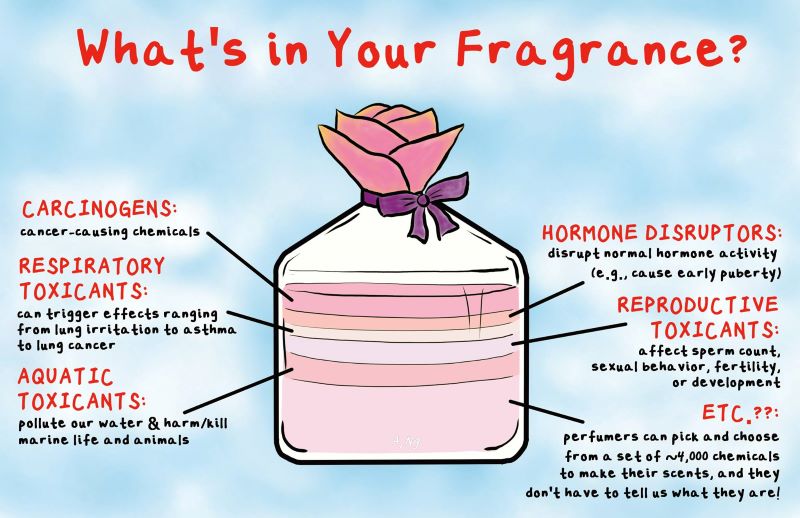
  • Butylated Hydroxytoluene (BHT), an EDC found in personal care products
Courtesy BCPP.org

What is breast cancer?

ALSO READ [EXPLAINER] Hepatitis: causes, symptoms, prevention

Breast cancer is one of the most common cancers in women. But did you know your personal care items might also put you at risk? Read on to know the expert’s opinion on it.

Breast cancer is one of the leading causes of death across the globe. Having proper awareness about it is one of the key factors in checking it and getting it treated well on time. Did you know that your cosmetics and everyday personal care items can put you at risk of breast cancer as well? There are several other toxins in environment that too may risk the development of tumour in women. While genetic predisposition and lifestyle factors are well-established contributors to breast cancer, the role of environmental toxins is increasingly being recognised as a critical factor in the increasing rates of breast cancer according to Dr. Karishma Kirti, Consultant Breast Specialist and Oncoplastic Surgeon. These toxins, which include chemicals found in industrial byproducts, pesticides, plastics, and even some personal care products, have been shown to disrupt hormonal balance, induce DNA damage, and promote cancer development.

How environmental toxins risk breast factor?

Environmental toxins encompass a broad range of chemicals, including endocrine-disrupting chemicals (EDCs), carcinogens, and other toxic substances. EDCs, in particular, are of great concern because they can mimic or interfere with the body’s natural hormones, particularly estrogen. Estrogen plays a key role in the development of breast tissue, and prolonged exposure to estrogen or estrogen-like substances is known to increase breast cancer risk.

One of the most studied environmental toxins is bisphenol A (BPA), a chemical used in the production of plastics and resins. BPA can leach into food and beverages from containers made with this chemical, leading to widespread human exposure. Research has shown that BPA can mimic estrogen and bind to estrogen receptors in breast tissue, potentially leading to increased cell proliferation and cancer development. A study published in Environmental Health Perspectives found that BPA exposure is associated with an increased risk of breast cancer, particularly when exposure occurs during critical periods of development such as puberty.

Pesticides, widely used in agriculture, are another significant source of environmental toxins. Certain pesticides, such as organochlorines, have been classified as possible human carcinogens. These chemicals persist in the environment and accumulate in fatty tissues, including breast tissue. A 2016 study examined the levels of organochlorine pesticides in women with breast cancer and found significantly higher concentrations compared to controls and suggested that these chemicals could be linked to the initiation and progression of breast cancer.

How shampoo, cosmetic products may risk breast cancer?

Phthalates and parabens, commonly used as preservatives in cosmetics and personal care products, are also implicated in breast cancer risk. Both are known EDCs and have been detected in human breast tissue. Phthalates, used in products like shampoos, lotions, and perfumes, have been shown to disrupt the endocrine system and may increase breast cancer risk by altering the expression of genes involved in hormone regulation, Dr. Kirti explained.

Similarly, parabens, used as antimicrobial agents in cosmetics, have been found in breast tumors. A study published by Darbre et al. detected parabens in the breast tissue of women with breast cancer, raising concerns about their role in the disease’s development. While the exact mechanism is still under investigation, the presence of these chemicals in breast tissue suggests that they may contribute to carcinogenesis.

The evidence linking environmental toxins to rising breast cancer rates among women is growing. While more research is needed to fully understand the mechanisms and extent of risk, the existing studies highlight the importance of reducing exposure to these harmful substances.

How to prevent selves from breast cancer

Individuals can take steps to reduce their exposure by choosing products free of harmful chemicals, supporting organic agriculture, and advocating for cleaner air and water.

India.com

Breast cancer Fragrances Perfumes Shampoo
Share. Facebook Twitter Pinterest LinkedIn WhatsApp Reddit Tumblr Email
Abdallah el-Kurebe
  • Website
  • Facebook
  • Twitter
  • LinkedIn

Related Posts

Lagos signs 10-year primary health care compact

May 7, 2026

Benue children stunted as malnutrition worsens — Nutrition officer

May 7, 2026

Lagos faces 500-year doctor shortage without urgent action — Commissioner warns

May 7, 2026

Leave A Reply Cancel Reply

First batch of 9,000 Nigerian pilgrims land in Madinah

May 7, 2026

PETAN chairman urges Africa to harness resources for energy future

May 7, 2026

Association urges faster energy transition

May 7, 2026

World press freedom day lecture highlights media’s role

May 7, 2026
About Us
About Us

ASHENEWS (AsheNewsDaily.com), published by PenPlus Online Media Publishers, is an independent online newspaper. We report development news, especially on Agriculture, Science, Health and Environment as they affect the under-reported rural and urban poor.

We also conduct investigations, especially in the areas of ASHE, as well as other general interests, including corruption, human rights, illicit financial flows, and politics.

Contact Info:
  • 1st floor, Dogon Daji House, No. 5, Maiduguri Road, Sokoto
  • +234(0)7031140009
  • ashenewsdaily@gmail.com
Facebook Twitter Instagram Pinterest
© 2026 All Rights Reserved. ASHENEWS Daily Designed & Managed By DeedsTech

Type above and press Enter to search. Press Esc to cancel.