


The Cancer Consciousness Initiative (CCI) has inaugurated the TeleOncology Hub to improve access to specialist cancer care in Northeastern Nigeria. The programme provides telemedicine consultations, virtual Multidisciplinary Team (MDT) meetings, and patient navigation services.
Dr. Hannatu Ayuba, CEO of CCI and Programme Lead of the TeleOncology Hub, described the initiative as a health system-strengthening programme during an interview with reporters on Sunday in Abuja.
Ayuba highlighted the rising number of cancer cases in the region and the urgent need to improve healthcare access. “Many patients in underserved communities face obstacles that delay diagnosis and treatment, affecting survival. In the Northeast, breast cancer accounts for 60 per cent of cases and is often diagnosed at late stages, creating huge treatment challenges,” she said, urging women to watch for breast lumps, changes in breast shape, nipple discharge, or other unusual signs.
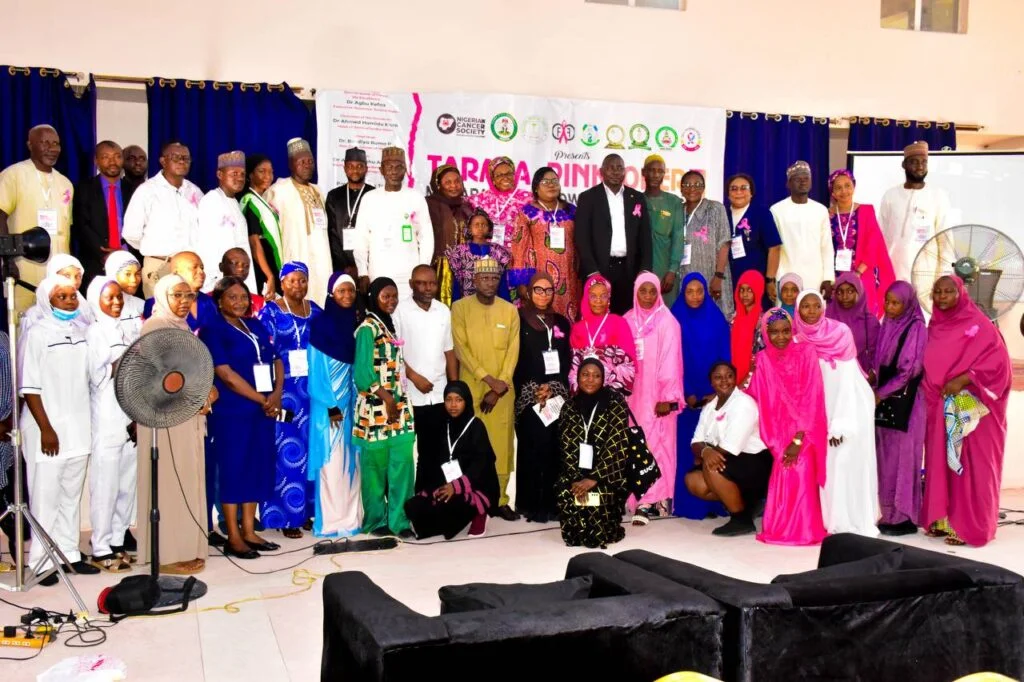
She added, “Early detection through self-exams, mammograms, and regular check-ups can save lives. Reducing cancer disparities ensures better care and improved outcomes for all patients.” To mark Breast Cancer Awareness Month, CCI collaborated with partners to organize town hall meetings and a mega-rally to raise awareness and improve access to specialist care in underserved communities.
Since its inauguration in April at FMC Jalingo, the TeleOncology Hub has made significant progress in addressing cancer care disparities across remote areas. “The initiative now collaborates with Modibbo Adama University Teaching Hospital, FMC Nguru, and Yobe State University Teaching Hospital Damaturu, expanding access to tele-oncology services and virtual specialist consultations,” Ayuba said.
The programme recently launched a community patient navigation initiative in Borno State, in partnership with the Grow Strong Foundation, integrating telemedicine, virtual MDT meetings, EMR monitoring via PocketPatientMD, and patient guidance for timely care. Over 35 patients have been onboarded, with more than 85 per cent of navigation encounters resulting in prompt diagnoses, treatment, and follow-up.
Ayuba also noted that healthcare professionals, nurses, and pharmacy staff had been trained in oncology care, digital health tools, and patient navigation to strengthen local capacity and quality of care. The initiative partners with patient assistance programmes, including BRANT by Oncopadi/Roche, offering free immunohistochemistry testing to 5,000 women, while Merck and AstraZeneca provide free KRAS and EGFR testing for colorectal and lung cancer patients.
“Late-stage diagnoses, financial constraints, and cultural barriers remain major challenges in remote areas. Only 8.6 per cent of patients at one centre are enrolled in health insurance or national schemes,” she said. To address these challenges, CCI provides financial counseling, treatment support, transportation, and logistics, aiming to make cancer care accessible regardless of location or financial status.
Looking ahead, Ayuba said the TeleOncology Hub plans to expand nationwide, including HIPAA-compliant telemedicine suites, broader training programmes, integration with the African Digital Health Network, and advocacy for sustainable funding and policy support.
