


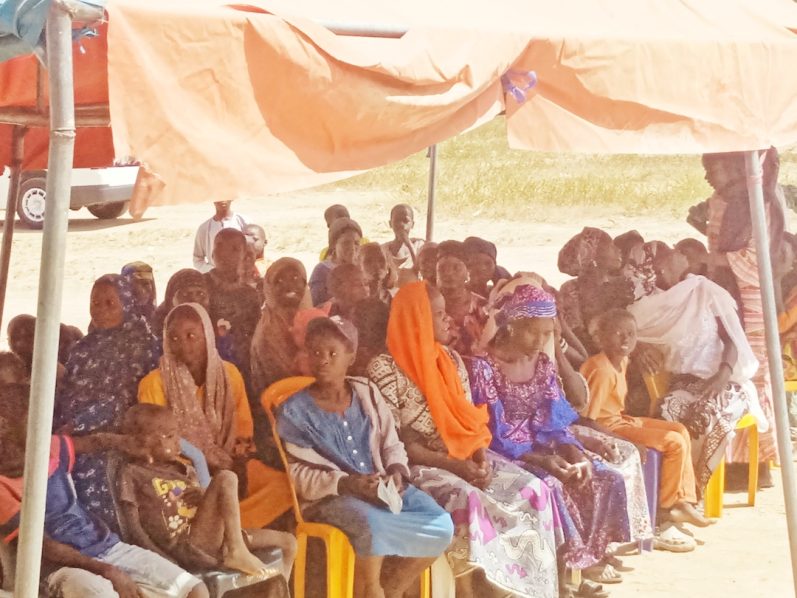
The National Commission for Refugees, Migrants, and Internally Displaced Persons (NCFRMI), in partnership with the One World Initiative for Sustainable Development, has launched a medical outreach for IDPs in Abuja.
The outreach, starting at the New Kuchingoro IDP Camp, targets vulnerable women, children, and others needing urgent healthcare support.
Speaking at the launch on Friday in Abuja, NCFRMI’s Head of Planning, Mr. Sam Sam, said the initiative aims to address urgent health needs identified through a recent assessment in selected camps.
He explained that NCFRMI, working with stakeholders, surveyed 7,776 displaced persons and 1,246 vulnerable individuals, revealing significant healthcare gaps.
The outreach is part of efforts to provide immediate humanitarian aid and promote long-term solutions for the welfare and reintegration of displaced persons.
Beneficiaries will receive free health screenings—including malaria tests, blood pressure, and blood glucose checks—malaria treatment, deworming, and referrals for specialized care when needed.
“The commission remains committed to improving the living conditions of displaced persons through strategic interventions and partnerships,” said Sam.
Mr. Timothy Achanya, President of the One World Initiative for Sustainable Development, noted that the outreach was initiated following a Memorandum of Understanding with NCFRMI to deliver humanitarian aid to refugees and IDPs.
He highlighted that the intervention was driven by a joint needs assessment, which identified healthcare as a top priority among displaced populations.
Achanya described the program as a quick response to immediate health challenges, while also laying the groundwork for future empowerment initiatives, including life-skills training.
“This platform delivers essential healthcare and promotes health education on hygiene, nutrition, vaccination, maternal health, and chronic disease prevention, along with referrals for specialized care,” he said.
He added that the organization plans to expand similar interventions nationwide, especially in communities affected by displacement and crises.
Achanya called on government agencies, development partners, and Nigerians to support efforts to improve displaced persons’ welfare.
Mrs. Deborah Azeez of the FCT Department of Public Health said the outreach would improve access to vital healthcare services.
She explained that health officials were conducting blood pressure, blood sugar tests, and deworming exercises to prevent common health issues among IDPs.
Azeez commended the partnership and expressed optimism that the intervention would lead to better health outcomes.
Other partners supporting the outreach include the FCT Department of Public Health, the National Malaria Elimination Programme, and other public-spirited Nigerians.
The New Kuchingoro IDP Camp houses over 1,200 displaced persons, many of whom are expected to benefit from this initiative.
