


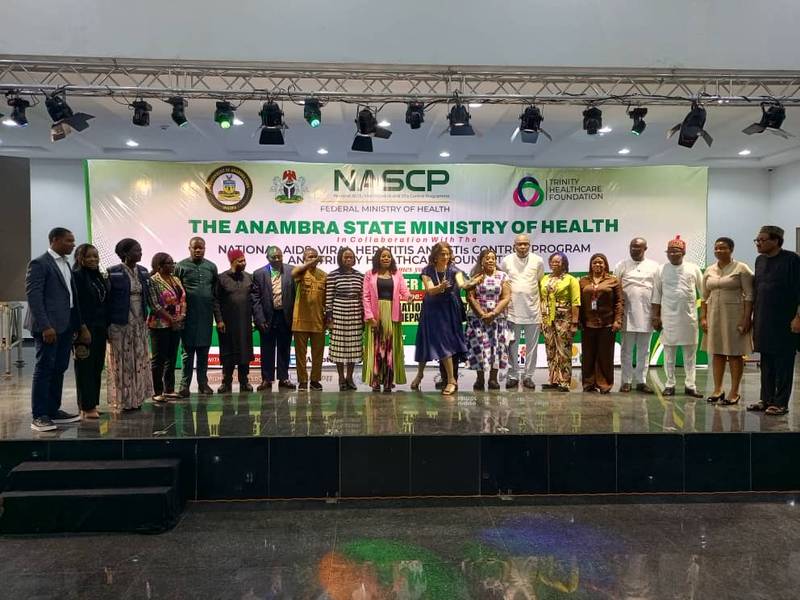
Wife of the Anambra Governor, Dr. Nonye Soludo, has emphasized that early testing, prompt treatment, and proper follow-up during pregnancy can prevent mother-to-child transmission of HIV and other infectious diseases.
Soludo made this statement on Tuesday in Awka at a one-day high-level stakeholders’ meeting on the Triple Elimination of Mother-to-Child Transmission of HIV, Viral Hepatitis, and Syphilis.
The meeting was themed, “Synergising Efforts Towards Triple Elimination: Strengthening Investment, Innovation, and Collaboration to End HIV, Viral Hepatitis, and Syphilis in Anambra State.”
It was organized by the Anambra Ministry of Health in collaboration with the National AIDS, Viral Hepatitis, and STIs Control Programme (NASCP), Trinity Healthcare Foundation, and other partners.
She said early testing and treatment would not only prevent infection transmission from mother to child but also prevent lifelong health complications for mothers and their babies.
Soludo called for increased investment and stronger collaboration among stakeholders to eliminate mother-to-child transmission of HIV, Hepatitis B, and Syphilis across Anambra.
According to her, sustained investment and collaboration are essential to protecting families and securing children’s futures through improved access to quality maternal and child healthcare services.
She highlighted her Healthy Living Initiative, which prioritizes preventive healthcare, emphasizing that investing in prevention is more effective and less costly than treating diseases after they occur.
Soludo commended the state government for strengthening maternal and child healthcare through its free antenatal care program in public health facilities across the state.
“Thousands of pregnant women are currently benefiting from essential antenatal services, including screening and preventive interventions aimed at eliminating the transmission of HIV, Hepatitis B, and Syphilis from mother to child.
“Achieving the Triple Elimination Agenda will require active participation from healthcare workers, traditional rulers, religious leaders, development partners, and families.
“Therefore, I urge community and religious leaders to intensify awareness campaigns, encourage early antenatal attendance, and combat stigma associated with these diseases.
“I believe that eliminating mother-to-child transmission of HIV, Hepatitis B, and Syphilis is achievable, affordable, and necessary if stakeholders renew their commitment,” she said.
Earlier, the Commissioner for Health, Dr. Afam Obidike, noted that despite significant progress in HIV testing and prevention, the state still needs to intensify efforts to identify undiagnosed cases.
He emphasized the need to strengthen linkage to treatment and sustain positive health outcomes among affected individuals across the state.
“The state’s free antenatal care program provides an effective platform for integrating screening, prevention, and treatment services for HIV, Hepatitis, and Syphilis,” he said.
In his remarks, WHO State Coordinator Dr. Bonos Mohammed stated that the triple elimination initiative requires strong political commitment and sustained collaboration among stakeholders.
Mohammed assured participants of WHO’s continued support through strategic guidance, technical assistance, and advocacy to achieve the initiative’s goals.
Additionally, the National Coordinator and Director of NASCP, Dr. Adebobola Bashorun, represented by Dr. Chioma Ukanwa, urged stakeholders to develop actionable plans with clear implementation timelines.
The State AIDS Programme Coordinator, Dr. Tonia Mbagwu, shared that out of 85,802 pregnant women tested for Syphilis, 20 were positive.
She also reported that 117 of 62,971 women screened for Hepatitis tested positive, highlighting the need for ongoing prevention and treatment efforts.
Mbagwu stressed the importance of expanding prevention programs, targeted testing, increasing domestic resources, and strengthening partnerships.
