


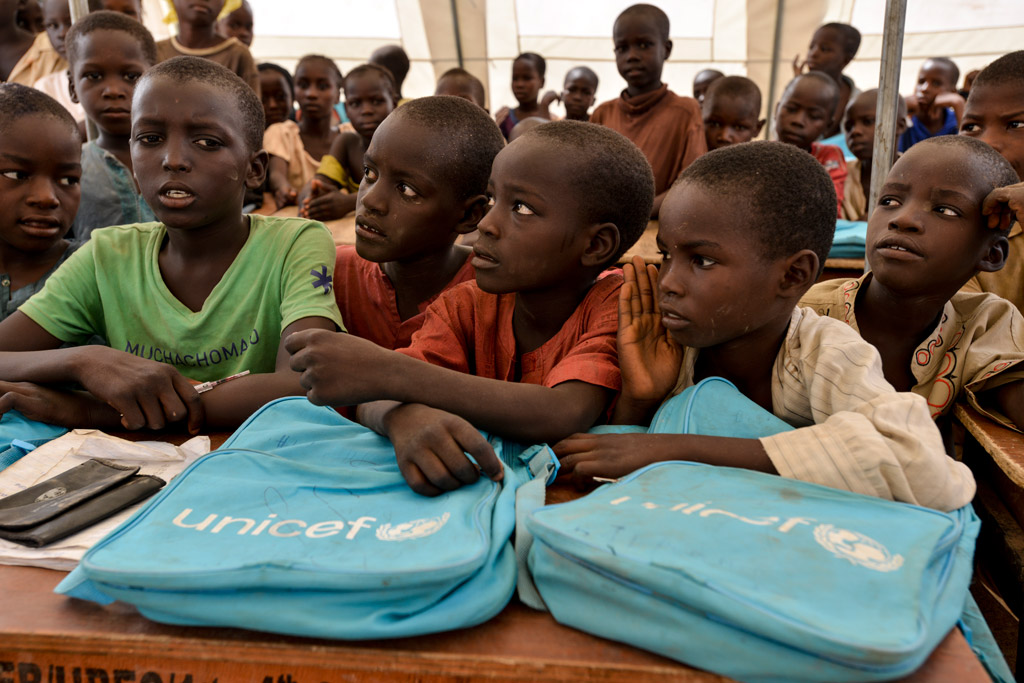
The United Nations Children’s Fund (UNICEF) has called for stronger advocacy in budget planning and implementation to safeguard the rights and well-being of children across Nigeria.
The Chief of UNICEF Field Office for South-West Nigeria, Ms. Celine Lafoucriere made this call during a media dialogue organized by UNICEF in collaboration with the Lagos State Ministry of Economic Planning and Budget (MEPB). The event, held in Ikeja, commemorated the 2025 Day of the African Child and was themed “Planning and Budgeting for Children’s Rights.”
Lafoucriere stressed the importance of ensuring that budgeted funds directly benefit children and that children’s welfare is prioritized in Nigeria’s public spending.
“Advocacy helps ensure funds reach the intended beneficiaries. The media and civil society are essential in pushing for more transparent and efficient budgeting,” she said.
She identified inadequate and inefficient budgeting as critical challenges undermining children’s rights protection in Nigeria.
UNICEF, she noted, has been working with Lagos State to improve accountability in budgeting through the introduction of a dedicated budget code.
“This system allows every naira spent on child-related programmes to be tracked, increasing visibility and enabling us to monitor real impact,” she explained.
Lafoucriere emphasized that budget planning should be data-driven, focusing on the most vulnerable children and their needs in areas such as clean water, education, healthcare, nutrition, and protection.
Despite marginal increases in child-focused budget allocations over the years, Lafoucriere lamented that actual spending remains insufficient.
“Malnutrition, school dropouts, and child abuse rates in the South-West are alarmingly high — clear indicators of an implementation gap,” she said.
“In a place like Lagos, education is still largely self-funded by families. Where is the public investment in giving children a fair start in life? These are not luxuries — they are basic human rights.”
She urged the Lagos State Government to remember its social contract with every child, warning that failing to invest in children today could endanger the future of the state.
Earlier, Mr. Muhammad Okorie, UNICEF Programme and Social Policy Manager, pointed out that although most Nigerian states allocate budgets for children, significant gaps exist in translating those allocations into real-world impact.
“The issue isn’t just allocation — it’s actual spending, equitable distribution, and evidence-based decisions,” he said.
“Many states meet or exceed budget benchmarks on paper, but the real test lies in implementation and impact.”
He acknowledged that several state governments have integrated child-focused policies into their development plans, but emphasized the need for stronger financial commitment and follow-through.
Okorie also advocated for applying a ‘child rights lens’ in fiscal decision-making.
“Children know what they need. Involving them in the budgeting process leads to better outcomes and greater accountability,” he said.
In his remarks, Mr. Olufemi Orojimi, Director at the Lagos State Ministry of Economic Planning and Budget, stated that the state relies on data and citizen feedback to drive more effective planning and budgeting.
“Lagos currently tracks and monitors the use of funds earmarked for child protection,” he said.
