


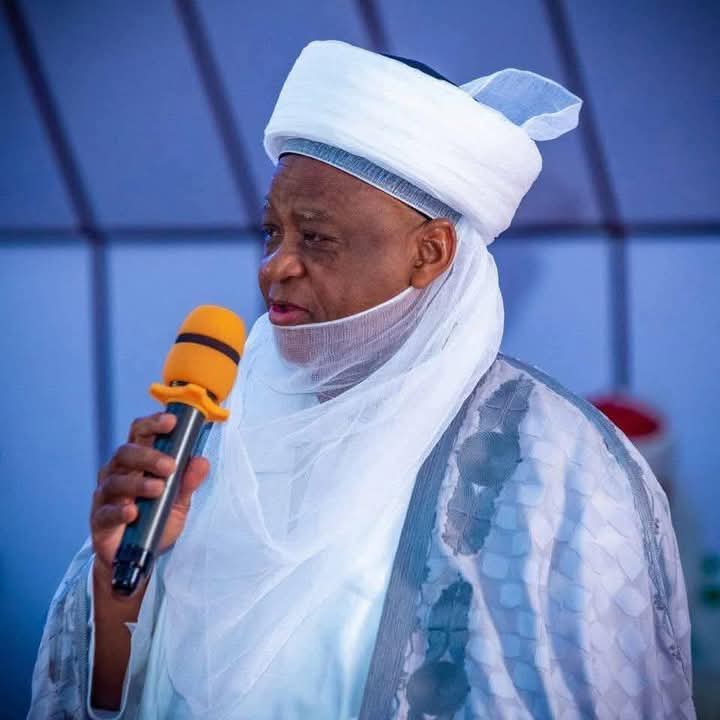
The Chairman of the Nigeria Union of Journalists (NUJ), Sokoto State Council, Usman Mohammed Binji, has addressed concerns raised by George Udom regarding Islamic leadership in Nigeria and the role of the Sultan of Sokoto.
Binji, in a rejoinder made available to the media, emphasized that while intellectual debate is not forbidden in Islam, it must be grounded in accuracy, scholarship, and a genuine concern for unity. He expressed concern that the arguments presented mischaracterize the position of the Sultan of Sokoto and selectively interpret Islamic principles in ways that could foster confusion and division among Muslims.
Binji clarified that the Sultan of Sokoto is not merely a traditional ruler with regional authority but is widely recognized as Amir al-Mu’minin in Nigeria and President-General of the Nigerian Supreme Council for Islamic Affairs (NSCIA), the apex coordinating body for Muslims in the country. According to him, this position is sustained through collective acceptance by scholars, emirs, Islamic organizations, and Muslim communities across Nigeria’s geopolitical zones.
He outlined the Sultan’s responsibilities to include promoting unity among Muslims, mediating disputes within Muslim communities and between Muslims and the state, overseeing national religious matters such as Ramadan moon sighting and major Islamic observances, representing Muslim interests in governance and policy discussions—including Hajj administration and Zakat frameworks—and safeguarding Islamic heritage rooted in the legacy of Usman dan Fodio.
“These responsibilities are practical and national in scope, not merely symbolic,” Binji stated, adding that the Sultan’s role does not replace the authority of local scholars or imams in issuing personal religious rulings. He noted that Islam historically balances local scholarship with overarching leadership, arguing that the presence of regional ulama does not diminish the need for a national religious figure.
Addressing claims that Islam left no leadership structure after the Prophet Muhammad (peace be upon him), Binji described such assertions as misleading. He pointed out that the Muslim community was historically led by caliphs and referenced Qur’anic injunctions, including Surah An-Nisa (4:59), which calls for obedience to legitimate authority. He further cited classical scholars who warned that the absence of structured leadership could lead to fragmentation and discord.
Binji cautioned that publicly questioning long-established Islamic institutions in a diverse and politically complex nation like Nigeria could have unintended consequences. He argued that unity in Islam encompasses both spiritual and organizational dimensions and warned that weakening established structures could expose the Muslim community to greater challenges.
He also stressed the importance of responsible public discourse, noting that framing the Sultan’s role as illegitimate or regionally confined may fuel ethnic suspicion and provide ammunition to critics of Islam. While acknowledging that critique has a place in Islamic tradition, he maintained that reopening settled matters of leadership without scholarly grounding or constructive alternatives risks deepening divisions.
“Respecting the Sultan of Sokoto does not imply blind obedience,” Binji concluded. “It signifies recognition of collective leadership, historical continuity, and the necessity of a unifying figure in national Muslim affairs.”
He urged those seeking clarity on issues of Islamic leadership to consult the NSCIA and qualified scholars rather than turning religious institutions into platforms for public contestation, emphasizing that unity is preserved through responsible engagement with established authority.
Binji is the Chairman, Nigeria Union of Journalists (Sokoto State Council).
