


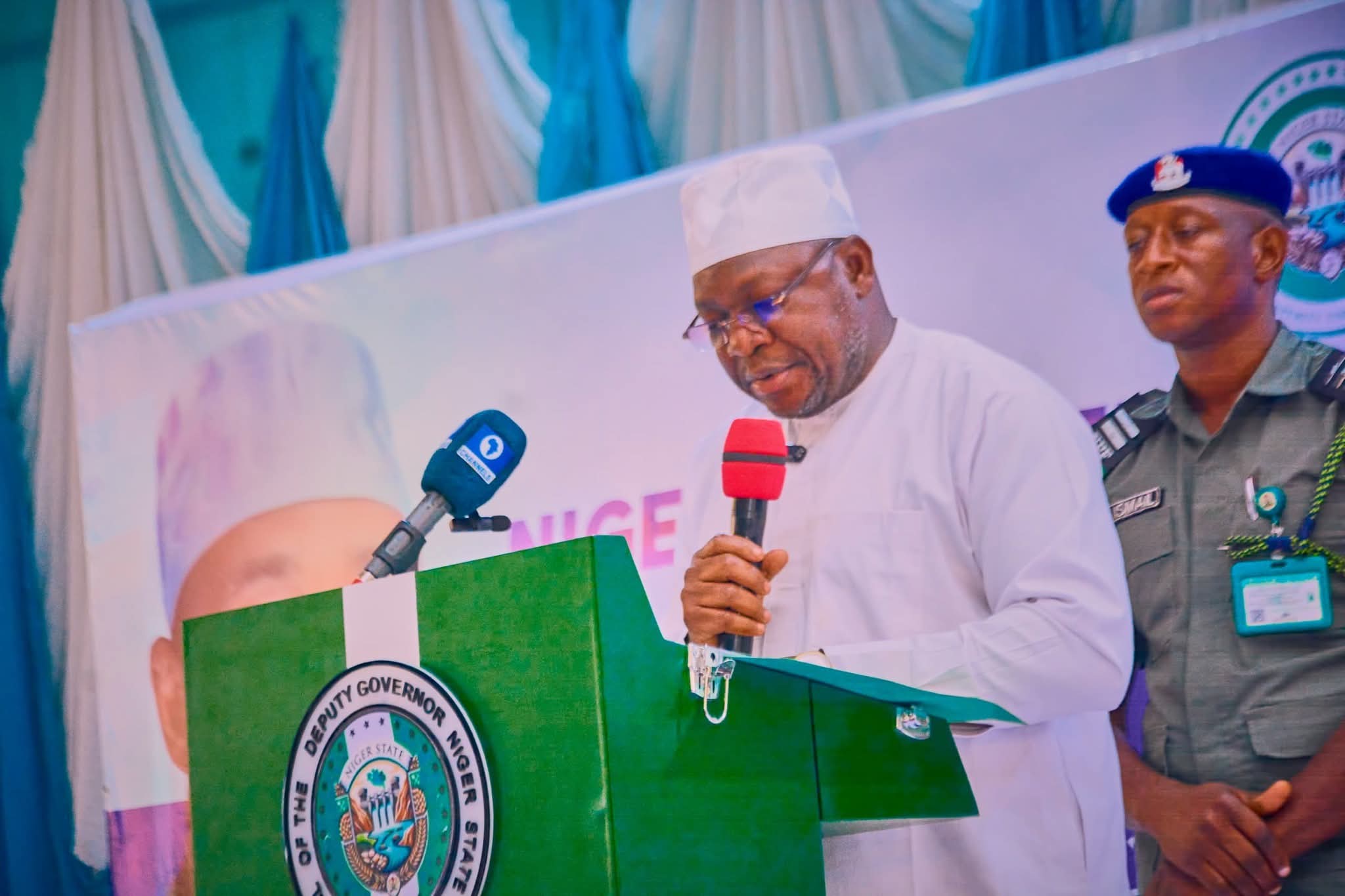
Niger State Governor, Umar Bago, has declared that the state has taken its energy destiny into its own hands.
The Governor, represented by his Deputy,Yakubu Garba, made the declaration on Wednesday during the opening of the maiden Stakeholders’ Engagement on the New Niger State Electricity Market.
The event, organized by the Niger State Electricity Regulatory Commission (NSERC) in collaboration with the German Agency for International Development (GIZ), was held at the Siyam Conference and Event Centre, Minna.
According to him, the engagement marks not just another step in the New Niger Agenda but a pivotal moment that signals the collective readiness of Nigerlites to confront energy challenges and chart a new, brighter path for electricity in the state.
“For too long, Nigerians have borne the burden of a dysfunctional power system,” he noted. “Despite years of reforms and investments, many homes remain in darkness. The unreliable power supply continues to stifle small businesses and large industries, while the high cost of running generators erodes profits and livelihoods. Hospitals, schools, and rural communities bear the brunt of this crisis.”
Governor Bago stated that the time for lamentation was over. “We have chosen a different path — a path of action, courage, and collaboration. We are here because Niger State has resolved to take its energy destiny into its own hands,” he declared.
He explained that the signing of the Electricity Act by the Federal Government in 2023 granted states the authority to develop and manage their electricity markets. In line with this, Niger State enacted the Niger State Power Sector Law on December 19, 2024, which led to the establishment of the Niger State Electricity Regulatory Commission (NSERC).
Describing Niger as truly deserving of its title, “The Power State”, the Governor highlighted the state’s abundant natural resources, especially its rivers and dams, which offer significant potential for hydroelectric power generation.
He emphasized that building a viable electricity market requires more than just policies or legislation — it demands partnership. “This is a time for collaboration, alignment, and collective ownership of the power sector’s future,” he added.
The Governor urged all Nigerlites to actively engage in the dialogue, noting that the event was about more than electricity. “This is about prosperity, productivity, and dignity in every home. We are not just regulating power — we are empowering people,” he said.
He commended the leadership and staff of NSERC, calling them trailblazers for laying the foundation for a new era of electricity deregulation in Nigeria, and pledged the continued support of the state government.
Chairman of the occasion, Dr. Mohammud Santuraki, applauded the Governor for establishing the commission, describing the engagement as a demonstration of the state’s commitment to transparency in electricity regulation.
He emphasized that Niger State’s geographical advantage gives it enormous potential to power the nation, though these resources remain underutilized.
Dr. Santuraki urged stakeholders to use the platform to develop a clear roadmap that ensures equitable, reliable, affordable, and accessible electricity for all.
Earlier in his welcome remarks, the Chairman of NSERC, Engr. Mohammed Sharu, stated that since the commission’s creation in late 2024, it has recorded significant progress.
He announced that by July 9, 2025, the transition of electricity regulation from the Nigerian Electricity Regulatory Commission (NERC) to the state will be completed, with Niger State taking full regulatory responsibility for its electricity market.
He assured stakeholders that the commission is committed to ensuring value for money for both service providers and consumers.
Representatives of key stakeholder groups — including GIZ, ALGON, NGF, NERC, NACCIMA, and NYCN — contributed valuable insights during the engagement.
