


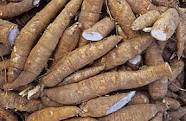
Cassava, rice, maize, and wheat account for 45 per cent of the calories consumed across Africa, highlighting the continent’s heavy reliance on just a few staple foods.
This finding is contained in a World Bank report titled “Food at a Crossroads: The Nexus Between Transport, Logistics, and Food Security in Africa.”
The report warns that such dependence leaves Africa vulnerable to supply disruptions, rising food prices, and climate-related shocks.
According to the World Bank, while these four staples dominate Africa’s diet, a large portion is imported from Europe, South Asia, and other regions.
Africa imports over 30 million tonnes of maize, more than 35 million tonnes of rice, and around 60 million tonnes of wheat every year.
“Just four key commodities account for 45 per cent of caloric intake across Africa — cassava, rice, maize, and wheat.
“A large portion of these commodities is imported from Europe, South Asia, and elsewhere, making transport a pivotal component in helping to address the challenges of food insecurity in Africa,” the report read in part.
After arriving on the continent, these staples face delays due to inadequate port infrastructure, inefficient logistics, and long inland journeys.
On average, food travels about 4,000 kilometres over 23 days in Africa — four times longer than in Europe — increasing the risk of spoilage, losses, and delayed delivery to households.
Seaports handle 14 per cent of Africa’s food imports, rising to 22 per cent for landlocked countries and 37 per cent for the lowest-income nations. However, many ports suffer from outdated systems, low capacity, and poor infrastructure, creating critical choke points in the food supply chain.
After clearance, imported staples must navigate weak road networks, congested borders, and poor rural connectivity. These transport challenges drive up costs, reduce food availability, and make staples less affordable for consumers.
The World Bank report noted that investments in port infrastructure, railways, and roads, along with streamlined logistics and simplified border procedures, could reduce delays, improve reliability, and support intra-African trade.
Even after transport, inadequate storage infrastructure exacerbates Africa’s food insecurity. The report noted that 20 per cent of cereals, 25 per cent of rice and maize, and up to 40 per cent of fruits and vegetables are lost before reaching consumers.
Losses of cassava, maize, rice, and wheat grew from 22.5 million tonnes in 2010 to 33.8 million tonnes in 2022 — equivalent to nearly 30 per cent of annual imports.
The report emphasised that investing in modern storage facilities, improving logistics, and applying proper handling techniques could significantly reduce these losses, ensuring more food reaches households safely and consistently.
On the Nigerian front, the country faces a looming food insecurity challenge. The United Nations Food and Agriculture Organization (FAO) projected that about 34.7 million Nigerians could experience severe food shortages during the 2026 lean season, from June to August.
The agency said the risk would persist if timely interventions were not implemented. Rising production costs, conflicts in key farming regions, economic shocks, and limited access to markets and credit were driving the threat.
A recent Nairametrics survey of farmers in the North-Central and North-West regions found that Nigeria faces a food crisis in 2026.
Farmers reported that soaring costs for fertiliser, fuel, and labour, combined with insecurity and limited government support, were making farming increasingly unprofitable.
Many had reduced cultivation or were considering abandoning their farms altogether. The survey also highlighted that the collapse of earlier support schemes, such as the Anchor Borrowers’ Programme, and poor rural infrastructure had further discouraged production.
Targeted support, including subsidised inputs, improved access to credit, mechanisation programmes, and enhanced rural security, is critical to avert severe food shortages in 2026.
