


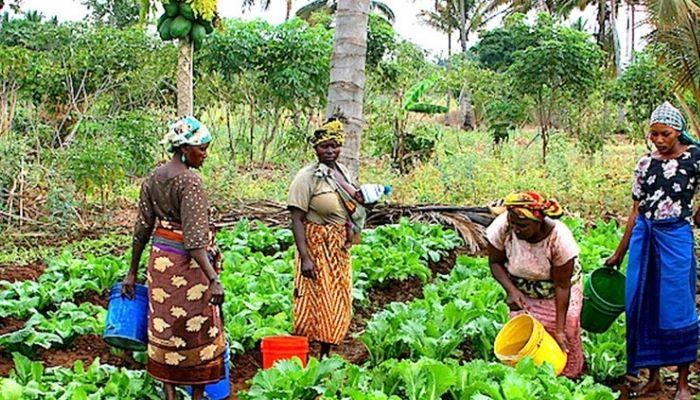
The Project Manager of Whitegreen Development Services, Mr. Jaye Yekini, has said that women farmers in Nigeria face poor access to farmland despite their significant contributions to food production.
Speaking to reporters in Ibadan, Yekini noted that this limited access continues to undermine their productivity.
According to him, women farmers are particularly vulnerable to rural insecurity and restrictive land-tenure practices, making it increasingly difficult for them to sustain their farming activities.
“Women are very vulnerable when it comes to insecurity. Many of them farm on less than two hectares of land and do not have the financial capacity to provide security, so they depend largely on what the government provides,” he said.
Yekini explained that these challenges negatively affect the economic activities and livelihoods of women in rural communities, where farming remains their main source of income.
He added that the land-tenure system restricts women’s contribution to food security, as many are not financially empowered to buy land outright.
He urged the government and stakeholders to intervene by making farmland more accessible to women.
“The government should lease out land, aggregate women farmers, and provide the necessary inputs. After harvest, the proceeds can be calculated, and the government can deduct its service charge. This will go a long way in empowering women farmers,” he said.
Yekini also dismissed claims that smallholder women farmers contribute little to the agricultural sector, emphasizing that they form the backbone of food production in many communities.
“Smallholder farmers, especially women, contribute at least 50 to 70 per cent of the food we consume in Nigeria. Many of them cultivate vegetables and food crops, and they are active across the entire agricultural value chain,” he said.
He noted that women participate in land preparation, planting, weeding, and several post-harvest activities such as peeling, drying, threshing, and processing.
According to him, empowering smallholder women farmers will significantly boost national food production.
Speaking on the activities of Whitegreen Development Services, Yekini said the organization provides mechanization services to farmers in Oyo State.
“We train farmers on record-keeping, the right fertilizers to apply, the appropriate chemicals and correct dosage, and the proper timing for weeding and other operations,” he said.
He called for stronger partnerships with the government to expand the reach of such services.
