


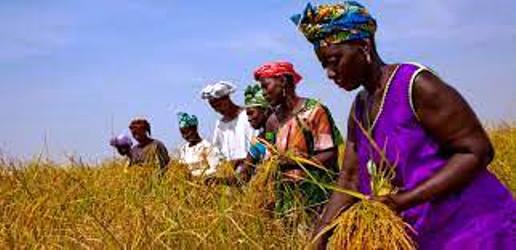
The Small Scale Women Farmers Organisation of Nigeria (SWOFON) has expressed optimism about the 2025 dry season farming, despite the ongoing challenges posed by climate change.
Speaking in an interview on Saturday in Ibadan, the Oyo State Coordinator of SWOFON, Mrs. Atinuke Akinbade, lamented the losses incurred by farmers during the early stages of the 2025 rainy season due to irregular rainfall patterns.
“Despite the problems faced by farmers, including small-scale women farmers, preparations for the dry season farming have begun,” she said.
Akinbade explained that planting activities carried out between April and May were largely unsuccessful, as the rains stopped abruptly and crops failed to grow appreciably.
“It is only now that plantations are starting to thrive, and we are hopeful that the rains will continue to support what we’ve planted,” she added.
She urged the government to begin the distribution of seedlings and other agricultural inputs to support dry season farming, especially in light of the losses farmers have already endured.
Akinbade highlighted the association’s efforts to source high-yielding seeds from agricultural institutes, noting that input prices have risen sharply.
She emphasized that small-scale women farmers are undeterred by the effects of climate change because farming remains their primary means of livelihood.
“We are going ahead with planting. Typically, dry season farming begins between August and September. But with the changing climate, it’s difficult to predict the weather pattern,” she noted. “Regardless, we will do what we can. We will plant and believe God for the best.”
Akinbade also called on government at all levels to prioritize support for small-scale women farmers, who she said play a critical role in household food security and poverty alleviation.
“Government support to small-scale women farmers is vital to emancipate women from poverty,” she said.
“Women are doing their best to support their families through farming and various innovations, including thrift contributions. These efforts should be acknowledged and backed by the state so that families can withstand the current economic challenges.”
