


Some agriculture stakeholders have called on the Federal Government to implement workable measures to reduce production costs in the sector.
The stakeholders made the call in separate interviews with reporters on Thursday in Lagos.
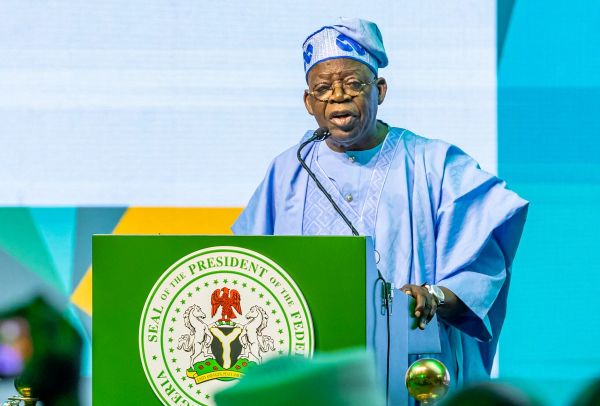
They were reacting to President Bola Tinubu’s 66th Independence Day celebration speech, in which he promised to reduce production costs across sectors.
In his Independence Day Broadcast, President Tinubu said reducing production costs in agriculture and other sectors would help achieve shared prosperity for Nigerians.
The Lagos State Chairman of the All Farmers Association of Nigeria (AFAN), Mr Sakin Agbayewa, commended the administration’s efforts but called for more funding for farmers.
“In all sincerity, President Bola Tinubu’s administration has been trying to reduce the cost of production for us farmers, and he has done well.
“The distribution of fertilisers to farmers across 26 states of the country is a testament to this. The cost of a bag of fertiliser is currently above N40,000, while the provision of three bags to farmers has really cut down our cost of production.
“The Federal Government also just launched an energy aid programme with the Bank of Africa for local farmers.
“With this programme in place, farmers in the rice, maize, cassava and soybean value chains can open current accounts with Bank of Africa. The Federal Government will subsidise their production costs under the programme,” Agbayewa said.
According to him, the government was doing well, adding that the Nigeria Forest Security initiative would help secure farmers’ fields.
“However, they should do more for farmers by increasing our sources of funding to reduce our cost of production and subsequently lower food prices,” he said.
Mr Omotunde Banjoko, a farmer and agriculture analyst, called for subsidised farm inputs and an end to imports of produce that Nigerian farmers could cultivate.
“It is a welcome development that President Tinubu’s administration wants to reduce the cost of production in the agric sector.
“Due to the increasing cost of production, the promise to reduce production costs is very welcome because that is what we have been clamouring for.
“It is better than the importation of food we can produce. To reduce production costs, the government needs to subsidise farm inputs.
“Fertilisers and seedlings should be made available to farmers at affordable rates. Fertilisers used to cost about N6,500, N4,000 less than 10 years ago.
“Now, a bag costs about N55,000. Farmers who used to cultivate 10 hectares are now probably struggling to maintain five or four hectares.
“As we reduce the size of farmland, the volume and quantity of food available also reduce, and prices keep skyrocketing. So, let the government subsidise the cost of inputs,” Banjoko said.
He also urged the government to sustain funding for farmers and ensure that promised interventions were implemented.
“The government last year promised to revitalise the Bank of Agriculture with N1.5 trillion. As we speak in 2026, that has not been done.
“Farmers should be able to get funds at single-digit interest rates to quickly do their operations. Farmers still have to rely on loan sharks and commercial banks, and that is increasing the cost of production.
“So, the President should keep to his words with action by recapitalising the Bank of Agriculture,” he said.
Banjoko also called for the provision of mechanisation equipment at subsidised rates across local government areas to increase production and reduce costs.
“I think if we do this, we probably will start seeing a difference in food prices. We will also not shy away from what we have been clamouring for. The government should prioritise commodity boards.
“When people produce, they can be assured of guaranteed uptake. If they get guaranteed uptake, they are able to go back and produce,” he said.
According to the expert, the government should stop importing produce that Nigerian farmers have the capacity to cultivate.
“Most factories are now unable to mop up what is being produced locally because the raw materials being imported are cheaper.
“So, the government should stop the importation of products that we have the capacity to produce.
“Bringing down importation tariffs on produce like rice is not doing us good.
“And also, do not forget the cost of energy, which influences transportation and logistics. Our cost of energy is also not doing us good in any way,” the expert said.
In a related vein, Dr Ismail Olawale, a strategic agriculture communication expert, called for a holistic approach to reducing agricultural production costs.
“From all indications and from the President’s speech, ensuring lower production costs in the agriculture sector is a good promise.
“But for the President to achieve this, with whatever policy he wants to set up or plan, the Presidency needs to understand the value chain across agriculture.
“The area where we are really having a problem is the high price of food and the non-availability of inputs to farmers.
“There are other value chains or additional value-addition areas that are not being focused on, and the government needs to pay attention to them,” Olawale said.
He said the government should also address pricing and the costs involved in moving agricultural produce from farms to markets and households.
“In the movement of agricultural produce from farm to market and then from market to household, the government needs to find a way to check the pricing system.
“People who go to farms to buy produce from farmers buy these things from farmers almost at no price at all. When they have the opportunity to transfer this produce to markets, the prices skyrocket.
“So, they arbitrarily charge transportation and preservation costs and then pass the bulk of the price to consumers or customers.
“Again, within that range, there are also local governments and different state taxes that tax these agricultural produce arbitrarily.
“So, at the end of the day, it is the buyer, the consumer, at the household level, that everybody passes the bulk of the price to.
“The government needs to address this. It can do this by going back to setting up the Price Regulatory Board to ensure agricultural produce prices remain stable,” he said.
The President, in his speech, said his administration would focus on reducing the cost of living by cutting production and transport costs adding that Nigeria’s reforms had improved the economy.
He cited more than four per cent growth, lower oil theft, a stabilised foreign exchange market, and $6 billion in non-oil exports in 2025.
Tinubu also said the government would expand mechanised irrigation, dry-season farming, roads, railways and ports, while strengthening social support, education loans and CREDICORP consumer credit, among others.
