


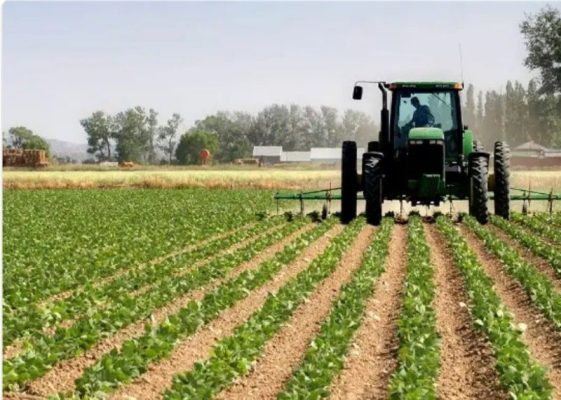
Stakeholders in the agriculture sector have called for increased agricultural mechanization to achieve food security and sufficiency in Nigeria.
They made the call on Wednesday at the 50th Anniversary Celebration of the Nigerian Institution of Agricultural Engineers (NIAE), held at the National Centre for Agricultural Mechanisation (NCAM), Ilorin.
The event also featured the 25th NIAE International Conference, the 45th Annual General Meeting (AGM), and a National Agricultural Machinery Exhibition.
The experts said it was time for Nigeria to move from crude farm implements to modern mechanised technologies to boost productivity and make farming more attractive.
The Executive Secretary, Agricultural Research Council of Nigeria (ARCN), Dr. Adamu Dabban, said Nigeria could not increase its farming productivity without large-scale mechanisation comparable to global standards.
“Our level of mechanisation is very low in this country. This gathering is to see how we can strengthen efforts to advance agricultural mechanisation.
We must stop relying on hoes and cutlasses and start using machines and equipment to modernise our farming practices,” he said.
Dabban stressed that large-scale mechanisation would enhance food production, reduce hunger, and enable the country to achieve self-sufficiency and export capacity.
The Co-Chairman of the Central Organising Committee, Engr. Oluwole Ogunjini, said mechanisation would eliminate the drudgery associated with traditional farming, thereby making it more appealing to young people.
“The major reason youths are not interested in farming is because it is not attractive.
If they have access to technologies like tractors and modern machinery, they will embrace agriculture,” he said.
Ogunjini expressed optimism that the 2025 conference would make a stronger impact on the agricultural value chain due to the inclusion of exhibitions showcasing locally produced machinery.
“This year’s exhibition of technologies developed by our engineers will have ripple effects on agriculture and the economy, because locally produced machines are easier to service and maintain,” he added.
The National Coordinator of Women in Agricultural and Bio-Resource Engineering in Nigeria (WABEN), Mrs. Taiwo Kehinde, said agricultural engineers must design technologies that improve women’s participation and productivity in farming.
“Women constitute a large portion of the farmers who plant, harvest, and process food. Their needs must be considered when designing and producing agricultural machines,” she said.
Kehinde emphasised the importance of including women engineers in decision-making processes to ensure that agricultural mechanisation efforts address the challenges faced by women farmers, especially in rural areas.
“Our goal is to empower rural women to develop and adopt small-scale technologies they can use to improve their productivity,” she added.
