

• Home
  • Agric
  • Sci & Tech
  • Health
  • Environment
  • Hausa News
  • More
    • Business/Banking & Finance
    • Politics/Elections
    • Entertainments & Sports
    • International
    • Investigation
    • Law & Human Rights
    • Africa
    • ACCOUNTABILITY/CORRUPTION
    • Hassan Gimba
    • Column
    • Prof. Jibrin Ibrahim
    • Prof. M.K. Othman
    • Defense/Security
    • Education
    • Energy/Electricity
    • Entertainment/Arts & Sports
    • Society and Lifestyle
    • Food & Agriculture
    • Health & Healthy Living
    • International News
    • Interviews
    • Investigation/Fact-Check
    • Judiciary/Legislature/Law & Human Rights
    • Oil & Gas/Mineral Resources
    • Press Freedom/Media/PR/Journalism
    • General News
    • Presidency
  • About Us
    • Contact Us
    • Board Of Advisory
    • Privacy Policy
    • Ethics Policy
    • Teamwork And Collaboration Policy
    • Fact-Checking Policy
    • Advertising
  • Media OutReach Newswire
    • Wire News
  • The Stories
Facebook Twitter Instagram
Trending
  • YASIF,IBM train 15,000 Nigerian youths for green, digital economy
  • How Corteva Agriscience is boosting South Africa’s farming system
  • AI-driven project targets climate resilient crops for farmers in Africa
  • Vice Chancellor urges graduands on digital, media literacy skills 
  • Ondo varsity expels 15 female students
  • Katsina varsity unveils plans for Marine Engineering, Aviation Tech
  • US approves arms sales to Israel, Saudi Arabia
  • NSCDC hands over fake cryptocurrency investment suspect to EFCC 
Facebook Twitter Instagram YouTube
AsheNewsAsheNews
  • Home
  • Agric

    How Corteva Agriscience is boosting South Africa’s farming system

    January 31, 2026

    AI-driven project targets climate resilient crops for farmers in Africa

    January 31, 2026

    FG empowers 40 cooperatives with farm inputs in Yobe

    January 30, 2026

    Katsina to host 3,750 housing units, aquaculture project financed by COSMOS

    January 30, 2026

    ActionAid empowers 12,000 FCT farmers with agroecology skills

    January 30, 2026
  • Sci & Tech

    Airtel Africa mobile money transactions top $210bn as subscribers hit 52m

    January 31, 2026

    Nigeria, KOICA partner to drive digital transformation in public service

    January 30, 2026

    NDPC leads Abuja roadshow to promote data protection awareness

    January 30, 2026

    NOTAP backs Nigerian developers to $1m sales

    January 29, 2026

    NIEEE, NDPC move to embed privacy in engineering projects

    January 29, 2026
  • Health

    Kogi records milestone in fight against NTDs, halts treatment for Lymphatic filariasis

    January 31, 2026

    Bauchi introduces nutrition supplement to tackle child undernutrition

    January 31, 2026

    Bus crash En route to Bayelsa deputy gov burial leaves 2 dead

    January 30, 2026

    Awka south chairman urges grassroots sensitization ahead of measles-rubella vaccination

    January 30, 2026

    Plateau integrates NTD prevention into school health programme

    January 30, 2026
  • Environment

    YASIF,IBM train 15,000 Nigerian youths for green, digital economy

    January 31, 2026

    Kukah urges religious leaders to speak out against environmental exploitation

    January 31, 2026

    LASEMA holds retreat to honor responders, boost emergency preparedness

    January 31, 2026

    Minister calls for strengthened collaboration to protect Gashaka-Gumti national park

    January 30, 2026

    Tudun Biri resettlement signals shift to structured post-conflict recovery — NEMA

    January 30, 2026
  • Hausa News

    Anti-quackery task force seals 4 fake hospitals in Rivers

    August 29, 2025

    [BIDIYO] Yadda na lashe gasa ta duniya a fannin Ingilishi – Rukayya ‘yar shekara 17

    August 6, 2025

    A Saka Baki, A Sasanta Saɓani Tsakanin ‘Yanjarida Da Liman, Daga Muhammad Sajo

    May 21, 2025

    Dan majalisa ya raba kayan miliyoyi a Funtuwa da Dandume

    March 18, 2025

    [VIDIYO] Fassarar mafalki akan aikin Hajji

    January 6, 2025
  • More
    1. Business/Banking & Finance
    2. Politics/Elections
    3. Entertainments & Sports
    4. International
    5. Investigation
    6. Law & Human Rights
    7. Africa
    8. ACCOUNTABILITY/CORRUPTION
    9. Hassan Gimba
    10. Column
    11. Prof. Jibrin Ibrahim
    12. Prof. M.K. Othman
    13. Defense/Security
    14. Education
    15. Energy/Electricity
    16. Entertainment/Arts & Sports
    17. Society and Lifestyle
    18. Food & Agriculture
    19. Health & Healthy Living
    20. International News
    21. Interviews
    22. Investigation/Fact-Check
    23. Judiciary/Legislature/Law & Human Rights
    24. Oil & Gas/Mineral Resources
    25. Press Freedom/Media/PR/Journalism
    26. General News
    27. Presidency
    Featured
    Recent

    YASIF,IBM train 15,000 Nigerian youths for green, digital economy

    January 31, 2026

    How Corteva Agriscience is boosting South Africa’s farming system

    January 31, 2026

    AI-driven project targets climate resilient crops for farmers in Africa

    January 31, 2026
  • About Us
    1. Contact Us
    2. Board Of Advisory
    3. Privacy Policy
    4. Ethics Policy
    5. Teamwork And Collaboration Policy
    6. Fact-Checking Policy
    7. Advertising
    Featured
    Recent

    YASIF,IBM train 15,000 Nigerian youths for green, digital economy

    January 31, 2026

    How Corteva Agriscience is boosting South Africa’s farming system

    January 31, 2026

    AI-driven project targets climate resilient crops for farmers in Africa

    January 31, 2026
  • Media OutReach Newswire
    • Wire News
  • The Stories
AsheNewsAsheNews
Home»Food & Agriculture»RESEARCH: Cassava may benefit from atmospheric change more than other crops
Food & Agriculture

RESEARCH: Cassava may benefit from atmospheric change more than other crops

EditorBy EditorNovember 14, 2020Updated:November 14, 2020No Comments4 Mins Read
Share
Facebook Twitter LinkedIn Pinterest Email

Carbon dioxide fuels photosynthesis, the process by which plants generate their food in the form of carbohydrates. The atmosphere’s carbon dioxide levels are rapidly increasing, but there is uncertainty about whether plants can turn these extra resources into higher yields while retaining nutritional quality.

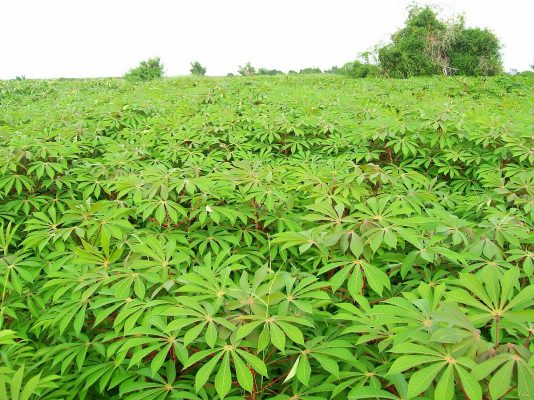
A team from the University of Illinois and Monash University studied how the root crop cassava, which feeds over 1 billion people, will adapt to the amount of carbon dioxide expected by the second half of this century. They grew the crop in an outdoor research facility called SoyFACE that artificially boosts carbon dioxide to understand how increasing levels will impact crops in the coming decades.

This study is the result of a partnership between two international research projects that are supported by the Bill & Melinda Gates Foundation. Cassava Source-Sink is focused on improving the yield of cassava; Realizing Increased Photosynthetic Efficiency (RIPE) is improving photosynthesis to boost crop yields with support from the Gates Foundation, Foundation for Food and Agriculture Research, and U.K. Foreign, Commonwealth & Development Office.

In the Journal of Experimental Botany, they reported significant yield increases ranging from 22 to 39 percent in seven out of eight varieties of cassava. Each cultivar selected for the study is ‘farmer preferred’ in Africa, where cassava makes up a quarter or more of diets in several countries. Counter to past studies on other crops, they found no decrease in protein quality nor nitrogen content in the leaves, which are consumed by humans and livestock in addition to the starchy tubers.

“We wanted to know how cassava copes with elevated carbon dioxide,” said RIPE Deputy Director Donald Ort, Robert Emerson Professor of Crop Sciences and Plant Biology at Illinois’ Carl R. Woese Institute for Genomic Biology. “Sometimes, plants cannot make use of extra carbohydrates, which then triggers the plant to down-regulate photosynthesis. We found cassava could maintain photosynthetic efficiency and nutritional quality.”

To take in carbon dioxide, plants open tiny pores in their leaves (called stomata) that allow water to exit through transpiration. This study found that when carbon dioxide levels increase from 400 to 600 ppm, cassava leaves could conserve 58 percent more water on average by optimizing stomatal conductance, which is the rate that carbon enters compared to water exiting the leaf.

“Cassava’s natural ability to produce high yields with little water is part of what makes this crop a staple in drought-prone regions across sub-Saharan Africa,” said co-author Amanda De Souza, a postdoctoral researcher for the RIPE project at Illinois. “It is not surprising to see this trait magnified in C3 crops, but it is encouraging since we predict water scarcity to be a major barrier to food security.”

While the team did not find much difference in how well the eight varieties photosynthesized, they discovered differences in their growth and development due to how the plants distributed carbohydrates to their roots, stems, and leaves—which is called partitioning. Cassava plant breeders try to maximize the resources allocated to the roots, referred to as the ‘sink’ where the plant stores carbon.

“We can capitalize on these differences in partitioning to develop cassava varieties that sink more carbon into their roots to boost yields,” said Ursula Ruiz Vera, a postdoctoral researcher for both projects, who led the study at Illinois. “We aim to enhance the natural resilience and productivity of this crop that is uniquely situated to help smallholder farmers withstand pressures from our changing climate.”

RIPE and CASS, and their sponsors, are committed to ensuring Global Access and making these projects’ technologies available to the farmers who need them the most.

Realizing Increased Photosynthetic Efficiency (RIPE) aims to improve photosynthesis and equip farmers worldwide with higher-yielding crops to ensure everyone has enough food to lead a healthy, productive life. RIPE is sponsored by the Bill & Melinda Gates Foundation, the U.S. Foundation for Food and Agriculture Research, and the U.K. Foreign, Commonwealth & Development Office.

Cassava Source-Sink (CASS) is an international effort to improve the yield of cassava to support smallholder farmers in sub-Saharan Africa. The CASS project is supported by the Bill & Melinda Gates Foundation.

Used from AlphaGalileo

Agriculture Cassava Gates Foundation Research RIPE SoyFACE University of Illinois
Share. Facebook Twitter Pinterest LinkedIn WhatsApp Reddit Tumblr Email
Editor
  • Website

Related Posts

How Corteva Agriscience is boosting South Africa’s farming system

January 31, 2026

AI-driven project targets climate resilient crops for farmers in Africa

January 31, 2026

Airtel Africa mobile money transactions top $210bn as subscribers hit 52m

January 31, 2026

Leave A Reply Cancel Reply

YASIF,IBM train 15,000 Nigerian youths for green, digital economy

January 31, 2026

How Corteva Agriscience is boosting South Africa’s farming system

January 31, 2026

AI-driven project targets climate resilient crops for farmers in Africa

January 31, 2026

Vice Chancellor urges graduands on digital, media literacy skills 

January 31, 2026
About Us
About Us

ASHENEWS (AsheNewsDaily.com), published by PenPlus Online Media Publishers, is an independent online newspaper. We report development news, especially on Agriculture, Science, Health and Environment as they affect the under-reported rural and urban poor.

We also conduct investigations, especially in the areas of ASHE, as well as other general interests, including corruption, human rights, illicit financial flows, and politics.

Contact Info:
  • 1st floor, Dogon Daji House, No. 5, Maiduguri Road, Sokoto
  • +234(0)7031140009
  • ashenewsdaily@gmail.com
Facebook Twitter Instagram Pinterest
© 2026 All Rights Reserved. ASHENEWS Daily Designed & Managed By DeedsTech

Type above and press Enter to search. Press Esc to cancel.