


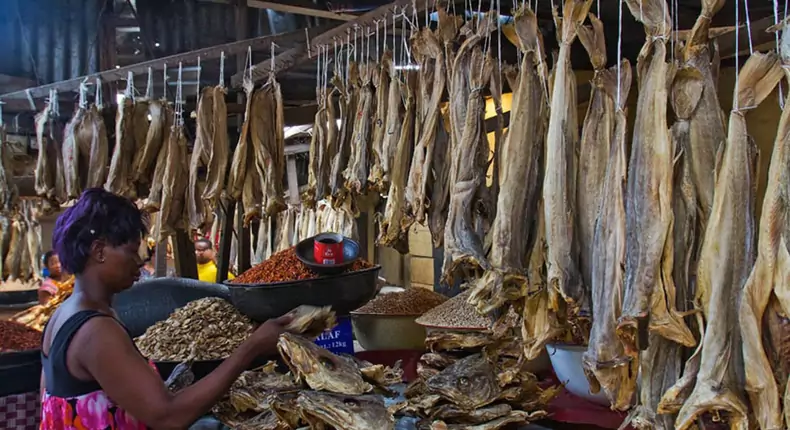
The Norwegian Seafood Council (NSC) has appealed to the Federal Government to include stockfish and its heads in Nigeria’s zero import duties list to make the products more affordable.
The appeal was made during a one-day interactive seminar for stockfish stakeholders and regulatory authorities held on Wednesday in Lagos.
The Royal Norwegian Ambassador to Nigeria, Mr. Svien Baera, said that waiving import duties would help sustain the sector and cushion the impact of the rising cost of stockfish in Nigeria.
Baera explained that the recent reduction in cod quotas — the main fish used for stockfish — was a sustainability measure aimed at protecting global fish stocks. However, he said the quota cut had led to higher prices, affecting both producers and consumers.
“Nigeria is consistently one of the largest importers of Norwegian stockfish in the world. It is an important part of the Nigerian kitchen.
“What started as a trade relationship decades ago has grown into a mutually beneficial partnership — one that goes beyond commerce and represents a story of cultural exchange.
“We therefore respectfully appeal once again for zero import duty on stockfish and stockfish heads to ensure continued accessibility and affordability for Nigerian consumers,” Baera said.
In his keynote address, the Minister of Marine and Blue Economy, Mr. Adegboyega Oyetola, reaffirmed the Federal Government’s commitment to working with the Norwegian Seafood Council to develop Nigeria’s fisheries and aquaculture subsector.
Oyetola, who was represented by Mr. Wellington Omoragbon, Director of Federal Fisheries and Aquaculture, commended the NSC for its annual seminar that brings together stakeholders and promotes dialogue on seafood trade and regulation.
“The Federal Ministry of Marine and Blue Economy recognizes the importance of seafood trade not only as an economic activity but also as a vital source of animal protein and industrial linkage,” he said.
The minister stressed the need to boost local fish production through increased public and private investment in aquaculture and marine fisheries infrastructure.
He added that the ministry was working to streamline seafood import and export processes, reduce administrative bottlenecks, and promote regulatory harmony among relevant agencies.
“We are committed to developing a sustainable, efficient, and inclusive seafood value chain that contributes to national food security, employment generation, and economic growth,” Oyetola added.
Also speaking, the NSC Director for Africa, Mr. Johnny Haaberg, said removing import duties would benefit the entire seafood sector and consumers alike.
“We have raised the issue of zero duties on stockfish imports because Nigerian consumers deserve better access to affordable protein.
“Due to reduced quotas, exporters are selling everything they have, leaving limited quantities available for export,” he said.
The Fisheries Consultant to the NSC, Ms. Abbey Cheke, said Norway plans to train more Nigerian fish farmers and government officers on sustainability and trade documentation to boost local export opportunities.
“Nigeria’s fish exports are often hindered by issues of documentation, sustainability, and quality assurance.
“We are working to complement previous training programmes and are again appealing to the Federal Government to place stockfish heads on the zero import duty list, just like other staple foods,” she said.
