


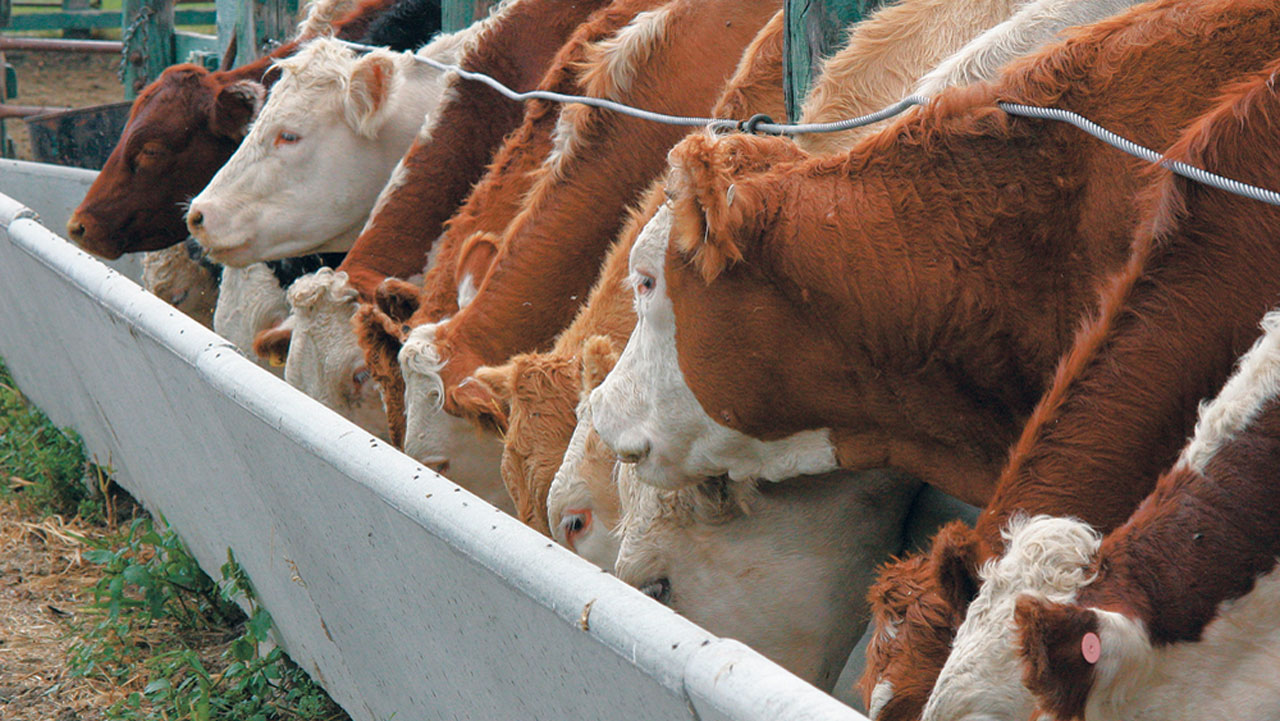
The Mi-Yetti Allah Cattle Breeders Association of Nigeria (MACBAN) has called for adequate budgetary allocation to boost the livestock economy.
The National President of the association, Baba Ngelzarma, made this appeal in an interview with on Sunday in Abuja.
Ngelzarma said it was disturbing that the nation spent more than 1.7 billion dollars annually on milk importation due to poor attention given to the livestock sub-sector.
He said that there was no budgetary allocation for livestock while agronomy always gained priority attention annually in terms of robust budget.
“The livestock sector has not and never received the needed attention from the government; the only support we have gotten is vaccination of cow.
“The aspect of livestock production, marketing, transportation, processing among others is left in the hands of the pastoralists; the entire value chain of cattle is not harnessed by the government.
“Nigeria has the largest population of livestock compared with neighbouring countries; yet we produce lesser milk due to neglect of the sector.’’
He said that if the sector was accorded due attention, the nation would be the hub of milk exportation as well as other value chain in livestock.
Ngelzarma said that cattle business in the country at the moment was doing the little it could to stimulate the economy.
He said that when given the deserved attention, it would contribute immensely to the agricultural Gross Domestic Product (GDP).
On the state of livestock sector in the country, Ngelzarma frowned at the poor attention given to the sector by the government.
He said that it was not right that every attention was channeled towards the agronomy sector while issues regarding livestock were left unattended to year in year out.
The MACBAN president called on the government to give due attention to livestock subsector of the economy to boost the nation foreign income.
“If the sector is well harnessed, it can unlock a lot of employment opportunities in the country considering its huge investment, foreign exchange among others.’’
Speaking on ranching, Ngelzarma said it would be difficult to practice ranching in the country.
According to him, such model is alien to pastoralists in the country since it is borrowed from foreigners.
He said the model could not suit the peculiarities of pastoralists in the country who were primitive adding that they still roamed about while seeking for pasture.
He explained a number of the pastoralists in the country were not educated adding that between 70 per cent and 80 per cent were smallholder farmers that could not afford ranching because it was capital intensive.
According to him, they are nomadic farmers that are used to open grazing system, and lack training on modernization.
Ngelzarma said for ranching to succeed in the country there was need for adequate funding.
He recommended a model that suited the peculiarities of the pastoralists such as transforming the grazing reserves into community ranching.
The MACBAN president suggested that the entire ranching should be fenced in order to prevent the pastoralists from straying out of the vicinity while in their traditional settings.
He further said such model would involve the development of grazing reserves, provision of accommodation and training of the pastoralists to propagate pasture within and create a sense of ownership in them.
According to him, this will ensure a sustained maintenance while facilities such as veterinary clinics, milk processing centres and markets can be provided within the reserve.
“All pastoralists in the reserve will be registered to know the capacity of such reserve and every local government across the nation will be encouraged to have one or more community ranches to accommodate pastoralists living within their domain.
‘’This will make it easier for every state and local governments to know the number of pastoralists living within their domain for effective supervision.
‘’It will also enhance revenue generation from pastoralists, Livestock registration and other value chain benefits.
“The ranching concept that was introduced under the Livestock Transformation Plan is not one that will solve the problem.
“We need a model that can suit the peculiarities of the pastoralists that we have.
“This is because we have pastoralists’ society that is not educated. We need a simpler model that can suit their peculiarities.
“These pastoralists are doing cattle business as a business and as a way of life, and most of them are smallholder farmers who have not more than 20 or 30 cows in their herds; this is their only source of livelihood,’’ he said.
Meanwhile, Livestock traders at livestock markets in the FCT have expressed concern over poor patronage.
A cattle dealer and an official at the Mararaba Livestock Dealers Market in Karu Local Government Area, Alhaji Yunusa Idris, said that the poor patronage was due to the removal of petrol subsidy policy.
He said the level of patronage was low compared to 2022 when sales were high due to high demands.
Idris said that a big cow cost between N450,000 and N550,000 as against N250,000 and N300,000 while a Medium -sized cow formerly sold at N85,000 and N120,000 cost between N150,000 and N250,000.
He said the prices of ram had equally increased significantly in the FCT.
“Before now, small-sized rams were sold between N60, 000 and N100, 000 each while medium-sized rams were sold within the range of N120, 000 and N180, 000 each.
“The big-sized rams were sold at the range of N200, 000 and N300, 000 each,’’ he said.
Idris also attributed the high cost of transportation of the animals from Yobe to Abuja as being responsible for the increment in the prices as compared to the previous year.
According to him, transporting the livestock from either Kano or Kano to Abuja is between N500, 0000, and N1million as against N600, 000.
Idris also said that hike in animal feeds also caused the increase in the prices of rams and cows.
On his part, Shehu Danlami, a trader at the Mararaba Livestock Market, who said that the level of patronage was low compared to 2022, attributed it to the economic situation in the country.
“As you can see, patronage is low; we have few customers now; the market is not as vibrant as it used to be,” he said.
A butcher at the Mararaba abattoir, Aliyu Maigudi, said that butchers in 2022 could slaughter up to a 100 cows a day as against 50 slaughtered currently.
“Customers are few now; we used to have high patronage that is sometimes overwhelming; but now, the market is not as active as before due to low patronage,” he said.
A buyer, Mallam Inuwa Hassan, who complained about the hike in livestock, said that the price of ram had also skyrocketed.
He said the smallest ram was now sold for N100, 000 as against N70,000 in N2022, while bigger ones sometimes sold for as high as N250,000 as against N140,000 to N160,000 in 2022.
The traders called on the government to address some of the challenges bedeviling the business which included issue of insecurity, bad road network, and epileptic power supply among others in the livestock development.
NAN reports that Livestock sub-sector accounts for more than 40 per cent of the global agricultural GDP and provides more than 33 per cent of the World’s protein intake.
In another development, some Stakeholders in the Livestock value chain have lamented that the astronomical rise in the prices of Livestock in the country was negatively affecting their business.
A meat seller, Mrs. Florence Smith frowned at the low turnout of buyers which she said was invariably jeopardizing their economic lives.
“Last month, I paid for 15 cows at the rate of N350, 000 to N400, 000 each and goats 30 goats at the rate of N35, 000 and N40, 000 each depending on the size but this week the prices have changed between N400,0000 and N550,000 for the same cow.
“A lot of times when you come to the market to buy meat, you just have to buy what you can afford; not because that is really what you wanted, but because of the prices of this animals have really gone high,’’ she said.
Mrs. Roseline Sunday, a buyer, said the increase in price of Livestock was affecting their as prices of meat changed arbitrarily.
More so, Alhaji Shehu Berger, Chairman Miyetti Allah, Dei Dei branch, said the high cost of transportation was responsible for the increase in the price of cattle.
“The amount we pay for transportation to bring in the cattle is very high because of the issue of bad roads and the increase in fuel and diesel.’’
According to him, most times, because of the bad roads, the truck load may breakdown for days leading to death of some of the animals.
“We are appealing to the Federal Government to please rehabilitate the roads to help reduce prices of livestock as the festive season was fast approaching,’’ he said.
