


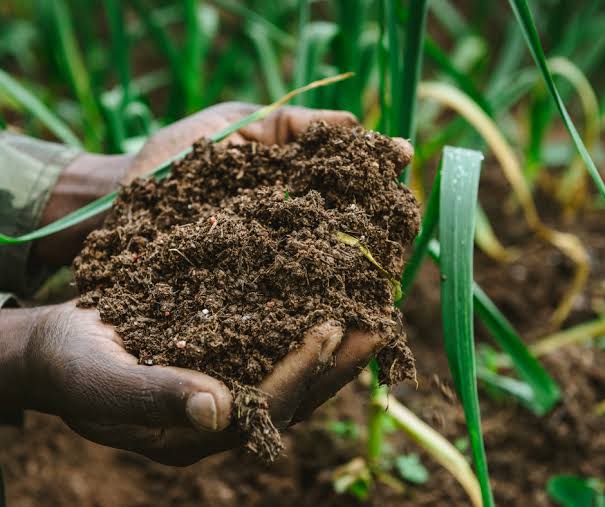
A professor of Nematology at the National Open University of Nigeria (NOUN), Monioluwa Omolara Olaniyi, has shed light on a hidden world beneath the soil. She explained how tiny plant-parasitic nematodes silently attack crop roots, weaken plants, and make them vulnerable to diseases.
Olaniyi, who lectures in the Department of Biological Sciences, made this known on Thursday during NOUN’s 36th inaugural lecture in Abuja. Her lecture was titled: “Managing Plant Worm Adversaries: Safeguarding the Environment, Sustaining Our Daily Bread.”
She described nematodes as serious enemies of farmers. These worms reduce crop yields, stunt plant growth, and lower farmers’ incomes, especially in staple foods that millions of Nigerians rely on.
The former Deputy Vice-Chancellor for Technology, Innovation and Research at NOUN explained that nematode damage often goes unnoticed. Their effects are sometimes mistaken for poor soil nutrients or drought stress, while in reality, the worms are destroying vegetables, cereals, tubers, and legumes.
Olaniyi traced her academic journey and decades of research on plant-parasitic worms. She linked her work to the United Nations Sustainable Development Goals (SDGs), especially Goal 2 (Zero Hunger), Goal 13 (Climate Action), and Goal 15 (Life on Land).
She said her research helps in the fight against hunger and in building sustainable farming systems. Climate change, poor seed hygiene, and repeated planting of the same crop worsen nematode problems by allowing them to survive and spread from season to season.
The professor stressed that the first step to solving the problem is correct diagnosis and farm hygiene. She advised farmers to adopt eco-friendly methods that work with nature rather than relying only on chemical pesticides.
Olaniyi shared her ongoing research on biological control and other sustainable methods that protect both farmers’ incomes and the environment. She also pointed out that NOUN has invested in facilities to ensure its students get hands-on scientific training, even as an Open and Distance Learning institution.
She spoke passionately about the importance of mentoring young scientists. According to her, guiding postgraduate and early-career researchers has been one of the most rewarding parts of her career.
Looking ahead, she said her future research will focus on innovation, collaboration across disciplines, and blending indigenous knowledge with modern science to improve nematode management.
In her closing words, she thanked NOUN, her family, mentors, and colleagues, and pledged to continue contributing to food security in Nigeria and beyond.
Earlier, the Vice-Chancellor of NOUN, Prof. Olufemi Peters, described inaugural lectures as vital to the university’s intellectual life. He praised Olaniyi’s groundbreaking work in nematology, noting its importance to food security, sustainable agriculture, and the pursuit of the UN’s SDGs.
Peters said her work bridges laboratory findings with real-life farming challenges. He also reaffirmed NOUN’s commitment to research, outreach, and policies that strengthen science-driven agriculture.
A vote of thanks was delivered by Prof. Godwin Akper, Vice-Chancellor (TIR), who expressed appreciation to Olaniyi, the university community, and all attendees for making the lecture a success.
