


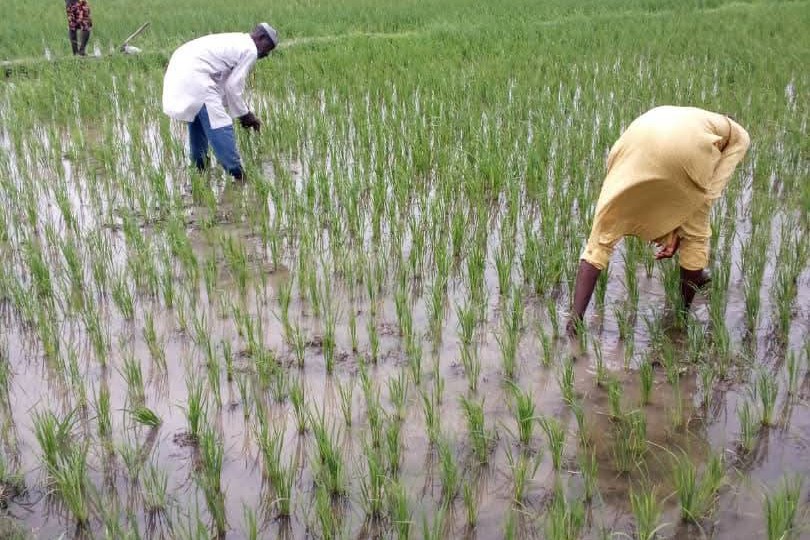
The National Cereals Research Institute (NCRI), Badeggi, is intensifying efforts to revolutionize rice production in Nigeria by promoting zinc-enriched FARO 71 rice through strategic community engagement and out-grower collaborations.
In a recent inspection tour of key rice-growing communities in Batagi and Sosa, NCRI’s Executive Director, Dr. Mohammed Ndagi Ishaq, reaffirmed the institute’s commitment to farmer-led innovation and sustainable agricultural transformation. He was accompanied by leading experts, including rice breeder Dr. Muhammad Liman and extension specialist Dr. Habib N. Abubakar.
The field visit was more than just oversight—it marked a pivotal step in rallying local farmers around the concept of farmland aggregation. This approach encourages cooperative farming practices, enabling rural communities to play a central role in NCRI’s seed multiplication agenda.
Under this model, farmers receive certified zinc-enriched seed varieties, technical training, and direct market access through a structured buy-back system that guarantees fair post-harvest pricing. The initiative aims not only to increase yields but to improve nutritional outcomes by promoting zinc-fortified rice, a key intervention in the fight against micronutrient deficiency.
“This is about more than just seeds,” said Dr. Ishaq. “It’s about empowering communities, improving nutrition, and ensuring that innovation reaches the grassroots.”
The zinc rice project underscores NCRI’s vision of a farmer-inclusive research ecosystem—where science is not confined to laboratories but is applied in the fields and shaped by those who till the land.
As Nigeria looks to bolster food security and agricultural resilience, the fortified FARO 71 rice, developed and promoted by NCRI, may well become a cornerstone of the nation’s nutritional strategy—cultivated not just with science, but with the hands and hopes of rural farmers.
