


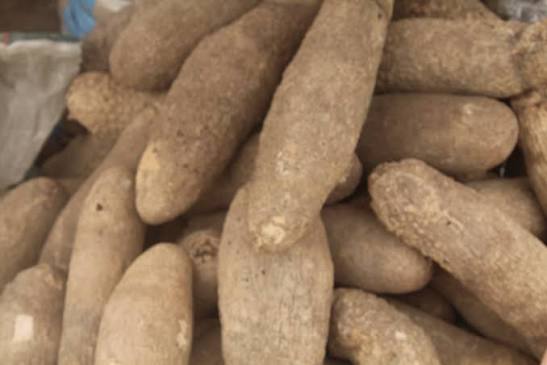
Some Lagos residents have raised the alarm over the increasing occurrence of discoloured yam, popularly known as “chocolate yam”, questioning the quality of the produce.
The residents lamented the quality of yams currently being sold in separate interviews with reporters on Sunday in Lagos.
They noted that the discolouration of the yams, which is discovered only after cutting them open, “causes us financial losses as the produce becomes inedible.”
Ms Divine-Favour Johnson, a resident of the Festac area of the state, expressed her dissatisfaction after discovering that she had purchased discoloured yams.
Johnson said she only discovered the problem after making the purchase, particularly after saving money to buy the product.
“You don’t understand the pain that comes with chocolate yam. Consumers suffer financial losses and lose their appetite.
“Imagine buying yam with your own money after you have saved to buy it. You then cut the yam open and discover that it is chocolate inside, like a spoilt yam.
“I don’t really know what causes it. Maybe the yam has stayed in the warehouse too long or something like that. It could be from either the people who sell them or the farmers,” Johnson said.
She also urged consumers to buy fresh yam when it is brought to the market, while urging sellers to reduce the use of substances for preserving the tubers.
On his part, Mr Samuel Arowojolu, a diesel operator in Oshodi, said he had experienced yam discolouration several times, adding that the problem appeared to be becoming more common.
He said consumers could hardly identify affected yams before purchasing them because they could not cut the tubers open at the point of purchase, adding that he usually discovered the discolouration only after slicing the yams.
“If you should go to a market where they sell yam, out of five different places you might try to purchase from, you might get two that will bring out discolouration,” he said.
Arowojolu said the development could result in financial losses for consumers who might have purchased another yam after discovering that the one bought was affected.
On the possible cause, Arowojolu said he believed the problem could be associated with different yam varieties and the use of fertilisers, although he could not establish the exact cause.
He suggested that farmers should consider using natural manure rather than relying on fertilisers to speed up the growth of yams.
Arowojolu, however, said he continued to consume the affected yams, noting that he had not experienced any health problems that he could attribute to eating them.
It was reported that at some yam markets across the state, traders displayed different sizes and varieties of yams, while some consumers inspected the tubers carefully before making their purchases.
A trader and supplier of the produce at Okerube Bus Stop, Ikotun, Mrs Aminat Omotolani, said consumers who were not familiar with yam varieties might find it difficult to distinguish between them.
Omotolani, who has been in the yam business for fifteen years, said she sourced yam from different states across Nigeria in search of good quality tubers.
She mentioned such places as Abuja, Oyo, Ilorin, Edo and Kwara, and supplied it mainly to people in the community who were unable to travel to these locations themselves.
Omotolani said the increasing prevalence of discoloured yam could be linked to its relatively lower price compared with the non-discoloured variety.
She also noted that the non-discoloured yam, which she identified as “efuru yam”, was usually more expensive, making the coloured variety a cheaper option for some consumers.
Omotolani said the taste of the coloured yam was different from that of the other varieties.
She also said, based on her understanding, the coloured yam was not harmful to the body.
Also, a yam trader at Ilogbo Mosque, Oyingbo, Iya Islamiat, said she did not sell discoloured yam, adding that she dealt mainly in white yam.
Islamiat, who said she had been in the yam business for 25 years, said some hawkers, whom she referred to as “mallams”, were mostly responsible for selling the coloured yam.
The trader said she sourced her yam directly from Ado-Ekiti and Kwara, describing the sources as reliable.
Islamiat said the prices of yam at her stall ranged from N1,500 to N2,000 depending on the size.
