

• Home
  • Agric
  • Sci & Tech
  • Health
  • Environment
  • Hausa News
  • More
    • Business/Banking & Finance
    • POLITICS
    • Entertainments & Sports
    • International
    • Investigation
    • Law & Human Rights
    • Africa
    • ACCOUNTABILITY/CORRUPTION
    • Hassan Gimba
    • Column
    • Prof. Jibrin Ibrahim
    • Prof. M.K. Othman
    • Defense/Security
    • Education
    • Energy/Electricity
    • Entertainment/Arts & Sports
    • Society and Lifestyle
    • Food & Agriculture
    • Health & Healthy Living
    • International News
    • Interviews
    • Investigation/Fact-Check
    • LAW & HUMAN RIGHTS
    • Oil & Gas/Mineral Resources
    • PRESS FREEDOM/JOURNALISM/PR
    • General News
    • Presidency
  • About Us
    • Contact Us
    • Board Of Advisory
    • Privacy Policy
    • Ethics Policy
    • Teamwork And Collaboration Policy
    • Fact-Checking Policy
    • Advertising
  • Media OutReach Newswire
    • Wire News
  • The Stories
Facebook Twitter Instagram
Trending
  • Who gets to participate? Zauro and the architecture of economic citizenship, by Mohammed M. Haruna, PhD, mnipr
  • PTA calls for upward review of teachers’ salaries
  • FG expands funding, local production to improve cancer care
  • Gov Otti warns Abia farmers to register for input support
  • AFAN in Ogun dismisses impostors parading as executives
  • BOA launches 2026 wet season input distribution in Katsina
  • NMC dismisses claims of Nigeria’s IMO observer status
  • Association urges Nigerians on proper waste management
Facebook Twitter Instagram YouTube
AsheNewsAsheNews
  • Home
  • Agric

    Gov Otti warns Abia farmers to register for input support

    July 11, 2026

    AFAN in Ogun dismisses impostors parading as executives

    July 11, 2026

    BOA launches 2026 wet season input distribution in Katsina

    July 11, 2026

    From scarcity to scale: What Africa can learn from India’s agricultural transformation, by Alice Ruhweza and Dr Purvi Mehta

    July 10, 2026

    Experts recommend local alternatives to cut poultry feed costs

    July 10, 2026
  • Sci & Tech

    Nigeria’s food service industry hits $11.09bn in 2025 – Moniepoint

    July 10, 2026

    Academy of medical sciences condemns maternal mortality, epidemic risks

    July 9, 2026

    NCC advances transparent pricing for fibre sharing

    July 8, 2026

    IHVN, partners launch Lassa fever research to support vaccine development in Bauchi

    July 8, 2026

    Meta rolls out first in-house AI image generator across WhatsApp, Instagram, Facebook

    July 8, 2026
  • Health

    FG expands funding, local production to improve cancer care

    July 11, 2026

    Niger targets 100 Level-2 PHCs by year-end

    July 11, 2026

    Psychiatrist urges Nigerians to prioritise brain health

    July 10, 2026

    Niger govt intensifies monitoring of PHC upgrades to level II

    July 10, 2026

    Zamfara approves 6 month maternity leave for female civil servants

    July 10, 2026
  • Environment

    NMC dismisses claims of Nigeria’s IMO observer status

    July 11, 2026

    Association urges Nigerians on proper waste management

    July 11, 2026

    NSE kicks off 2026 national engineering games

    July 11, 2026

    Young innovators rewarded millions for plastic waste solutions

    July 10, 2026

    AKK gas pipeline 95% complete, on track for commissioning

    July 10, 2026
  • Hausa News

    UNA signs MoU to launch air Bissau in Guinea-Bissau

    June 15, 2026

    Otti plans 250-room 5-star hotel in Umuahia

    April 11, 2026

    Anti-quackery task force seals 4 fake hospitals in Rivers

    August 29, 2025

    [BIDIYO] Yadda na lashe gasa ta duniya a fannin Ingilishi – Rukayya ‘yar shekara 17

    August 6, 2025

    A Saka Baki, A Sasanta Saɓani Tsakanin ‘Yanjarida Da Liman, Daga Muhammad Sajo

    May 21, 2025
  • More
    1. Business/Banking & Finance
    2. POLITICS
    3. Entertainments & Sports
    4. International
    5. Investigation
    6. Law & Human Rights
    7. Africa
    8. ACCOUNTABILITY/CORRUPTION
    9. Hassan Gimba
    10. Column
    11. Prof. Jibrin Ibrahim
    12. Prof. M.K. Othman
    13. Defense/Security
    14. Education
    15. Energy/Electricity
    16. Entertainment/Arts & Sports
    17. Society and Lifestyle
    18. Food & Agriculture
    19. Health & Healthy Living
    20. International News
    21. Interviews
    22. Investigation/Fact-Check
    23. LAW & HUMAN RIGHTS
    24. Oil & Gas/Mineral Resources
    25. PRESS FREEDOM/JOURNALISM/PR
    26. General News
    27. Presidency
    Featured
    Recent

    Who gets to participate? Zauro and the architecture of economic citizenship, by Mohammed M. Haruna, PhD, mnipr

    July 11, 2026

    PTA calls for upward review of teachers’ salaries

    July 11, 2026

    FG expands funding, local production to improve cancer care

    July 11, 2026
  • About Us
    1. Contact Us
    2. Board Of Advisory
    3. Privacy Policy
    4. Ethics Policy
    5. Teamwork And Collaboration Policy
    6. Fact-Checking Policy
    7. Advertising
    Featured
    Recent

    Who gets to participate? Zauro and the architecture of economic citizenship, by Mohammed M. Haruna, PhD, mnipr

    July 11, 2026

    PTA calls for upward review of teachers’ salaries

    July 11, 2026

    FG expands funding, local production to improve cancer care

    July 11, 2026
  • Media OutReach Newswire
    • Wire News
  • The Stories
AsheNewsAsheNews
Home»Food & Agriculture»ICRISAT releases Eastern and Southern Africa’s first biofortified pearl millet
Food & Agriculture

ICRISAT releases Eastern and Southern Africa’s first biofortified pearl millet

NewsdeskBy NewsdeskDecember 23, 2025Updated:December 23, 2025No Comments4 Mins Read
Maize1
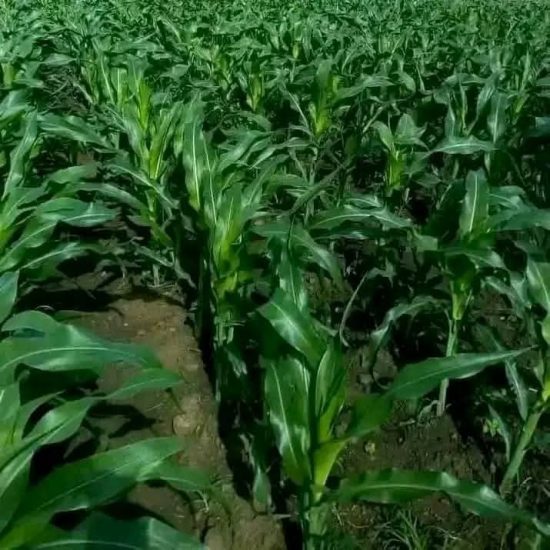
A maize farm
Share
Facebook Twitter LinkedIn Pinterest Email

The International Crops Research Institute for the Semi-Arid Tropics (ICRISAT) has released two new pearl millet varieties—Iniadi Composite 1501 and ICMP 177003—the first biofortified millet in Eastern and Southern Africa with naturally high iron and zinc, a milestone expected to significantly transform nutrition and agriculture in Zimbabwe and the wider region.

The release marks a major step forward in addressing malnutrition, strengthening food security, and improving climate resilience for millions of smallholder farmers who depend on millet as a staple crop.

Pearl millet is widely grown in arid and semi-arid areas due to its ability to withstand harsh climatic conditions, making it a critical food source in regions increasingly affected by climate change.

The new varieties are the product of several years of scientific breeding and rigorous evaluation. They combine high micronutrient density with strong grain yields, drought tolerance, and adaptability to semi-arid environments.

This dual advantage of enhanced nutrition and agronomic performance positions the varieties as a practical solution for both health and livelihood challenges facing farming communities.

Their release was supported under the Grow Further–funded initiative titled Improving Food, Nutritional and Income Security of Smallholder Farmers in Zimbabwe’s Arid and Semi-Arid Lands through High-Yielding Iron-Dense Pearl Millet Varieties. The initiative aims to ensure that scientific innovations translate into tangible benefits for farmers and consumers.

ICRISAT Director General Dr Himanshu Pathak described the development as a critical step in tackling widespread micronutrient deficiencies. He noted that biofortification is one of the most effective ways science can improve everyday nutrition.

According to Dr Pathak, the iron- and zinc-rich pearl millet varieties offer a sustainable solution to hidden hunger by helping reduce anaemia, strengthen immunity, and improve the health of women and children. By making nutrient-dense crops accessible to vulnerable communities, the release helps close a major gap in food and nutrition security.

Micronutrient deficiencies remain prevalent in many rural areas, disproportionately affecting children, women, and low-income households. Iron and zinc are essential for cognitive development, immune function, and maternal health.

The new biofortified millet varieties provide a natural and sustainable approach to improving nutrient intake through daily diets, without requiring supplements or changes in eating habits.

Beyond nutrition, the varieties offer important agronomic and environmental benefits. They are derived from the hardy Iniadi genetic background, which is well known for its drought tolerance, high grain quality, and stability under harsh conditions.

This makes them particularly suitable for Zimbabwe’s drylands, where climate change has intensified water stress and reduced agricultural productivity.

ICRISAT Global Research Program Director and Director for Africa, Dr Rebbie Harawa, emphasized the broader regional significance of the release. She said the milestone demonstrates the value of collaborative research that is directly aligned with farmer needs.

According to Dr Harawa, the varieties will help strengthen food systems, improve household incomes, and provide families with healthier food choices, while contributing to climate-resilient agriculture across Africa’s drylands.

As high-yielding crops, Iniadi Composite 1501 and ICMP 177003 also hold strong economic potential. They create opportunities for income generation, particularly for women and youth who play a significant role in millet production and value addition.

To support wide adoption, the Grow Further project is investing in seed system development, farmer training, and market development.

The project focuses on four key areas: strengthening seed systems to ensure reliable access to certified seed across Zimbabwe’s drylands; nutrition education to help households understand and utilize biofortified crops; training in climate-smart agriculture to boost productivity and resilience; and supporting markets for nutrient-dense grains and value-added products.

ICRISAT pearl millet breeder Dr Henry Ojulong described the release as a message of hope for farming communities. He said the varieties represent hope for mothers seeking nutritious food for their children, for farmers facing climate challenges, and for communities striving for better livelihoods.

The release of Iniadi Composite 1501 and ICMP 177003 marks a significant milestone in Zimbabwe’s agricultural transformation agenda.

As the first biofortified pearl millet varieties in Eastern and Southern Africa, they pave the way for wider regional adoption, improved nutrition outcomes, and farming systems strengthened through science and innovation.

ICRISAT
Share. Facebook Twitter Pinterest LinkedIn WhatsApp Reddit Tumblr Email
Newsdesk
  • Website

Related Posts

Gov Otti warns Abia farmers to register for input support

July 11, 2026

AFAN in Ogun dismisses impostors parading as executives

July 11, 2026

BOA launches 2026 wet season input distribution in Katsina

July 11, 2026

Leave A Reply Cancel Reply

Who gets to participate? Zauro and the architecture of economic citizenship, by Mohammed M. Haruna, PhD, mnipr

July 11, 2026

PTA calls for upward review of teachers’ salaries

July 11, 2026

FG expands funding, local production to improve cancer care

July 11, 2026

Gov Otti warns Abia farmers to register for input support

July 11, 2026
About Us
About Us

ASHENEWS (AsheNewsDaily.com), published by PenPlus Online Media Publishers, is an independent online newspaper. We report development news, especially on Agriculture, Science, Health and Environment as they affect the under-reported rural and urban poor.

We also conduct investigations, especially in the areas of ASHE, as well as other general interests, including corruption, human rights, illicit financial flows, and politics.

Contact Info:
  • 1st floor, Dogon Daji House, No. 5, Maiduguri Road, Sokoto
  • +234(0)7031140009
  • ashenewsdaily@gmail.com
Facebook Twitter Instagram Pinterest
© 2026 All Rights Reserved. ASHENEWS Daily Designed & Managed By DeedsTech

Type above and press Enter to search. Press Esc to cancel.