


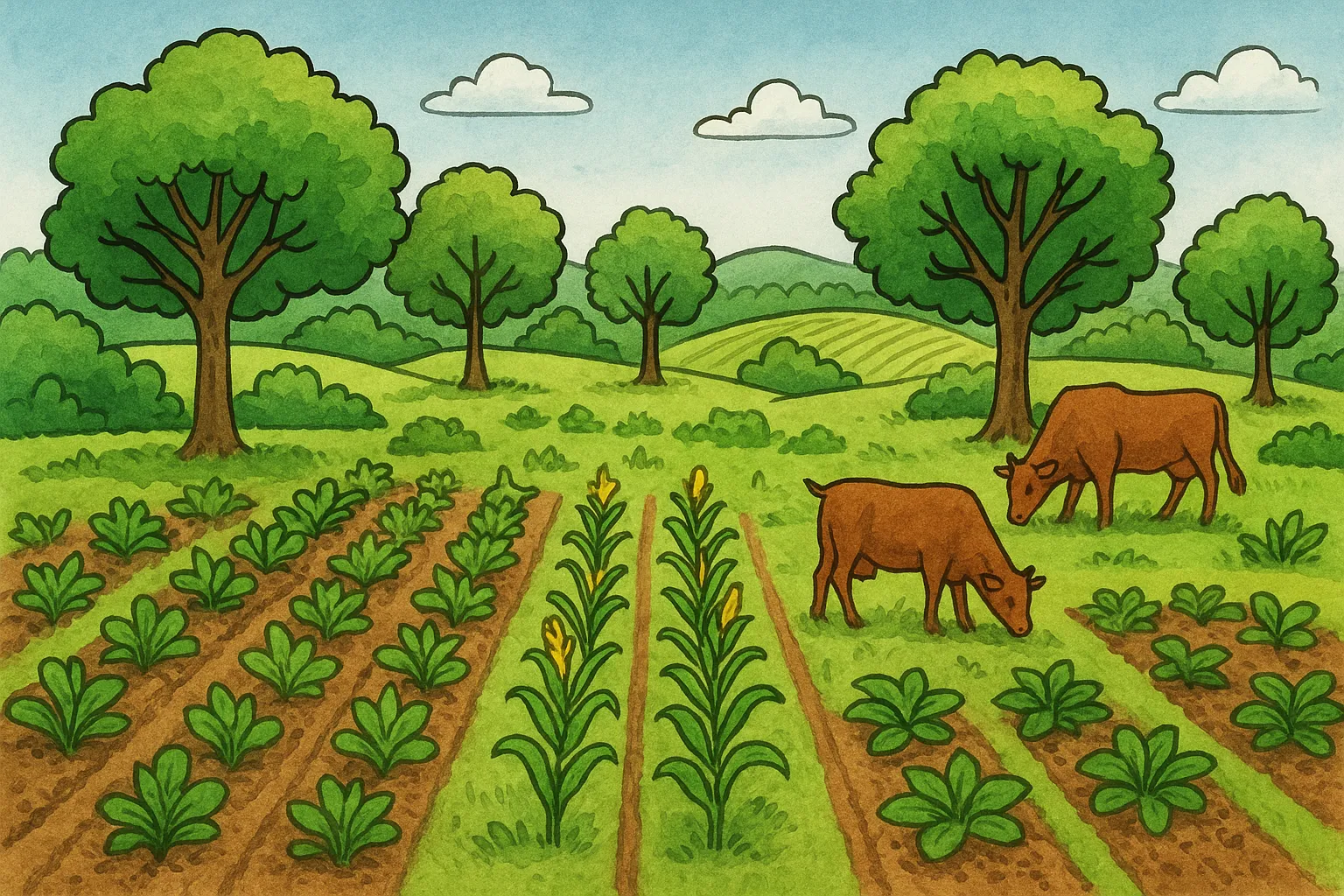
Agroforestry is a land-use practice that combines trees and shrubs with crops, livestock, or both, on the same land in a way that creates ecological and economic interactions between them. It aims to improve land productivity and sustainability by diversifying and integrating components like trees for fruit, fodder, or nitrogen fixation with agricultural activities.
This approach offers environmental benefits such as soil conservation and water quality improvement, alongside socio-economic advantages like increased income and enhanced food security for farmers.
Forest restoration and #agroforestry projects are being implemented by communities across the world to restore landscapes, sustain food systems, boost agricultural outputs, and improve #soilquality and microbial #soilbiodiversity. Agroforestry could be the largest single contribution the agricultural sector can make toward mitigating climate change.
These community-driven initiatives, taking place in many parts of the planet, may be the most effective way to protect the natural world by restoring forests and halting #deforestation. Current estimates suggest that 10 million hectares of forests are lost globally each year.
An agroforestry system combines trees with crops in an agricultural model where each plant species is selected for a specific purpose, balancing short-term and long-term goals. Some species are chosen to produce #organicmatter, improving #soilfertility and health. Fast-growing tree species are harvested to provide farmers with steady short-term income. Slow-growing species, such as hardwood trees, generate long-term income, forming a type of pension or savings plan for the farmer’s future.
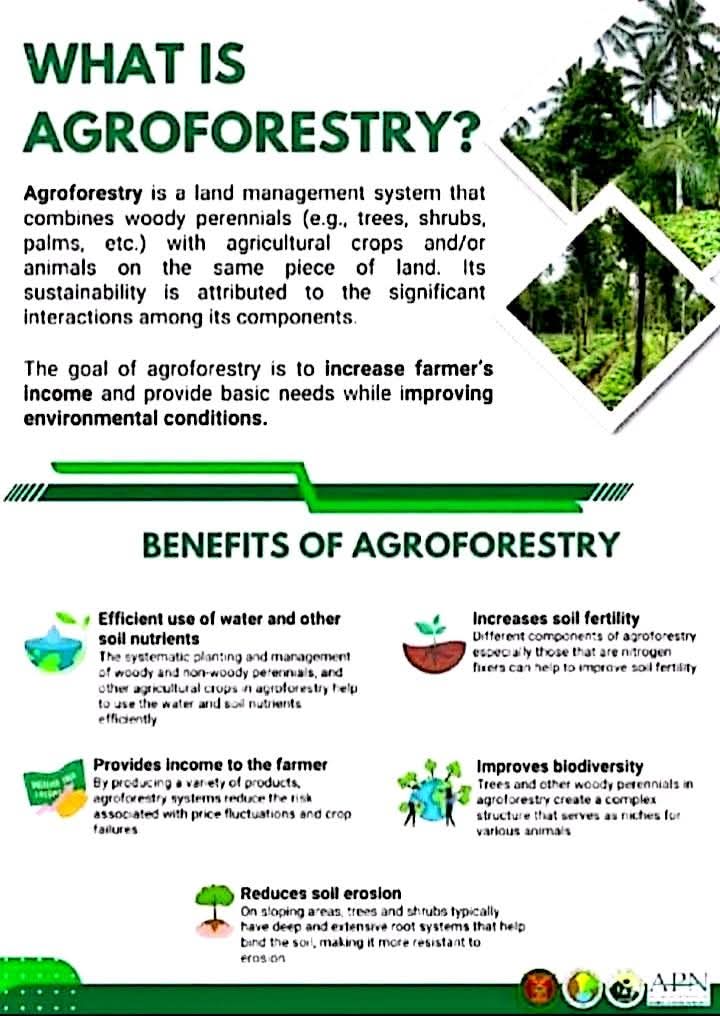
This diversification widens the scope of financial earnings, increases economic security, and ensures that income is not dependent on a single crop. Additionally, planting trees enhances the #climateresilience of production systems against extreme weather events caused by climate change.
Local communities maintain the closest connection to the unique #biodiversity and #ecosystems within their regions. Healthy economies cannot exist without a healthy environment, and the impacts of an unhealthy natural world—exacerbated by #climatechange—are most deeply felt by those whose livelihoods depend directly on nature. While no single solution exists for the #climatecrisis, all available methods must be employed to reduce #greenhousegasemissions and restore the planet’s soils to health.
Employing nature-based solutions effectively can serve as a low-cost strategy for both #climateadaptation and #climatemitigation. These projects help rebuild global ecosystems in sustainable and resilient ways. Conservation initiatives also provide financial incentives for communities whose livelihoods depend on healthy ecosystems, thereby helping to end poverty and hunger across the world.
The regeneration of ecosystems brings multiple benefits: improved soil quality and #soilhealth for more productive and resilient agriculture; sustained #waterquality in local aquifers; natural flood defence mechanisms; and maintenance of forests and soils as effective carbon sinks. Furthermore, restored ecosystems can generate alternative livelihoods such as #ecotourism, reinforcing the link between environmental health and economic prosperity.
Source: Sustainability
