


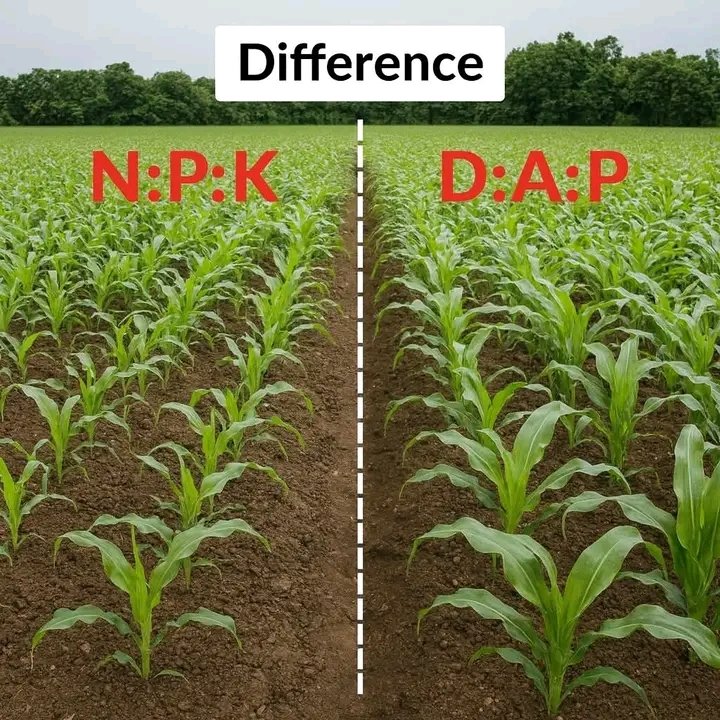
Recently, I came across a striking comparison between maize plots treated with DAP and those fertilised with NPK. The difference in early plant vigour was hard to ignore. That visual contrast pushed me to dig deeper into the science behind these two commonly used fertilizers—and why they perform differently in the field.
DAP: Powering early root development
Diammonium Phosphate (DAP), with its 18-46-0 composition, is exceptionally high in phosphorus. This matters because phosphorus is the engine of early plant growth. It fuels:
- Root meristem activity
- Energy transfer through ATP
- The formation of strong, deep root systems
With well-developed roots, young crops can absorb water and nutrients more efficiently. The result is a healthier, more uniform stand that gets a head start—something farmers often notice within the first few weeks after planting.
NPK: Balanced feeding for later stages
NPK fertilizers deliver a blend of three essential nutrients:
- Nitrogen (N): Drives leafy, vegetative growth
- Phosphorus (P): Supports energy transfer and root function
- Potassium (K): Enhances stress tolerance, disease resistance, and grain filling
This balanced feeding is most effective once the root system is already established. If early phosphorus is limited—as can happen when NPK is used at planting—crops may show delayed or uneven emergence compared to those started with DAP.
Why DAP gives young plants an edge
Beyond its high phosphorus content, DAP releases both ammonium and phosphate ions, improving nutrient availability in the soil. It also temporarily adjusts the root-zone pH, allowing seedlings to access nutrients more easily.
This combination gives young plants a crucial early advantage—one that often translates into stronger performance throughout the growing season.
Key takeaway for farmers
- Start with DAP at planting
It establishes a robust root base and supports early vigour. - Switch to NPK as the crop develops
During vegetative and reproductive stages, NPK provides the balanced nutrition needed for sustained growth, stress resistance, and yield formation.
Smart farming isn’t just about applying fertilizer—it’s about understanding the science beneath the soil and choosing the right input at the right time.
Source: Agriculture Insider @Agriculfuture
