

• Home
  • Agric
  • Sci & Tech
  • Health
  • Environment
  • Hausa News
  • More
    • Business/Banking & Finance
    • Politics/Elections
    • Entertainments & Sports
    • International
    • Investigation
    • Law & Human Rights
    • Africa
    • ACCOUNTABILITY/CORRUPTION
    • Hassan Gimba
    • Column
    • Prof. Jibrin Ibrahim
    • Prof. M.K. Othman
    • Defense/Security
    • Education
    • Energy/Electricity
    • Entertainment/Arts & Sports
    • Society and Lifestyle
    • Food & Agriculture
    • Health & Healthy Living
    • International News
    • Interviews
    • Investigation/Fact-Check
    • Judiciary/Legislature/Law & Human Rights
    • Oil & Gas/Mineral Resources
    • Press Freedom/Media/PR/Journalism
    • General News
    • Presidency
  • About Us
    • Contact Us
    • Board Of Advisory
    • Privacy Policy
    • Ethics Policy
    • Teamwork And Collaboration Policy
    • Fact-Checking Policy
    • Advertising
  • Media OutReach Newswire
    • Wire News
  • The Stories
Facebook Twitter Instagram
Trending
  • Singer Nanyah dies of snake bite at her home
  • Indonesia lifts ban on Elon Musk’s Grok  
  • Wema Bank launches ‘Evolution of Love’ campaign for Valentine’s Day
  • Army renovates 91-year-old primary school in Sokoto 
  • SERAP sues NNPCL over missing oil funds
  • Lagos govt airlifts 200 pilgrims to Israel, Jordan
  • Lawmaker plans free healthcare for 10,000 constituents
  • Iran, beware the fangs of January, the scourge of February, the ides of March [II], by Hassan Gimba
Facebook Twitter Instagram YouTube
AsheNewsAsheNews
  • Home
  • Agric

    How Corteva Agriscience is boosting South Africa’s farming system

    January 31, 2026

    AI-driven project targets climate resilient crops for farmers in Africa

    January 31, 2026

    FG empowers 40 cooperatives with farm inputs in Yobe

    January 30, 2026

    Katsina to host 3,750 housing units, aquaculture project financed by COSMOS

    January 30, 2026

    ActionAid empowers 12,000 FCT farmers with agroecology skills

    January 30, 2026
  • Sci & Tech

    Indonesia lifts ban on Elon Musk’s Grok  

    February 1, 2026

    Expert urges federal govt to tackle multiple taxation in telecoms sector

    January 31, 2026

    Airtel Africa mobile money transactions top $210bn as subscribers hit 52m

    January 31, 2026

    Nigeria, KOICA partner to drive digital transformation in public service

    January 30, 2026

    NDPC leads Abuja roadshow to promote data protection awareness

    January 30, 2026
  • Health

    Lawmaker plans free healthcare for 10,000 constituents

    February 1, 2026

    Anambra seeks LG chairmen’s support for measles–rubella vaccination campaign

    January 31, 2026

    Kaduna eliminates Trachoma as public health threat

    January 31, 2026

    Kogi records milestone in fight against NTDs, halts treatment for Lymphatic filariasis

    January 31, 2026

    Bauchi introduces nutrition supplement to tackle child undernutrition

    January 31, 2026
  • Environment

    Abia govt approves new climate change policy, prioritises disability inclusion

    January 31, 2026

    LAWMA arrests cart pushers for illegal dumping on Lagos–Badagry expressway

    January 31, 2026

    YASIF, IBM train 15,000 Nigerian youths for green, digital economy

    January 31, 2026

    Kukah urges religious leaders to speak out against environmental exploitation

    January 31, 2026

    LASEMA holds retreat to honor responders, boost emergency preparedness

    January 31, 2026
  • Hausa News

    Anti-quackery task force seals 4 fake hospitals in Rivers

    August 29, 2025

    [BIDIYO] Yadda na lashe gasa ta duniya a fannin Ingilishi – Rukayya ‘yar shekara 17

    August 6, 2025

    A Saka Baki, A Sasanta Saɓani Tsakanin ‘Yanjarida Da Liman, Daga Muhammad Sajo

    May 21, 2025

    Dan majalisa ya raba kayan miliyoyi a Funtuwa da Dandume

    March 18, 2025

    [VIDIYO] Fassarar mafalki akan aikin Hajji

    January 6, 2025
  • More
    1. Business/Banking & Finance
    2. Politics/Elections
    3. Entertainments & Sports
    4. International
    5. Investigation
    6. Law & Human Rights
    7. Africa
    8. ACCOUNTABILITY/CORRUPTION
    9. Hassan Gimba
    10. Column
    11. Prof. Jibrin Ibrahim
    12. Prof. M.K. Othman
    13. Defense/Security
    14. Education
    15. Energy/Electricity
    16. Entertainment/Arts & Sports
    17. Society and Lifestyle
    18. Food & Agriculture
    19. Health & Healthy Living
    20. International News
    21. Interviews
    22. Investigation/Fact-Check
    23. Judiciary/Legislature/Law & Human Rights
    24. Oil & Gas/Mineral Resources
    25. Press Freedom/Media/PR/Journalism
    26. General News
    27. Presidency
    Featured
    Recent

    Singer Nanyah dies of snake bite at her home

    February 1, 2026

    Indonesia lifts ban on Elon Musk’s Grok  

    February 1, 2026

    Wema Bank launches ‘Evolution of Love’ campaign for Valentine’s Day

    February 1, 2026
  • About Us
    1. Contact Us
    2. Board Of Advisory
    3. Privacy Policy
    4. Ethics Policy
    5. Teamwork And Collaboration Policy
    6. Fact-Checking Policy
    7. Advertising
    Featured
    Recent

    Singer Nanyah dies of snake bite at her home

    February 1, 2026

    Indonesia lifts ban on Elon Musk’s Grok  

    February 1, 2026

    Wema Bank launches ‘Evolution of Love’ campaign for Valentine’s Day

    February 1, 2026
  • Media OutReach Newswire
    • Wire News
  • The Stories
AsheNewsAsheNews
Home»Environment/Climate Change»[VIEWPOINT] The drought is here, and only technology, foresight, and policy will save us, by Nelson Maina
Environment/Climate Change

[VIEWPOINT] The drought is here, and only technology, foresight, and policy will save us, by Nelson Maina

EditorBy EditorDecember 17, 2025Updated:December 17, 2025No Comments5 Mins Read
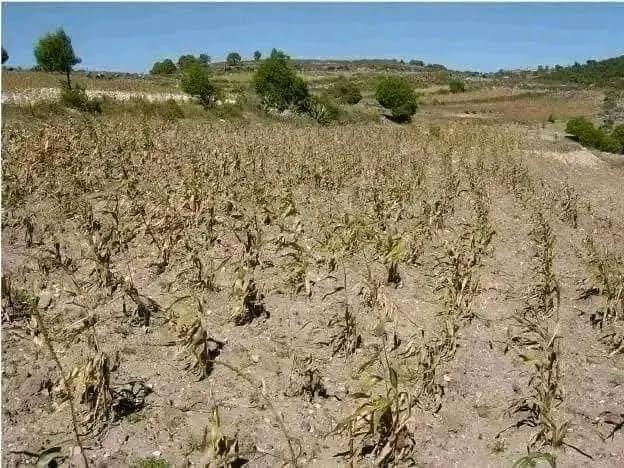
A farmland affected by the drought.
Share
Facebook Twitter LinkedIn Pinterest Email

Kenya is walking—quietly and dangerously—into one of the most severe agricultural crises in recent memory. Recently, the Government flagged 22 counties as hard-hit by the deepening drought. What is emerging on the ground is nothing short of heartbreaking: carcasses of livestock strewn across empty plains, soils cracking under a merciless sun, and fields of maize and beans curling into brittle husks.

Even counties long considered part of Kenya’s traditional food basket—Meru, Embu, Trans Nzoia, Uasin Gishu, Bungoma and Nakuru—are reporting failures that would once have been unimaginable. If these regions, the backbone of the country’s food systems, are faltering, then the implications are far more serious than many are willing to admit.

Just weeks ago, millions of farmers planted in hope. They ploughed their land, procured seed, bought fertilizer, paid labourers and prepared their fields for what the Kenya Meteorological Department repeatedly described as enhanced short rains. But the sky refused to cooperate. The rains came late, stopped early, or failed to appear entirely. Today, fields that should be thriving with food are instead brown and lifeless. The tea sector, the country’s most important agricultural export, is also suffering. The season that ordinarily opens with heavy flushes has instead begun with depressed yields, guaranteeing reduced earnings for farmers and for the nation.

ALSO READ Rwanda: Farmers in eastern province turn to climate-smart methods to beat drought

A bad farming year is always a bad economic year for Kenya, and this year is shaping up to be particularly painful. The agricultural supply chain is already in distress. Agro-dealers and distributors—who stocked their shelves in anticipation of normal planting—are now watching their inventory gather dust. With no crops to fertilize, no weeds to spray, and no harvests to support, their losses will soon become visible. When agricultural seasons collapse, so too does every link in the value chain. Transporters, processors, exporters and retailers are all beginning to feel the shockwaves. Consumers, too, are fearing increased prices as shortages bite.

Yet even in this bleak moment, innovation offers a path forward. Elgon Kenya has, for years, invested in preparing farmers for the inevitability of rainfall failure. The company has worked across the country to expand the use of climate-resilient tools—from irrigation systems, dam liners, to greenhouse solutions. Its partnerships with drone-technology companies are enabling farmers to detect crop stress, pests and nutrient deficiencies long before the human eye can see them. These tools do more than solve problems; they anticipate them. In a climate where the rains can no longer be trusted, such technologies are becoming essential safeguards for farmers’ livelihoods.

The Meteorological Department has now warned that no significant rains are expected until March next year. Yet this same institution has, season after season, forecast rains that failed to materialize. Farmers trusted the forecasts and paid for that trust with total crop loss. Kenya urgently needs a weather service that is modern, accurate and localized—one that farmers, counties and investors can rely on. Weather forecasting is not a luxury; it is a prerequisite for national planning.

But not all crises are about rain. Even in good years, Kenya loses vast amounts of produce to poor storage and a lack of processing facilities. Post-harvest technologies are becoming as important as irrigation. Cold storage for vegetables, fruits and potatoes, along with modern silos and value-addition plants for a wide range of produce, must become part of the national food-security conversation. Kenya will also have to rebuild and expand its strategic food reserves, ensuring the country can withstand at least four consecutive rainless seasons—because climate variability is no longer an exception but the norm.

Beyond technology and storage, Kenya must return to the basics of environmental stewardship. Rainwater harvesting should become standard in every household, institution and county. Wetlands, our natural water banks, must be protected and restored. Forests must be rehabilitated, and tree planting must evolve from a ceremonial exercise into an enforceable national practice. Every farm should be encouraged—if not required—to set aside a portion of its land for trees to help improve microclimates, reduce runoff and restore local water cycles. Without trees, there is no water; without water, there is no agriculture; without agriculture, there is no Kenya.

This drought may not have been predictable in timing, but it was predictable in inevitability. Rainfall patterns have shifted, yet our systems remain anchored to assumptions from another era. Kenya cannot continue planting based on hope, harvesting disappointment and repeating the same cycle each season. The tools to build resilience already exist; the expertise exists; and the innovators are ready. What the country needs now is the political will to convert knowledge into action.

If Kenya is to avoid a future defined by recurring hunger, rising food prices and widespread loss of livelihoods, then rainwater harvesting, irrigation, accurate weather forecasting, post-harvest management and environmental restoration must become national priorities. No farmer, no supply chain and no household should remain at the mercy of uncertain clouds. The time for speeches has passed. What Kenya needs now is decisive action that matches the scale of the crisis before us.

Nelson Maina is the Communications Manager at Elgon Kenya

Drought Kenya Nelson Maina
Share. Facebook Twitter Pinterest LinkedIn WhatsApp Reddit Tumblr Email
Editor
  • Website

Related Posts

Abia govt approves new climate change policy, prioritises disability inclusion

January 31, 2026

LAWMA arrests cart pushers for illegal dumping on Lagos–Badagry expressway

January 31, 2026

YASIF, IBM train 15,000 Nigerian youths for green, digital economy

January 31, 2026

Leave A Reply Cancel Reply

Singer Nanyah dies of snake bite at her home

February 1, 2026

Indonesia lifts ban on Elon Musk’s Grok  

February 1, 2026

Wema Bank launches ‘Evolution of Love’ campaign for Valentine’s Day

February 1, 2026

Army renovates 91-year-old primary school in Sokoto 

February 1, 2026
About Us
About Us

ASHENEWS (AsheNewsDaily.com), published by PenPlus Online Media Publishers, is an independent online newspaper. We report development news, especially on Agriculture, Science, Health and Environment as they affect the under-reported rural and urban poor.

We also conduct investigations, especially in the areas of ASHE, as well as other general interests, including corruption, human rights, illicit financial flows, and politics.

Contact Info:
  • 1st floor, Dogon Daji House, No. 5, Maiduguri Road, Sokoto
  • +234(0)7031140009
  • ashenewsdaily@gmail.com
Facebook Twitter Instagram Pinterest
© 2026 All Rights Reserved. ASHENEWS Daily Designed & Managed By DeedsTech

Type above and press Enter to search. Press Esc to cancel.