

• Home
  • Agric
  • Sci & Tech
  • Health
  • Environment
  • Hausa News
  • More
    • Business/Banking & Finance
    • POLITICS
    • Entertainments & Sports
    • International
    • Investigation
    • Law & Human Rights
    • Africa
    • ACCOUNTABILITY/CORRUPTION
    • Hassan Gimba
    • Column
    • Prof. Jibrin Ibrahim
    • Prof. M.K. Othman
    • Defense/Security
    • Education
    • Energy/Electricity
    • Entertainment/Arts & Sports
    • Society and Lifestyle
    • Food & Agriculture
    • Health & Healthy Living
    • International News
    • Interviews
    • Investigation/Fact-Check
    • LAW & HUMAN RIGHTS
    • Oil & Gas/Mineral Resources
    • PRESS FREEDOM/JOURNALISM/PR
    • General News
    • Presidency
  • About Us
    • Contact Us
    • Board Of Advisory
    • Privacy Policy
    • Ethics Policy
    • Teamwork And Collaboration Policy
    • Fact-Checking Policy
    • Advertising
  • Media OutReach Newswire
    • Wire News
  • The Stories
Facebook Twitter Instagram
Trending
  • NCAA suspends no pay, no service enforcement on airlines
  • Sokoto ADC adopts Atiku for 2027 presidential race
  • Catholic chaplaincy donates food to banditry victims in Wukari
  • MTN hosts EPL watch party in Ibadan
  • NECA: Right to strike subject to National laws
  • NALPGAM raises alarm over cooking gas shortage, price hike
  • Yari donates 500 cows to APC members in Zamfara
  • NEMA receives 329 stranded Nigerians from Niger
Facebook Twitter Instagram YouTube
AsheNewsAsheNews
  • Home
  • Agric

    Rotary e-club plants mangroves in Ibeju-Lekki

    May 23, 2026

    Nonye Soludo distributes 5,000 seed packs for home gardens

    May 22, 2026

    FG, NDDC distribute support to 630 beneficiaries in Cross River

    May 21, 2026

    Olam Agri unveils Mama’s choice wheat flour, Mama’s pride semolina

    May 20, 2026

    Association secures N1.6bn support for onion farmers

    May 20, 2026
  • Sci & Tech

    MTN hosts EPL watch party in Ibadan

    May 24, 2026

    GovGuide Nigeria: AI Chatbot launched to improve access to govt services

    May 22, 2026

    Meta: Platforms contribute $820m annually to Nigeria’s economy

    May 21, 2026

    Hyperscalers bypassing Nigeria over high costs, outdated rules

    May 21, 2026

    Africa faces “year of reckoning” in 2026 as climate, food and health pressures converge — Report

    May 21, 2026
  • Health

    NCDC heightens Ebola preparedness Nationwide

    May 24, 2026

    HGSGH Fistula centre repairs over 2,000 cases since 1999

    May 23, 2026

    Two countries, one injury: Care for women with obstetric fistula in Nigeria, Somalia

    May 22, 2026

    Edo calls for stronger PHC sensitisation, monitoring

    May 22, 2026

    Nigeria: 2.1m women now accessing antenatal care

    May 22, 2026
  • Environment

    NCAA suspends no pay, no service enforcement on airlines

    May 25, 2026

    Association holds climate rally in Lagos

    May 24, 2026

    Association urges Africa-wide cultural mobility framework

    May 24, 2026

    Nigeria calls for stronger ECOWAS border cooperation

    May 22, 2026

    Lagos records 28,000 trucks on Lekki-Epe system

    May 22, 2026
  • Hausa News

    Otti plans 250-room 5-star hotel in Umuahia

    April 11, 2026

    Anti-quackery task force seals 4 fake hospitals in Rivers

    August 29, 2025

    [BIDIYO] Yadda na lashe gasa ta duniya a fannin Ingilishi – Rukayya ‘yar shekara 17

    August 6, 2025

    A Saka Baki, A Sasanta Saɓani Tsakanin ‘Yanjarida Da Liman, Daga Muhammad Sajo

    May 21, 2025

    Dan majalisa ya raba kayan miliyoyi a Funtuwa da Dandume

    March 18, 2025
  • More
    1. Business/Banking & Finance
    2. POLITICS
    3. Entertainments & Sports
    4. International
    5. Investigation
    6. Law & Human Rights
    7. Africa
    8. ACCOUNTABILITY/CORRUPTION
    9. Hassan Gimba
    10. Column
    11. Prof. Jibrin Ibrahim
    12. Prof. M.K. Othman
    13. Defense/Security
    14. Education
    15. Energy/Electricity
    16. Entertainment/Arts & Sports
    17. Society and Lifestyle
    18. Food & Agriculture
    19. Health & Healthy Living
    20. International News
    21. Interviews
    22. Investigation/Fact-Check
    23. LAW & HUMAN RIGHTS
    24. Oil & Gas/Mineral Resources
    25. PRESS FREEDOM/JOURNALISM/PR
    26. General News
    27. Presidency
    Featured
    Recent

    NCAA suspends no pay, no service enforcement on airlines

    May 25, 2026

    Sokoto ADC adopts Atiku for 2027 presidential race

    May 25, 2026

    Catholic chaplaincy donates food to banditry victims in Wukari

    May 25, 2026
  • About Us
    1. Contact Us
    2. Board Of Advisory
    3. Privacy Policy
    4. Ethics Policy
    5. Teamwork And Collaboration Policy
    6. Fact-Checking Policy
    7. Advertising
    Featured
    Recent

    NCAA suspends no pay, no service enforcement on airlines

    May 25, 2026

    Sokoto ADC adopts Atiku for 2027 presidential race

    May 25, 2026

    Catholic chaplaincy donates food to banditry victims in Wukari

    May 25, 2026
  • Media OutReach Newswire
    • Wire News
  • The Stories
AsheNewsAsheNews
Home»Environment/Climate Change»New study reveals how forest giants handle light and heat
Environment/Climate Change

New study reveals how forest giants handle light and heat

Abdallah el-KurebeBy Abdallah el-KurebeAugust 25, 2025Updated:August 25, 2025No Comments4 Mins Read
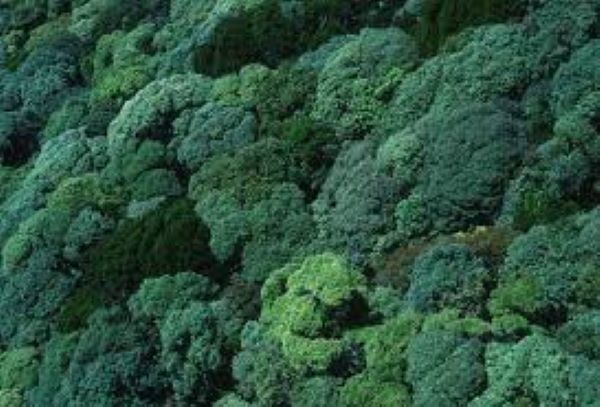
Amazon rainforest canopy trees
Share
Facebook Twitter LinkedIn Pinterest Email

In a recent study published in New Phytologist, researchers at Michigan State University have uncovered how Amazon rainforest canopy trees manage the intense sunlight they absorb — revealing resilience to hot and dry conditions in the forest canopy while also offering a way to greatly improve the monitoring of canopy health under increasing extreme conditions. The study was made possible by funding from the National Science Foundation and NASA.

Highlights of the study

  • Scientists use satellite images of light given off by plants — called solar-induced fluorescence, or SIF — to check how healthy the Amazon forest is. SIF is often used to estimate how much photosynthesis is happening. But this study shows that SIF may not be a reliable predictor of photosynthesis functionality. When the climate is stressful, like during a drought, leaves might still glow more even though their ability to photosynthesize is diminished. This could lead scientists to think the forest is doing better than it really is.
  • The findings offer a first-of-its-kind, high-resolution look at how the Amazon canopy navigates seasonal extremes.
  • Understanding how trees manage light energy is important worldwide, as the Amazon plays a vital role in global climate regulation, recycling moisture into rainfall and storing vast amounts of carbon. 

The study published by the New Phytologist, led by doctoral candidate Leonardo Ziccardi with Associate Professor Scott Stark in the MSU Department of Forestry, shows how tropical trees act like giant solar antennas — absorbing vast quantities of light energy that must be carefully managed. When trees absorb more energy than they can use for photosynthesis, it must be safely dissipated, either as heat or re-emitted as light — a process called chlorophyll fluorescence.

“It’s been a long journey,” said Ziccardi. “Since 2019, we’ve run multiple field campaigns across seasons, climbing giant trees in the heart of the Amazon to understand how these forests respond to environmental changes. We’ve spent hundreds of hours up in the canopy doing measurements — some of the most intense and rewarding work I’ve ever done.”

Ziccardi spent more than four years climbing trees nearly 200 feet tall in the central Amazon, measuring the fates of absorbed photons in thousands of leaves across many species, canopy heights, and light exposure conditions, producing a truly unique and unprecedented dataset.

Using a revolutionary handheld instrument — the MultispeQ, developed at MSU by co-author David Kramer in the MSU-DOE Plant Research Laboratory — Ziccardi captured how leaves in natural settings balance incoming light with their ability to photosynthesize or dissipate excess energy.

The findings offer a first-of-its-kind, high-resolution look at how the Amazon canopy navigates seasonal extremes. As the Amazon experiences increasing stress, due to both greenhouse gases and deforestation leading to hotter and drier conditions in the canopy, understanding how trees manage light energy is essential to predicting their future survival. Not only does this climate change lead to greater physiological stress due to more frequent extreme conditions related to lower soil water availability and dry, hot air, it also can increase the amount of sunlight hitting the forest. This happens because drier conditions have fewer clouds, which lets more sunlight through. This study helps address whether Amazon trees can absorb and use this extra light under stressful conditions.

Despite facing intense sunlight and atmospheric dryness, many canopy leaves were able to continue photosynthesizing, but only by increasing their allocation to energy dissipation pathways.

For the first time in the Amazon, the study revealed a nuanced, three-phase response of leaves to rising light and drought conditions. Under low to moderate light, leaves balance energy use between photosynthesis and fluorescence, so these processes tend to increase and decrease together. As light and drought stress increase, however, this balance breaks down. Heat-protective dissipation mechanisms become overwhelmed, photosynthesis drops, and fluorescence can spike — signaling potential damage to the photosynthetic machinery.

The implications are critical for scientists using satellite observations of fluorescence — the so-called solar-induced fluorescence, or SIF — to monitor Amazon forest health. While SIF is often used as a proxy for photosynthesis, this study shows that photosynthesis and fluorescence do not always go up and down together. Under high light and stress, this relationship breaks down, and leaves may fluoresce more even as their photosynthetic machinery declines, potentially leading to overestimates of ecosystem productivity during droughts.

Amazon rainforest canopy trees MSU NASA National Science Foundation
Share. Facebook Twitter Pinterest LinkedIn WhatsApp Reddit Tumblr Email
Abdallah el-Kurebe
  • Website
  • Facebook
  • Twitter
  • LinkedIn

Related Posts

NCAA suspends no pay, no service enforcement on airlines

May 25, 2026

Association holds climate rally in Lagos

May 24, 2026

Association urges Africa-wide cultural mobility framework

May 24, 2026

Leave A Reply Cancel Reply

NCAA suspends no pay, no service enforcement on airlines

May 25, 2026

Sokoto ADC adopts Atiku for 2027 presidential race

May 25, 2026

Catholic chaplaincy donates food to banditry victims in Wukari

May 25, 2026

MTN hosts EPL watch party in Ibadan

May 24, 2026
About Us
About Us

ASHENEWS (AsheNewsDaily.com), published by PenPlus Online Media Publishers, is an independent online newspaper. We report development news, especially on Agriculture, Science, Health and Environment as they affect the under-reported rural and urban poor.

We also conduct investigations, especially in the areas of ASHE, as well as other general interests, including corruption, human rights, illicit financial flows, and politics.

Contact Info:
  • 1st floor, Dogon Daji House, No. 5, Maiduguri Road, Sokoto
  • +234(0)7031140009
  • ashenewsdaily@gmail.com
Facebook Twitter Instagram Pinterest
© 2026 All Rights Reserved. ASHENEWS Daily Designed & Managed By DeedsTech

Type above and press Enter to search. Press Esc to cancel.