


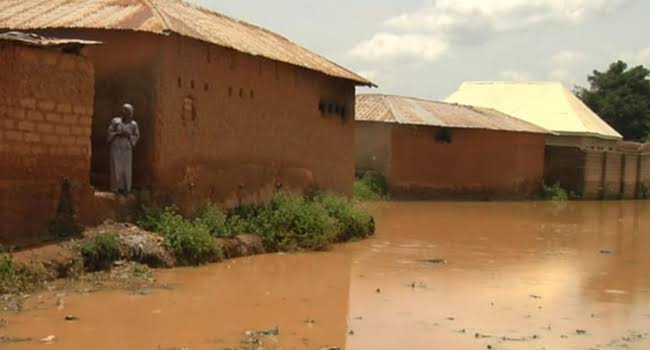
Kaduna State has mobilised emergency agencies, development partners, humanitarian organisations, and grassroots institutions to strengthen flood preparedness following forecasts that placed the state among areas at high risk of flooding during the 2026 rainy season.
The coordinated response, led by the Kaduna State Emergency Management Agency (KADSEMA), combines risk assessment, early warning, public sensitisation, emergency planning, and community-based response to minimise loss of lives and property.
KADSEMA’s Executive Secretary, Mr Usman Mazadu, said the state government had activated the 2026 Flood Emergency Operations and Response Strategic Team as well as the Flood Tactical Response Team to coordinate preparedness and emergency operations.
He said the agency had commenced statewide flood risk assessment and public enlightenment campaigns, while training members of Local Emergency Management Committees (LEMCs), Community Information Coordinators (CICs), and Community Disaster Managers (CMDs) across the 23 local government areas.
According to him, the initiative is strengthening grassroots early warning systems, disaster reporting, and emergency coordination.
Mazadu identified blocked drainage channels, indiscriminate refuse disposal, construction on waterways, and river overflow as major causes of flooding in many communities.
He added that KADSEMA had strengthened collaboration with Ministries, Departments and Agencies (MDAs), UNICEF, Christian Aid, and other partners to improve disaster preparedness and response.
As part of the intervention, Christian Aid, under its Enhancing Preparedness and Response (E-Prep) Project, sensitised residents of Kigo Road and Rafin Guza in Kaduna North Local Government Area, and Karatudu and Nasarawa in Chikun Local Government Area, on flood prevention and emergency response.
Mr Michael Agbo, Head of Communications at Christian Aid, urged residents to heed weather forecasts, relocate from flood-prone areas when necessary, and support measures aimed at reducing disaster risks.
He also called on the government to halt development on floodplains, dredge rivers, and sustain public awareness campaigns in vulnerable communities.
The National Emergency Management Agency (NEMA) complemented the campaign by taking flood awareness messages to vulnerable communities, churches, and mosques across the state.
The Head of NEMA Operations in Kaduna, Halima Suleiman, said the agency’s 2026 Climate-Related Risk Management, Preparedness and Mitigation Framework provides for emergency responders’ training, simulation exercises, vulnerability mapping, infrastructure assessment, evacuation planning, pre-positioning of relief materials, and grassroots sensitisation.
She urged residents to avoid dumping refuse in drainage channels, stop building on waterways, monitor weather forecasts, and comply with official early warning advisories.
Similarly, NEMA’s Disaster Risk Reduction Unit carried out flood sensitisation during Friday Juma’at prayers at the Sultan Bello Mosque, where worshippers were advised to keep drainages clear, avoid floodplains, and relocate from high-risk areas when necessary.
Mr Yusuf Buto, Senior Hydrologist with the Nigeria Hydrological Services Agency (NIHSA), warned that Kaduna would remain in the high flood-risk category throughout the rainy season. He advised residents, particularly those living along River Kaduna, to relocate from vulnerable communities.
Stakeholders, including the National Orientation Agency (NOA), Nigeria Security and Civil Defence Corps (NSCDC), Nigerian Red Cross Society, Safety Awareness and Environmental Support Initiative (SAISI), UNICEF, and Christian Aid, have aligned with the Kaduna State Government to strengthen flood preparedness through coordinated planning, public education, and early response mechanisms.
