


Sometimes, I wonder if some of these meetings the Nigerian government attends on Climate Change in Dubai, New York, India, South Africa, Brazil, to mention but a few have been able to yield any significant impact on how Nigeria can tackle climate change issues, how it can be of Economic prosperity.
I wonder if these meetings also suggest legislative policies are adopted to manage and cushion the effect of climate change disasters to safeguard the lives and property of the Nigerian citizens.
Let us take a look at some of the Nigerian goverment moves for climate change in 2025;
In April 23, 2025, the Statehouse published a speech titled “President Bola Tinubu to Global Leaders: The Time for Climate Action is Now, Not Tomorrow” at the meeting, co-hosted by United Nations Secretary-General, António Guterres and Brazilian President Luiz Inacia Lula da Silva, aimed to accelerate global climate ambition ahead of COP30.
President Bola Ahmed Tinubu described Nigeria’s Energy Transition Plan (ETP) as an ambitious yet practical strategy aimed at achieving net-zero emissions by 2060. The plan focuses on five key sectors – power, cooking, transport, oil and gas, and industry – and estimates that more than $410 billion in financing will be required by 2060 to meet its objectives.
He explained that the government is working to align regulatory frameworks, fiscal incentives, and institutional structures to ensure that energy access, decarbonization, and economic competitiveness advance together, while also positioning Nigeria as a leader in expanding energy access.
He further reiterated that ‘part of the broader energy reforms architecture for Nigeria is the Nigeria Carbon Market Activation Policy in March 2025. A policy that will unlock up to $2.5 billion by 2030 in high-integrity carbon credits and related investments.
The President disclosed that Nigeria is actively updating its Nationally Determined Contributions (NDCs) in line with the UN Framework Convention on Climate Change (UNFCCC), with plans to present a comprehensive revision by September 2025.
“Our climate strategy is not limited to planning and regulation, it is also rooted in market reform”, Tinubu stated.
In November 29th, 2025, President Bola Tinubu again departed Abuja on Wednesday for Dubai in the United Arab Emirates (UAE) to participate in the COP28 Climate Summit, officially known as the 28th United Nations Climate Change Conference with the aim that the Nigerian delegation will establish new and deeper bilateral partnerships to implement Nigeria’s Energy Transition, Article 6 Projects, Internationally Transferred Mitigation Outcomes (ITMOs), Technology Transfer, Capacity Building, and Methane Mitigation.
In December 18, 2025, The Minister of Environment, Malam Balarabe Lawal, 18th National Council on Environment (NCE) meeting, hosted by the Federal Ministry of Environment in Katsina State speaking through the theme, “Tackling the triple planetary crises of climate change, biodiversity loss, and pollution for sustainable development in Nigeria,” he stressed that rising temperatures, desertification, flooding, pollution, and ecosystem degradation are already undermining livelihoods across the country.
The Minister also pointed that the crises are deeply interlinked and require an integrated, science-driven, and multi-sectoral response.
“This is collectively known as the triple planetary crisis recognised as critical to Nigeria’s sustainable development, economic resilience, and environmental security,” the Minister stated.
Also in a publication released on https://www.environewsnigeria.com on December 19, 2025, the Director General of Nigerian Conservation Foundation (NCF), Dr Joseph Onoja, described COP30 as a turning point in global climate action, marking a shift from years of negotiation to implementation.
He said that the conference saw nations agree to increase and triple climate finance by 2030, to reach $1.3 billion for developing countries by 2035 while reiterating that Nigeria needed a well-curated national database to drive climate planning and strengthen its negotiating position.
Nigerian government budget and plan for climate change in 2025
Nigeria’s 2025 budget places strong emphasis on climate action by leveraging financing tools such as Green Bonds and carbon markets. President Tinubu has outlined ambitions to mobilize billions of dollars in climate funding to support clean energy development, infrastructure expansion, and the achievement of net-zero emissions by 2060.
These efforts are backed by programs like the Energy Transition Plan and the planned activation of the National Carbon Market Framework toward the end of 2025.
While the 2025 budget includes higher allocations for the power sector, particularly for renewable energy and rural electrification, overall climate-related funding depends largely on innovative financial mechanisms and international collaboration rather than a single, substantial budget line item.
What are the climate risks?
Climate risk describes the possible financial, social, or environmental damage resulting from climate change. It includes various threats, ranging from severe weather events to long-term changes in climate conditions.
These risks can emerge in multiple forms, influencing businesses, supply chains, infrastructure, investments, and the broader economy. Recognizing and assessing climate risk is essential for creating effective mitigation measures and strengthening resilience as climate change continues to evolve.
Physical climate risks are the more ‘obvious’ climate-related financial risks. They refer to the economic ramifications of damage to infrastructure, supply chains, and the built environment.
Extreme weather condition: Extreme weather conditions refer to episodes of exceptionally intense weather or climate patterns that can have severe effects on communities, as well as agricultural and natural ecosystems.
Weather-related extreme events are typically short in duration and include phenomena such as heatwaves, cold spells, heavy rainfall, tornadoes, tropical cyclones, and floods. In contrast, climate-related extreme events tend to last longer or result from the cumulative impact of repeated weather or climate occurrences over extended periods.
On May 29, 2025, Mokwa in Niger State, Nigeria experienced one of the most catastrophic flash floods in the nation’s recent history. Triggered by intense overnight rainfall, the flood rapidly overwhelmed local infrastructure.
The human impact was severe: 159 people were confirmed dead, 98 reported missing, and at least 11 hospitalised with various injuries. Approximately 3,018 residents were displaced, many seeking shelter with relatives, friends, or in host communities due to limited emergency housing. Infrastructure damage was extensive.
This disaster highlights the growing threat of extreme weather events linked to climate variability and underscores the urgent need for effective early warning systems, resilient infrastructure, and comprehensive disaster risk reduction strategies in Nigeria.

People look through debris from damaged buildings in the town of Mokwa after torrential rains. Photograph: Tonye Bakare/AFP/Getty Images
According to World Food Programme, in 2025, flooding had reportedly affected over 315,700 people across 25 states, displacing more than 113,000 individuals, and washing away more than 46,000 hectares of farmlands, posing a serious threat to food security and livelihoods in Nigeria.
The Northeast has been hardest hit with around 64,600 people impacted by rising waters. WFP also recorded that this is the second consecutive year of catastrophic flooding in Nigeria.
Between 13 and 14 September 2025, Dikwa Local Government Area (LGA) in Borno State, Nigeria, was hit by severe flooding caused by heavy rainfall, significantly affecting three sites: Alhaji Bashir Camp, Kamcheji Camp, and the Reception Centre.
According to IOM Nigeria Flash Report 169, the floods displaced 5,829 people from 1,058 households, including 3,350 children, 1,364 women, and 1,115 men. In total, 895 shelters were impacted, with 849 completely destroyed and 46 sustaining partial damage.
Between 21 and 26 September 2025, severe flooding caused by heavy rainfall and river overflows affected five local government areas (LGAs) across Jigawa State, including Guri, Kiri Kasamma, Birniwa, Jahun, and Ringim. The incident led to widespread damage to homes, shelters, and community infrastructure across host communities.
Localized flooding, especially flash floods triggered by heavy rainfall, has continued to cause population displacement, loss of livelihood assets, destruction of farmlands, and crop damage. These impacts have worsened challenges in accessing food and income, leading to wider food consumption gaps in some riverine communities nationwide.
In Adamawa State, flash floods in mid-September inundated 13 communities across Yola North and Yola South local government areas, forcing many residents from their homes.
In September 2025, no fewer than five communities in the Ibaji Local Government Area of Kogi State were underwater due to flooding.
The Executive Secretary of the State Emergency Management Agency, Alhaji Mouktar Atima, disclosed that the ‘floods have completely submerged the Ibaji Local Government Area in the state’s eastern senatorial district.

170,000 displaced by floods in Ibaji, Kogi State
In August 2025, The Nigerian Television Authority Released a report on 2025 FLOOD DASHBOARD. The report says 19 states have recorded devastating floods with 119,000 people affected, 165 persons deceased, 82 persons missing, 138 people injured and 43,936 people displaced.
The report also stated that the floods also destroyed or damaged 8,594 homes and 8,278 farmlands across 43 Local Government Areas (LGAs).
The breakdown shows that women and children were the most affected as there were 53,314 children, 36,573 women, 24,600 men, 5,304 elderly persons and 1,863 persons with disabilities.
The hardest-hit states include Imo, Rivers, Abia, Borno, and Kaduna while the affected states are Abia, Adamawa, Akwa Ibom, Anambra, Bayelsa, Borno, Edo, Gombe, Imo, Jigawa, Kaduna, Kano, Kogi, Kwara, Niger, Ondo, Rivers, Sokoto, and the Federal Capital Territory (FCT).

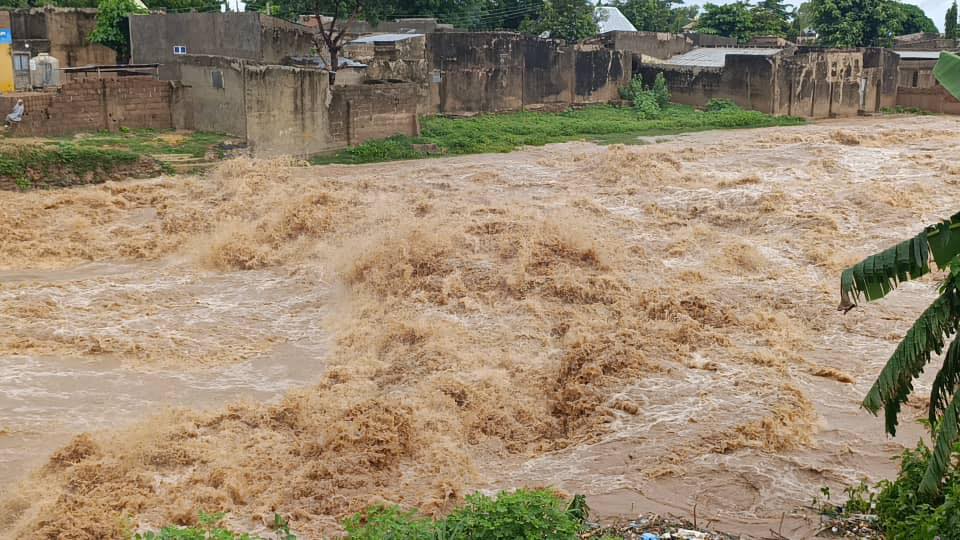
Flood in Nigeria 2025
Food and water insecurity: Growing issues of food and water and insecurity in 2025 appears to be a growing issues as several occurrence poised as major threat to food security some of which was caused by weather condition.
Health crises: In 2025, an estimated 4,930,892 people required health assistance, with the Sector aiming to reach approximately 3,158,720 of them. At-risk populations include children under five years old, pregnant and breastfeeding women, older persons, and individuals with disabilities.
Ongoing challenges with the functionality of health facilities continue to restrict access to vital health services, especially in hard-to-reach areas that face a severe shortage of healthcare personnel.
There is a substantial demand for mental health and psychosocial support services as a result of trauma and stress caused by the crisis. Elevated levels of acute malnutrition, especially among children under the age of five, are largely driven by food insecurity, disasters such as flooding, and the disruption of livelihoods.
 Resident doctors [PHOTO CREDIT: phadamhospital.com]
Biodiversity loss: In 2025, Nigeria experienced serious biodiversity decline caused by deforestation, oil pollution, habitat degradation, illegal wildlife trafficking, and climate change.
Key concerns include widespread forest loss due to development activities, the degradation of aquatic ecosystems (notably in Ogoniland), and local species extinctions driven by demand for wildlife products, including vultures and donkeys.
These pressures are intensified by weak governance, widespread poverty, and rapid population growth, leading the government to renew its commitment to tackling the “triple planetary crisis” of climate change, biodiversity loss, and pollution.
Climate change impacts: Changes in rainfall patterns, increased flooding, and rising temperatures are placing significant strain on livelihoods dependent on agriculture, fisheries, and forestry.
Human–wildlife conflict: Encroachment from farming and logging activities increases encounters with wildlife, undermining conservation efforts and intensifying conflicts.
Sea level rise and coastal flooding: A report by The Cable stated that, in 2025, Nigeria experienced a series of overlapping climate crises, including flash floods that swept through inland market towns and river corridors, ocean surges eroding coastal communities, and heat and drought stress across the north that combined to produce what emergency agencies describe as one of the most complex climate years in recent memory.
In November, NEMA’s flood dashboard recorded 241 deaths, 839 injuries, and 433,578 people affected across 123 LGAs in 27 states. The agency also reported 144,790 displaced individuals, 52,509 houses destroyed or damaged, and 74,767 farmlands affected.
But behind these stark figures lay countless riverine towns and communities, but none was more devastated than Tiffin Maza and Anguwan Hausawa in Mokwa LGA, Niger state.
Also in late July, flash flooding in Yola, the capital of Adamawa state, and surrounding communities displaced approximately 5,560 people. Torrential rainfall swept through low-lying wards, claiming 25 lives and leaving 11 people missing, according to NEMA.
Also, extreme heat was most intense in cities like Kebbi, Jalingo, Yola, Minna, and Makurdi, where temperatures rose as high as 42°C (107.6°F).
Further compounding the crisis, states like Plateau, Kaduna, Niger, Benue, Nasarawa, Taraba, Adamawa, and Kwara faced a delayed onset of rainfall, disrupting the critical planting season.
The combination of extreme heat and prolonged dry spells proved catastrophic for rain-fed agriculture, devastating crop yields and threatening food security.
Farmers in Sokoto reported that once-reliable water bodies, essential for irrigation farming, were visibly withering, forcing them to rely on groundwater pumping, an expensive and unsustainable solution for smallholder farmers. The semi-arid nature of Sokoto and Kebbi, where desertification is a perennial problem, made them acutely vulnerable to water scarcity.
The combined impact of drought and an abbreviated rainy season significantly worsened the national food insecurity outlook.
Coastal surges and erosion: In 2025, coastal surges and erosion posed significant threats to several states along Nigeria’s over 800 km coastline, accelerating long-standing erosion processes already exacerbated by climate change and human activities.
Lagos experienced severe shoreline retreat, threatening communities like Apakin, Okun-Alpha, and Akodo-Ise. The state faced heightened risks from rising sea levels and storm surges, with the cost of environmental degradation extremely high given the concentration of valuable assets along the coast.
Nigeria’s coastal vulnerability to climate change was more pronounced in Ondo state, where the persistent ocean surge in the Ilaje and other coastal LGAs reached crisis levels.
In the fishing community of Ayetoro, recurring sea incursion destroyed homes and infrastructure, putting the settlement at risk of being washed away. In response to the recurring disaster, NEMA implemented a targeted intervention in June, distributing relief materials to the affected communities and issuing urgent warnings about further surge risks and the need for relocation.
Across the Niger Delta, the surge had immediate and devastating economic consequences for artisanal fishermen. Fishing families in Akwa Ibom, Rivers, and Delta states reported massive losses of gear and boats due to the incessant sea surge and erosion.
Recommendations for 2026
Climate change education: By committing sufficient funding to climate change initiatives, it becomes possible to support research and the development of innovative approaches in clean technologies, adaptation strategies, and sustainable practices.
These investments can generate new solutions to climate-related challenges while positioning Nigeria as a leader in sustainable development.
A well-rounded climate change curriculum should be embedded throughout all levels of the education system, from primary to tertiary institutions, alongside broad public awareness campaigns. This curriculum should cover climate science, environmental sustainability, and strategies for climate mitigation and adaptation.
In addition, there should be an emphasis on building partnerships with academic institutions, non-governmental organizations, and the private sector to develop and distribute educational resources, as well as to implement public awareness initiatives that inform citizens about urgent climate challenges and the actions they can take to address them.
By investing in climate change education, Nigeria can equip its citizens with the knowledge and skills needed to tackle urgent environmental challenges while also supporting global efforts to address climate change.
Climate change adaptation: Nigeria must adopt effective strategies to adapt to changing climatic conditions in order to reduce their adverse effects. This includes strengthening the resilience of communities, infrastructure, and ecosystems to existing and emerging vulnerabilities.
Sufficient funding can enable initiatives such as the development of climate-resilient infrastructure, the implementation of proactive disaster preparedness measures, the promotion of sustainable agricultural practices, and the enhancement of early warning systems to address the growing frequency and severity of climate-related disasters.
Renewable energy: It is recommended that the government give priority to investing in the development of renewable energy sources such as solar, wind, and hydropower in order to diversify the energy mix, decrease reliance on fossil fuels, and reduce the associated environmental and economic challenges.
This can be accomplished through the adoption of supportive policies and incentives that encourage private sector investment, the development of strong grid infrastructure to enable the integration of renewable energy, and increased support for research and development in renewable energy technologies.
Waste management: Giving priority to waste management reforms is essential for tackling the country’s waste management challenges. Waste management regulations need to be reinforced, with strict enforcement of compliance.
In addition, building partnerships with the private sector and local communities can support the development of sustainable waste-to-energy projects and recycling programs. These efforts would greatly reduce the environmental and health risks linked to improper waste disposal while also encouraging economic growth and job creation.
Flood and erosion control: There is a need to implement comprehensive erosion control strategies, including sound land-use planning, sustainable forestry practices, and proper infrastructure maintenance, to reduce the severe impacts of erosion.
These efforts should be supported by sustainable urban planning and land-use regulations aimed at preventing soil degradation, as well as investments in resilient infrastructure to shield vulnerable communities from erosion-related damage.
Additionally, investing in research and technology to monitor and forecast erosion-prone areas can enable early intervention, helping to address this critical environmental challenge while safeguarding communities and preserving productive agricultural land.
Climate change in Nigeria presents an urgent and complex challenge that requires swift, coordinated efforts across all sectors.
As climate impacts grow more severe, the nation’s fragile ecosystems, communities, and economy face increasing threats.
Nevertheless, by acknowledging the close links between environmental, social, and economic dimensions, it becomes possible to adopt comprehensive approaches that reduce the effects of climate change while promoting sustainable development.
