


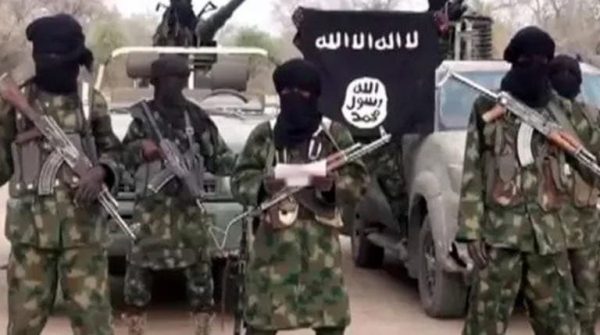
A new terrorism study has confirmed the presence of the Islamic State West Africa Province (ISWAP) in Sokoto State, signalling a significant expansion of the group’s operations beyond Nigeria’s North-East and the Lake Chad Basin.
The study, conducted by James Barnett and Umar Musa and published by the Combating Terrorism Centre, found that Lakurawa militants operating in Sokoto are linked to the Islamic State’s Sahel Province (ISSP), which maintains operational ties with ISWAP.
The findings attracted heightened attention following United States airstrikes early Friday on ISIS-linked targets in Sokoto, a location far removed from ISWAP’s traditional strongholds.
ALSO READ Sokoto govt: Nigeria–US joint airstrike targets terrorists with no civilian casualties
According to the research, ISWAP and its Sahel-based affiliates have embedded themselves in north-western Nigerian communities under the guise of “Lakurawa”—a term commonly used to describe militants crossing into Nigeria from neighbouring Sahelian states.
The study notes that Lakurawa militants have been active in border communities of Sokoto State since late 2017 and gained notoriety after launching a series of deadly attacks on rural settlements late last year.
While Lakurawa has often been portrayed in media and security reports as a standalone militant group, the researchers argue that the label is being deliberately used as cover by multiple jihadist factions seeking to obscure their true affiliations.
The report, titled “Kachallas and Kinship: Understanding Jihadi Expansion and Diffusion in Nigeria,” examines how Nigerian and Sahelian jihadist groups have expanded, relocated, and diffused across different regions over the past five years.
It explains that early members of the Lakurawa sect may initially have been aligned with Jama’a Nusrat ul-Islam wa al-Muslimin (JNIM), al-Qa‘ida’s Sahel affiliate, between 2017 and 2018, before later shifting allegiance to ISSP.
The study further found that ISSP militants operate not only in Sokoto but also in parts of northern Kebbi State, continuing to use Lakurawa as a façade. United Nations experts cited in the report also identified an ISWAP logistics hub in Sokoto, reportedly used to coordinate activities between ISSP and ISWAP.
These findings point to a deeper and more complex jihadist network in Nigeria’s North-West than previously acknowledged, with ISIS-linked groups exploiting local identities and labels to evade detection and enforcement.
By deliberately obscuring whether they belong to ISWAP, ISSP, or JNIM, Lakurawa militants are said to benefit from confusion among local communities and security agencies, thereby strengthening their operational security.
“They do this because the confusion surrounding their identity benefits them,” the study noted.
The research also observes that many violent bandit groups operate in Muslim-majority states—Zamfara, Sokoto, Katsina, and parts of Kaduna, Niger, and Kebbi—making Muslim civilians a significant proportion of both perpetrators and victims of violence.
Taken together, the report underscores growing security risks in North-West Nigeria and raises fresh questions about the evolving geographic reach of ISIS affiliates in the country.
Reacting to the US airstrikes, President Donald Trump said in a post on his Truth Social platform that the operation was executed “as only the United States is capable of doing,” vowing that his country would not allow radical Islamic terrorism to prosper.
The latest strike follows repeated warnings by Trump over alleged religiously motivated violence in Nigeria. In November, he publicly threatened military intervention and directed the US Department of Defense to prepare for potential action.
Nigeria’s Minister of Foreign Affairs, Yusuf Tuggar, later disclosed that the Nigerian government approved and provided intelligence support for the Christmas Day airstrikes carried out by the United States military on terrorist targets in Sokoto State.
His remarks followed confirmation by President Trump that he authorised what he described as a powerful and deadly strike against an ISIS terrorist base in North-West Nigeria.
