

• Home
  • Agric
  • Sci & Tech
  • Health
  • Environment
  • Hausa News
  • More
    • Business/Banking & Finance
    • Politics/Elections
    • Entertainments & Sports
    • International
    • Investigation
    • Law & Human Rights
    • Africa
    • ACCOUNTABILITY/CORRUPTION
    • Hassan Gimba
    • Column
    • Prof. Jibrin Ibrahim
    • Prof. M.K. Othman
    • Defense/Security
    • Education
    • Energy/Electricity
    • Entertainment/Arts & Sports
    • Society and Lifestyle
    • Food & Agriculture
    • Health & Healthy Living
    • International News
    • Interviews
    • Investigation/Fact-Check
    • Judiciary/Legislature/Law & Human Rights
    • Oil & Gas/Mineral Resources
    • Press Freedom/Media/PR/Journalism
    • General News
    • Presidency
  • About Us
    • Contact Us
    • Board Of Advisory
    • Privacy Policy
    • Ethics Policy
    • Teamwork And Collaboration Policy
    • Fact-Checking Policy
    • Advertising
  • Media OutReach Newswire
    • Wire News
  • The Stories
Facebook Twitter Instagram
Trending
  • Anambra seeks LG chairmen’s support for measles–rubella vaccination campaign
  • Librarians’ Council lauds Northwest varsity for establishing well-equipped library, e-library
  • LAWMA arrests cart pushers for illegal dumping on Lagos–Badagry expressway
  • Kaduna eliminates Trachoma as public health threat
  • Expert urges federal govt to tackle multiple taxation in telecoms sector
  • Customs intercepts 10 parcels of narcotics in 29 days 
  • INEC recognises Usman-led leadership
  • YASIF, IBM train 15,000 Nigerian youths for green, digital economy
Facebook Twitter Instagram YouTube
AsheNewsAsheNews
  • Home
  • Agric

    How Corteva Agriscience is boosting South Africa’s farming system

    January 31, 2026

    AI-driven project targets climate resilient crops for farmers in Africa

    January 31, 2026

    FG empowers 40 cooperatives with farm inputs in Yobe

    January 30, 2026

    Katsina to host 3,750 housing units, aquaculture project financed by COSMOS

    January 30, 2026

    ActionAid empowers 12,000 FCT farmers with agroecology skills

    January 30, 2026
  • Sci & Tech

    Expert urges federal govt to tackle multiple taxation in telecoms sector

    January 31, 2026

    Airtel Africa mobile money transactions top $210bn as subscribers hit 52m

    January 31, 2026

    Nigeria, KOICA partner to drive digital transformation in public service

    January 30, 2026

    NDPC leads Abuja roadshow to promote data protection awareness

    January 30, 2026

    NOTAP backs Nigerian developers to $1m sales

    January 29, 2026
  • Health

    Anambra seeks LG chairmen’s support for measles–rubella vaccination campaign

    January 31, 2026

    Kaduna eliminates Trachoma as public health threat

    January 31, 2026

    Kogi records milestone in fight against NTDs, halts treatment for Lymphatic filariasis

    January 31, 2026

    Bauchi introduces nutrition supplement to tackle child undernutrition

    January 31, 2026

    Bus crash En route to Bayelsa deputy gov burial leaves 2 dead

    January 30, 2026
  • Environment

    LAWMA arrests cart pushers for illegal dumping on Lagos–Badagry expressway

    January 31, 2026

    YASIF, IBM train 15,000 Nigerian youths for green, digital economy

    January 31, 2026

    Kukah urges religious leaders to speak out against environmental exploitation

    January 31, 2026

    LASEMA holds retreat to honor responders, boost emergency preparedness

    January 31, 2026

    Minister calls for strengthened collaboration to protect Gashaka-Gumti national park

    January 30, 2026
  • Hausa News

    Anti-quackery task force seals 4 fake hospitals in Rivers

    August 29, 2025

    [BIDIYO] Yadda na lashe gasa ta duniya a fannin Ingilishi – Rukayya ‘yar shekara 17

    August 6, 2025

    A Saka Baki, A Sasanta Saɓani Tsakanin ‘Yanjarida Da Liman, Daga Muhammad Sajo

    May 21, 2025

    Dan majalisa ya raba kayan miliyoyi a Funtuwa da Dandume

    March 18, 2025

    [VIDIYO] Fassarar mafalki akan aikin Hajji

    January 6, 2025
  • More
    1. Business/Banking & Finance
    2. Politics/Elections
    3. Entertainments & Sports
    4. International
    5. Investigation
    6. Law & Human Rights
    7. Africa
    8. ACCOUNTABILITY/CORRUPTION
    9. Hassan Gimba
    10. Column
    11. Prof. Jibrin Ibrahim
    12. Prof. M.K. Othman
    13. Defense/Security
    14. Education
    15. Energy/Electricity
    16. Entertainment/Arts & Sports
    17. Society and Lifestyle
    18. Food & Agriculture
    19. Health & Healthy Living
    20. International News
    21. Interviews
    22. Investigation/Fact-Check
    23. Judiciary/Legislature/Law & Human Rights
    24. Oil & Gas/Mineral Resources
    25. Press Freedom/Media/PR/Journalism
    26. General News
    27. Presidency
    Featured
    Recent

    Anambra seeks LG chairmen’s support for measles–rubella vaccination campaign

    January 31, 2026

    Librarians’ Council lauds Northwest varsity for establishing well-equipped library, e-library

    January 31, 2026

    LAWMA arrests cart pushers for illegal dumping on Lagos–Badagry expressway

    January 31, 2026
  • About Us
    1. Contact Us
    2. Board Of Advisory
    3. Privacy Policy
    4. Ethics Policy
    5. Teamwork And Collaboration Policy
    6. Fact-Checking Policy
    7. Advertising
    Featured
    Recent

    Anambra seeks LG chairmen’s support for measles–rubella vaccination campaign

    January 31, 2026

    Librarians’ Council lauds Northwest varsity for establishing well-equipped library, e-library

    January 31, 2026

    LAWMA arrests cart pushers for illegal dumping on Lagos–Badagry expressway

    January 31, 2026
  • Media OutReach Newswire
    • Wire News
  • The Stories
AsheNewsAsheNews
Home»Column»The Spectre of Unconstitutional Change of Governments (UCGs), Prof. Jibrin Ibrahim
Column

The Spectre of Unconstitutional Change of Governments (UCGs), Prof. Jibrin Ibrahim

EditorBy EditorJuly 5, 2024Updated:July 12, 2024No Comments6 Mins Read
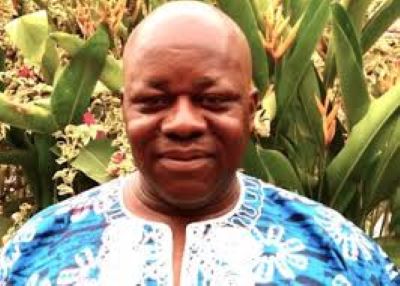
Prof. Jibrin Ibrahim
Share
Facebook Twitter LinkedIn Pinterest Email

This week, I am attending a conference in Sao Tome on the persistence of the threat of coups and other forms of unconstitutional change of government (UCG) organised by the United Nations Office for Central Africa. Since 2020, at least seven countries have faced UCGs, including the recent case in Central Africa, Gabon in 2023; while in West Africa, four countries have been affected: Mali twice in 2020 and 2021, Guinea in 2021, Burkina Faso twice in 2022 and Niger in 2023; and East Africa in Sudan in 2021. They disrupted the existing institutional and legislative framework, leading to transitions that are not always linear, increasingly protracted and in some instances, open-ended. There has also been exceptionalism displayed in the specific context of Chad in April 2021 when their coup occurred. Voices were calling for the immediate suspension of the country, by the legal instruments of the African Union (AU), while others emphasized that Chad’s particular security situation warranted a distinct approach. Ultimately, the AU Peace and Security Council neither imposed sanctions nor suspended Chad, a position also adopted by the Economic Community of Central African States (ECCAS). Such exemptions always create difficulties in legitimately defending principles thereby weakening African institutions.

The story of UCG is always complex and while there should be no justification, the context is always important. The Mali coup had roots in the then president, Ibrahim Boubacar Keita, using the constitutional court to remove elected opposition legislators and make himself “sole authority”. In Guinea, the Octogenarian Alpha Conde had used State power to impose himself as an unconstitutional third-term president and was determined to remain in power for the rest of his life. In Gabon, President Ali Bongo had a stroke way back in 2018 and was unable to exercise power effectively but his wife essentially took over power using the powerful words that “my husband directs you to….”. The Bongo family had ruled the country as a personal estate for 56 years. In Chad, the tradition of “power to the strongest warlord” qualified Deby the son to take over from Deby the daddy when the President died on the war front. The other element of context in Chad was that late President Deby had explained that he was ready to hand over power way back in 2005 when their hegemon, France, directed him to stay in power given the great role he was playing in the war on terror. The African story of power has been for too long the concentration of power and arbitrariness in the hands of a person, and increasingly, on his family.

In other words, so many African countries have continuously disregarded their commitments to respect good governance, democracy, respect for fundamental freedoms and human rights, tolerance, and the culture of peace as essential prerequisites for the establishment and maintenance of peace, security and stability enunciated in the Lome Declaration of 2000. The owners of Lome, Eyadema the father and the son have ruled the country where the Declaration was made for 58 years so far and the dynasty has become very adept at inventing strategies for self-preservation in power. It is not surprising if the coup option emerges repeatedly as the only way out. The problem is that the coup makers don’t try to change the politics, they often seek to make themselves the new dynasty in power. Africa must find democratic means for removing political leaders who insist on staying in power beyond their legitimate tenure.

ALSO READ [COLUMN] The Northwest Peace and Security Summit, By Prof. Jibrin Ibrahim

The conference on UCGs in Central Africa organised by UNOCA, with the technical support of the Institute for Security Studies (ISS), analysed extensively this issue of context but also the root causes, normative frameworks, and policies to prevent the recurrence of the phenomenon through improving the quality of governance. There was a close examination of the strengths and limitations of normative frameworks and policies aimed at preventing unconstitutional changes of government as well as supporting and ensuring transitions towards a return to a democratic constitutional order. There was also a lot of focus on how ECOWAS misapplied its sanctions regime in West Africa leading to the decision of Mali, Burkina Faso and Niger to announce their departure from the regional body and the weakening of the edifice of ECOWAS.

There were also discussions on the applicability of the African Union principles on good governance and democracy, such as the African Peace and Security Architecture (APSA) and the African Governance Architecture (AGA). There are insufficiencies in the instruments and they are not always applied consistently. Concerning the principle of subsidiarity, the African Union has in principle largely positioned itself in support of the Regional Economic Communities and Regional Mechanisms (RECs/RM) but this sometimes leads to heightening the differences based on their normative texts and mechanisms.

The Central Africa region has experienced fewer UCGs than other regions. However, the recent UCGs have provoked a reflection on the prevention of UCGS, in a context where the existing regulatory frameworks do not seem able to prevent UCGs, let alone provide adequate support for the resulting transitions to generate more resilient and stable governments. This situation highlights the need to reassess preventive normative frameworks and mechanisms that failed to avert the occurrence of coups, to conceptualise transitions as possible preventive periods to lay the foundations for addressing the structural fragilities that fuel recurrent instability while avoiding relapses and to maintain focus beyond the post-coup elections on key structural changes needed for stability and inclusive development.

This raises the crucial question of the appropriate political practices and institutional regulatory framework required to not only prevent UCGs but also accompany, when they occur, transitions towards a return to a sustainable and democratic constitutional order. For an organisation such as ECCAS, addressing this issue and elaborating appropriate framework is an urgent priority, based on lessons from other contexts including the Economic Community of West African States (ECOWAS). ECOWAS is equipped with a regulatory framework for managing UCGs which is based on numerous instruments – the 1993 Revised ECOWAS Treaty, the Protocol relating to the Mechanism for Conflict Prevention, Management, Resolution, Peacekeeping and Security of 1999 and the 2001 Supplementary Protocol on Democracy and Good Governance. Developing these instruments has been an important step in providing tools to address governance deficits but at the end of the day, the important marker always remains the will and capacity to remain anchored to the implementation of the principles enunciated in the instruments.

African Union ECCAS ECOWAS UCGs
Share. Facebook Twitter Pinterest LinkedIn WhatsApp Reddit Tumblr Email
Editor
  • Website

Related Posts

Another “betrayal” in Kano: Kwankwasiyya and its aftermath, Prof. Jibrin Ibrahim

January 30, 2026

Kano family killing: Nigerian youths and collective responsibilities, By Prof. MK Othman

January 26, 2026

Unlocking opportunities in bambara nut for Nigeria’s food, climate and economic development, By Aremu Fakunle (PhD)

January 25, 2026

Leave A Reply Cancel Reply

Anambra seeks LG chairmen’s support for measles–rubella vaccination campaign

January 31, 2026

Librarians’ Council lauds Northwest varsity for establishing well-equipped library, e-library

January 31, 2026

LAWMA arrests cart pushers for illegal dumping on Lagos–Badagry expressway

January 31, 2026

Kaduna eliminates Trachoma as public health threat

January 31, 2026
About Us
About Us

ASHENEWS (AsheNewsDaily.com), published by PenPlus Online Media Publishers, is an independent online newspaper. We report development news, especially on Agriculture, Science, Health and Environment as they affect the under-reported rural and urban poor.

We also conduct investigations, especially in the areas of ASHE, as well as other general interests, including corruption, human rights, illicit financial flows, and politics.

Contact Info:
  • 1st floor, Dogon Daji House, No. 5, Maiduguri Road, Sokoto
  • +234(0)7031140009
  • ashenewsdaily@gmail.com
Facebook Twitter Instagram Pinterest
© 2026 All Rights Reserved. ASHENEWS Daily Designed & Managed By DeedsTech

Type above and press Enter to search. Press Esc to cancel.