


There are moments when public criticism produces something more useful than an exchange of accusations. It creates an opportunity for direct engagement between the person raising questions and the public office holder expected to answer them. Such an opportunity arose following my open letter to the Minister of Power, Chief Joseph Olasunkanmi Tegbe, titled “We Have Heard This Before: Nigerians Need Electricity, Not Another Performance of Promises.”
The letter was written in the public interest. It questioned the familiar pattern of ministerial assurances in Nigeria’s electricity sector, examined some of the Minister’s public statements and challenged the tendency to present isolated improvements as evidence of a wider transformation. It was not an indictment of his personal integrity, nor was it intended as a personal confrontation. It was an interrogation of public responsibility and the performance expected of an office that touches virtually every aspect of national life.
I had no reason to anticipate what followed.
On noticing a missed call from the Minister’s telephone number, I returned the call without hesitation. I did not want my failure to return the call to create an impression that I was unwilling to engage with the person whose public statements I had examined.
He answered. After a brief exchange, I introduced myself as Lanre Ogundipe. His immediate question was direct: was I the person who had written the open letter that had gone viral across media platforms?
I acknowledged authorship.
The conversation quickly became a challenge. The Minister questioned why I had written the letter without first reading his earlier rebuttal in an interview with the press. I explained that I was unaware of the interview when I prepared the article. Had I seen it, I would have examined its contents and considered the explanations offered before publication.
He expressed displeasure at what he described as a tendency among Nigerian writers to destroy reputations. I took exception to the generalisation. I told him that writers and journalists should not be lumped together in that manner. My letter, I explained, had not impugned his credibility or personal reputation. It had examined a statement attributed to him in the public domain, particularly his account of communities that had reportedly moved from prolonged darkness to as much as 18 hours of electricity supply.
There is a fundamental distinction between questioning a public statement and attacking the character of the person who made it. Public office holders must be able to recognise that distinction, just as journalists must understand the responsibility that comes with publishing criticism.
The Minister maintained that he had granted interviews to the press to explain his position, but complained that journalists had a tendency to twist his statements. I responded that the context in which a statement was made could sometimes contribute to the interpretation placed on it. That possibility makes context important, but it does not remove the obligation to interrogate statements made by public officials, particularly when those statements concern matters of considerable public interest.
During the conversation, the Minister offered to send me materials to enable me to examine and verify his position. I encouraged him to do so. He subsequently forwarded social media materials, including satirical and critical reactions to his freezer remark, as well as a YouTube video containing a favourable assessment of improvements in electricity supply.
I have examined the materials. The social media commentary reflects the scepticism and humour with which some members of the public received his statement. The video, on the other hand, presents a positive testimonial from an individual who believes that improvements in electricity supply are making a difference to businesses and ordinary consumers.
Both reactions are worth acknowledging. Neither should be mistaken for a comprehensive assessment of the national electricity situation. A critical social media post does not establish that no improvement has occurred. Equally, a favourable testimonial from an individual consumer cannot establish that the country’s electricity crisis has been overcome.
There is, however, an important qualification. Although the Minister referred to an earlier press interview in which he said he had explained his position, he did not forward the interview, its transcript or details of its contents. I have therefore not had the opportunity to examine that particular rebuttal. I would be willing to consider it if it is made available. A fair hearing requires that the substance of a person’s explanation be examined rather than presumed.
That is the spirit in which I regard the telephone conversation. The Minister had an opportunity to express his displeasure and explain why he considered the open letter premature. I had an opportunity to explain the basis of my intervention and defend the legitimacy of the questions raised. Neither of us needed to abandon his position for the conversation to be useful.
Indeed, I consider the willingness of a public office holder to engage directly with criticism a development worth acknowledging. Public office is not merely the occupation of an official position or the exercise of authority. It carries an obligation to respond to matters of public concern. A minister does not have to agree with every critic, but citizens are entitled to explanations, and those entrusted with public responsibility should not regard questions as personal affronts.
Responsiveness is not a substitute for performance, however. It is one of the obligations that accompany public office.
In the course of our discussion, I reiterated a point that I consider particularly important for the Minister at this stage of his assignment. He must guard against the temptation to become carried away by applause from praise singers. There will always be individuals eager to celebrate a minister, just as there will be others prepared to ridicule every action. Neither group should determine the direction of public policy.
The Minister’s responsibility is to face the work before him with greater commitment and address the persistent instability of electricity supply. He should be more concerned about the consumer who cannot plan a business around an unreliable supply of electricity than about the commentator who praises or criticises his public statements.
The electricity crisis is too consequential to be reduced to a contest over public perception. It affects manufacturing, commerce, healthcare, education, household expenditure and the productivity of the national economy. For millions of Nigerians, electricity is not an abstract policy debate. It determines whether a business remains open, whether food is preserved, whether a hospital can operate effectively and whether a student can study without interruption.
The Minister may well have inherited a difficult sector. The constraints are real: inadequate gas supply, financial liabilities, transmission bottlenecks, distribution weaknesses, vandalism, metering deficits and regulatory challenges. But these difficulties are not new discoveries. Successive administrations have identified them, announced interventions and offered assurances. The public is entitled to ask what is different this time and what measurable improvements will follow.
The Minister’s reported account of improved supply in some communities deserves verification, not dismissal. The repairs to transmission infrastructure and the return of generating units to service also deserve recognition where the operational evidence supports the claims. But the Ministry must go further by publishing reliable information about the locations benefiting from improved supply, the duration of that improvement, generation levels, distribution allocations and the progress of outstanding repairs.
The country needs a clear distinction between temporary restoration and sustainable improvement. It needs to know what has been completed, what remains in progress and what obstacles are delaying delivery. Above all, consumers need to experience the difference in their homes, businesses and communities.
My original letter remains relevant. The telephone conversation does not invalidate the questions it raised, just as the questions do not invalidate the Minister’s right to explain his actions. Indeed, the exchange reinforces the importance of public engagement. Where a minister believes that his statements have been misrepresented, he should provide the relevant context and supporting information. Where a journalist raises questions, the office holder should be prepared to respond. Where evidence establishes that an account was inaccurate, it should be corrected. That is how responsible public discourse should function.
I do not regard the Minister’s telephone call as an answer to the electricity crisis. Nor should he regard the publication of a favourable video or the circulation of supportive comments as evidence that the work is done. The real verdict will come from consumers whose electricity supply becomes dependable, whose businesses can operate without the constant expense of alternative power and whose lives are no longer organised around the uncertainty of the next outage.
Chief Tegbe has an opportunity to make a difference. I would rather see him succeed in delivering sustained improvements than become another name in the succession of ministers who diagnosed the problems but could not overcome them. That is not a concession to the Minister. It is an expression of what Nigerians stand to gain if the assignment is successfully discharged.
The telephone conversation has opened a channel of engagement. I remain willing to examine further information he may provide, including the press interview to which he referred. But the central issue remains unchanged.
A minister may explain his performance, and the public must be prepared to hear him. A journalist may raise uncomfortable questions, and the public office holder must be prepared to answer them. In the end, however, neither the explanation nor the argument will keep the lights on.
Electricity must.
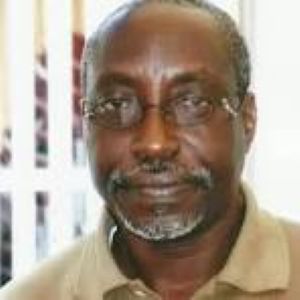
Ogundipe, Public Affairs Analyst, former President Nigeria and Africa Union of Journalists writes from Abuja.
