


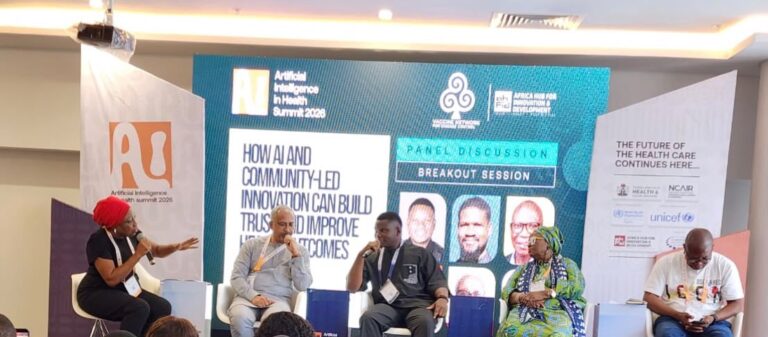
The summit was convened by the Africa Hub for Innovation and Development (AHFID) under the theme, “Catalyzing Country AI-in-Health Frameworks for Transformative Healthcare Systems”.
The session examined why vaccine misinformation resonated with communities, how it spread, and how artificial intelligence (AI) and community-led interventions could support accurate health communication.
Mr Kshitij Joshi, Chief of Social and Behavioural Change at UNICEF, highlighted the importance of local innovation and collaboration in developing AI solutions to address Nigeria’s health information challenges.
Joshi contributed to discussions on a proposed hackathon to encourage young Nigerian developers to create applications and AI models that respond to local needs.
Dr Joseph Oteri, Senior Programme Officer for Measles and Rubella at the Gates Foundation, said addressing misinformation required acknowledging caregivers’ concerns and connecting them with trusted sources of information.
Oteri said caregivers could become worried when children developed fever, experienced pain or cried after immunisation, making it important for health workers to explain expected reactions and provide appropriate guidance.
According to him, trusted health workers and credible community figures could help caregivers understand vaccination and address their concerns.
He recalled rumours circulated during previous immunisation campaigns, including claims that vaccines could harm particular groups and suggestions that coconut water could prevent or relieve post-vaccination reactions.
He said traditional rulers, religious leaders and other community influencers had played important roles in addressing such rumours during polio vaccination campaigns.
“AI can strengthen these efforts by helping health authorities detect emerging misinformation and alert communication teams to claims requiring investigation,” he said.
He said identifying rumours early would enable health authorities to respond with accurate information before misleading claims spread widely.
Mrs Moji Makanjuola, founder of the International Society of Media in Public Health (ISMPH), urged journalists to verify vaccine-related claims before publication, warning against assuming that widespread circulation made a rumour credible.
Makanjuola said misinformation had circulated during polio vaccination campaigns, including allegations that vaccines could sterilise Nigerian women or were designed to reduce Africa’s population.
“The rumours generated resistance among parents and communities, requiring sustained efforts to establish the facts and restore confidence in immunisation.
“Journalists and other stakeholders had investigated the vaccine process, from production to administration, to establish whether the allegations were supported by evidence,” she said.
She also recounted an encounter in Jigawa State with a community health extension worker whose daughter developed paralysis associated with polio after remaining unvaccinated.
She said the experience became an important part of her advocacy, helping communities understand the potential consequences of refusing immunisation.
The veteran journalist said specialised knowledge was essential for accurate health reporting, urging journalists to acquire the expertise needed to ask relevant questions and identify credible sources.
She also called for simpler language in health communication, noting that technical expressions could prevent members of the public from understanding important health information.
She cautioned against publishing unverified rumours simply because they were sensational, stressing that journalists had a responsibility to establish the facts before reporting them.
Mr Tolulope Olowolaju, Senior AI and SI Associate at AHFID, said AI could be used to analyse public conversations and identify emerging concerns about health interventions across digital platforms.
Olowolaju cited social listening and sentiment analysis on platforms such as Facebook, Instagram, LinkedIn, YouTube and X as approaches that could help organisations understand public perceptions.
He said such analyses could help identify recurring concerns and information patterns requiring further investigation or targeted communication.
He, however, cautioned against automatically classifying negative online comments as misinformation, noting that public reactions could reflect genuine concerns, personal experiences or distrust of institutions.
Olowolaju said AI-supported responses should therefore consider context and distinguish false claims from opinions, factual information and legitimate questions.
He also highlighted the importance of accountability, responsibility, authenticity and trust in developing and deploying AI solutions.
He said credible sources and evidence-based counter-messages were important in responding to misleading information and helping people access accurate health information.
Earlier, the moderator, Mrs Chika Offor, Chief Executive Officer of the Vaccine Network for Disease Control (VNDC), opened the discussion with the hypothetical story of Yabola, a caregiver whose child was due for routine immunisation.
Offor said Yabola received a WhatsApp message from her husband’s elder sister warning her against vaccinating her child.
“The message alleged that Bill Gates wanted to reduce Africa’s population because the United States had a low population, leaving the caregiver confused ahead of her child’s scheduled clinic visit,” she said.
She said the scenario illustrated how misinformation shared by trusted family members could influence healthcare decisions, even when professional health services were available.
She said the discussion would focus on understanding why such claims resonated, how they spread, the potential contribution of AI and how health services could rebuild public trust.
Participants also identified media capacity building and collaboration among technology developers, journalists, health professionals and community representatives as important steps towards responsible AI use.
They said AI should complement, rather than replace, trusted health workers, journalists and community leaders in responding to vaccine misinformation.
The discussion concluded that technology alone could not resolve vaccine misinformation without credible information, responsible journalism, responsive health services and sustained community engagement.
The initiative is expected to create opportunities for collaboration among young innovators, media professionals and other stakeholders while encouraging the development of solutions informed by Nigeria’s languages, communities and information needs.
