


The Central Bank of Nigeria (CBN) is seeking more efficient cross-border payment systems with China to facilitate trade, investment and financial transactions between businesses in both countries.
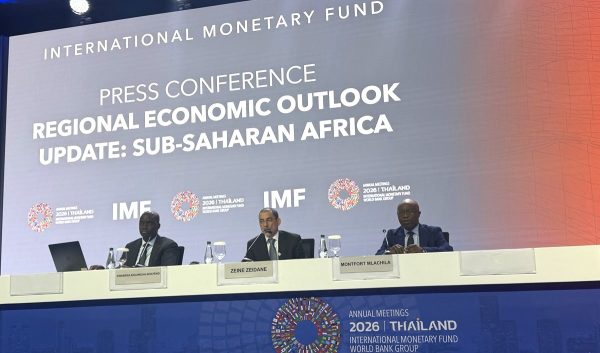
CBN Governor Olayemi Cardoso disclosed the plan after meeting with Pan Gongsheng, Governor of the People’s Bank of China, on the sidelines of the 2026 Annual Meetings of the International Monetary Fund (IMF) and World Bank Group in Bangkok, Thailand.
Cardoso said the discussions focused on cross-border payments, settlement arrangements, financial technology and trade finance, adding that Nigeria would build on the engagements during an upcoming visit to Beijing.
According to him, the proposed visit would provide an opportunity to advance financial cooperation, strengthen links between the two countries’ financial institutions and explore ways to make transactions easier for Nigerian and Chinese businesses.
The CBN has yet to announce specific implementation plans or timelines for the proposed payment arrangements.
Beyond China, Nigeria is also expanding its financial engagement with other Asian markets to attract investment and strengthen international financial connectivity.
During the recent engagements in Singapore, the Nigerian delegation met with the Monetary Authority of Singapore and signed a memorandum of understanding with the Global Finance and Technology Network to promote cooperation in financial innovation.
The delegation also convened the Nigeria-Asia Financial Connectivity Dialogue in collaboration with JPMorgan, Nigerian Exchange Group and FMDQ Group, focusing on investment opportunities, financial-market development and stronger connections between Nigeria and Asian markets.
Cardoso also disclosed that discussions with international credit rating agencies, including Standard & Poor’s and Moody’s, centred on Nigeria’s economic outlook and its prospects of attaining investment-grade ratings in the medium term.
He said consistent economic policies, credible institutions and effective coordination between fiscal and monetary authorities would be critical to achieving the objective.
On monetary policy, the CBN governor cited the September reduction of the Monetary Policy Rate from 26.5 per cent to 23 per cent as an example of the importance of institutional credibility, transparency and clear communication.
He said the apex bank remained committed to price stability, monetary discipline and safeguarding the financial system, with single-digit inflation as its medium-term objective.
Cardoso also urged African countries to develop the capacity to shape the opportunities presented by artificial intelligence and capture the economic value generated by emerging technologies.
He said Nigeria’s broader engagement with international partners was aimed at consolidating recent economic gains and translating them into higher investment, improved productivity and sustainable growth.
