


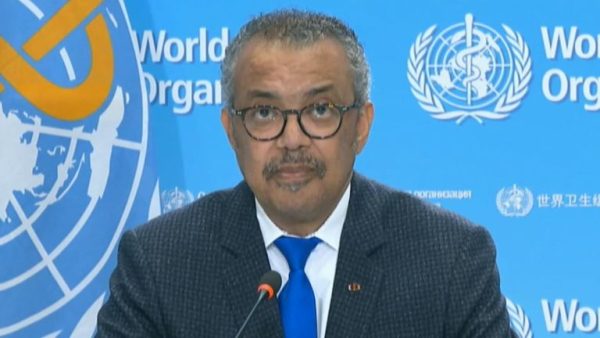
The World Health Organization (WHO) has urged countries to turn their commitments on pandemic prevention and preparedness into action following the adoption of a United Nations declaration aimed at strengthening the global response to future health emergencies.
The declaration, adopted by the UN General Assembly, calls for sustained investment in disease surveillance, national health systems, research and development, and equitable access to pandemic-related resources to protect populations from future outbreaks.
commitments into action, particularly by concluding negotiations on the Pathogen Access and Benefit-Sharing (PABS) annex to the WHO Pandemic Agreement.
“The world has come a long way since COVID-19,” Tedros said, stressing that finalising the negotiations would pave the way for the agreement to be opened for signature, ratification and eventual entry into force as international law.
Member states considered the declaration at the second UNGA High-Level Meeting on Pandemic Prevention, Preparedness and Response (PPPR) on September 25, 2026, before referring it to the full General Assembly for adoption.
Building on scientific advances and strengthened international coordination since the COVID-19 pandemic, the declaration calls for sustained investment in national, regional and global capacities to prevent, detect and respond to pandemic threats.
It also emphasises that pandemic preparedness goes beyond public health, describing it as a development, economic and security imperative that requires coordinated action across sectors.
Member states specifically highlighted the urgency of concluding negotiations on the PABS annex, a key component of the WHO Pandemic Agreement. The outcome of the negotiations is expected to be considered at the next World Health Assembly in May 2027 or earlier through a special session.
Finalising the annex would enable the Pandemic Agreement to proceed towards entry into force, strengthening prospects for a more equitable, coordinated and effective global response to future pandemic threats.
The UN declaration outlines key priorities for strengthening global health security, including improving disease surveillance and monitoring systems, investing in national preparedness capacities and implementing the amended International Health Regulations (2005).
It also calls for greater community engagement, timely access to pathogens and equitable sharing of benefits, alongside expanded local and regional manufacturing capacity, increased investment in research and development, and sustainable financing.
According to WHO, these measures are intended to strengthen international cooperation, promote equity and ensure that countries are better equipped to confront future pandemic threats.
