


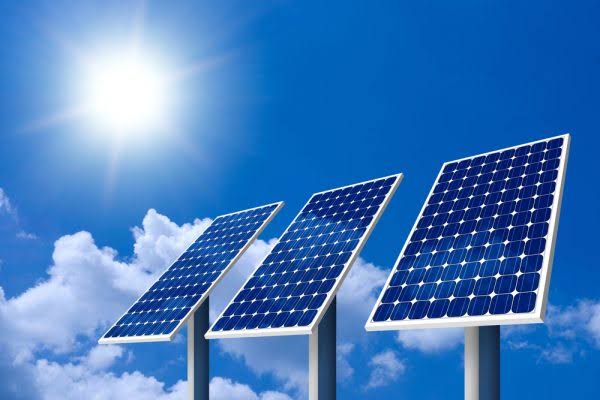
The Federal Government has commissioned a 3.3MWp solar hybrid mini-grid with 2MWh battery storage at Yakubu Gowon University, formerly the University of Abuja, as part of efforts to improve electricity supply to federal tertiary institutions.
The project, commissioned on Wednesday, has a 3MW AC output capacity, a dedicated grid connection and a Renewable Energy Workshop and Training Centre.
Implemented under Phase 2 of the Federal Government’s Energizing Education Programme (EEP), the project forms part of an intervention covering seven universities and two teaching hospitals. The government is currently implementing Phase 3 of the programme.
Speaking at the commissioning, Minister of Power, Chief Joseph Tegbe, said the facility would serve about 58,726 students, while 388 solar-powered streetlights would improve lighting and security across the campus.
Tegbe said the reliable power supply would support teaching and research, reduce the university’s dependence on diesel generators and ease pressure on its operating costs.
He also urged students and members of the university community to protect the infrastructure against vandalism and promptly report any damage to power installations.
“This sustained investment is a testament to this administration’s constancy of purpose. Continuing a national programme through successive phases, bringing projects to completion, and preparing the next phase reflects the discipline that development requires,” the minister said.
The 2MWh battery storage system is designed to supply critical loads beyond daylight hours, while the grid connection will cater for non-critical demand when solar generation is unavailable.
Managing Director of the Rural Electrification Agency (REA), Abba Abubakar Aliyu, said the impact of the Energizing Education Programme should be assessed beyond the volume of electricity generated.
According to him, the programme should also be measured by its effect on laboratories, research, campus security and the finances of beneficiary institutions.
“The value of EEP should not be measured only by the amount of electricity generated, but also by its impact on laboratories, research, campus safety and institutional finances,” Aliyu said.
He disclosed that the government had established the Renewable Asset Management Company (RAMCO) to support the long-term management, maintenance and optimisation of renewable-energy assets delivered through its programmes.
Aliyu stressed that the sustainability of the Yakubu Gowon University project would depend on effective management after commissioning and urged the university’s governing council to ensure that the facility continues to deliver value.
Beyond electricity generation, the REA established a Renewable Energy Workshop and Training Centre at the university to strengthen local technical capacity.
The REA chief executive encouraged the institution to use the centre as a research hub for distributed energy resources and develop academic programmes and technologies around renewable energy.
The university project comes amid wider efforts by the Federal Government and development partners to expand electricity access through renewable and distributed power systems.
The African Development Bank, for instance, approved a $3.9 million, two-year project in January to support Nigeria and 12 other African countries in implementing their Mission 300 energy compacts. The wider Mission 300 initiative, led by the World Bank and AfDB, targets connecting 300 million Africans to electricity by 2030.
The REA also recently reported that Nigeria’s domestic solar-panel manufacturing capacity had risen to 300MW from 120MW two years earlier, with a 3.7GW project pipeline under development.
The agency has further signed a memorandum of understanding with Lotus Bank for a ₦100 billion revolving credit facility aimed at expanding renewable-energy access to unserved and underserved communities across Nigeria.
