


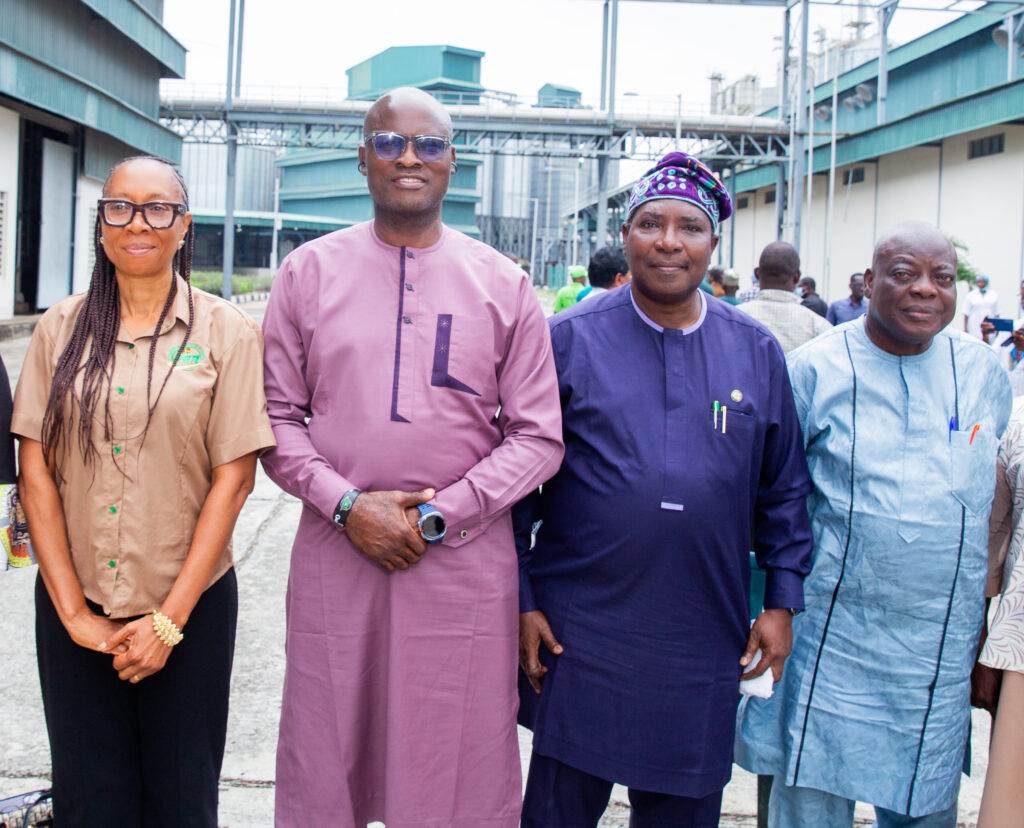
The Lagos State Government has trained rice millers and regulators on rice biofortification to boost food security.
The training, organised by the state’s Ministry of Agriculture and Food Systems, was held at Imota, Ikorodu, on Thursday.
It aimed to improve the quality and nutritional value of rice produced in the state.
In his welcome address, the Special Adviser to Governor Babajide Sanwo-Olu on Agriculture and Food Systems, Dr Oluwarotimi Fashola, reiterated the government’s commitment to increasing both the quantity and quality of rice production.
“It is my pleasure, on behalf of the Lagos State Ministry of Agriculture and Food Systems and the Lagos State Rice Company Ltd., to warmly welcome you all to this critical training session for millers and regulatory representatives.
“We are particularly honoured to host this training on fortified rice production and extend our sincere appreciation to the organisers and our partners for selecting the Lagos State Rice Company Ltd.
“For us, this is more than just a training workshop; it is a vital platform to share knowledge, strengthen our industry’s capacity, and advance the conversation on improving the nutritional value and quality of rice produced and consumed in Nigeria,” Fashola said.
According to Fashola, the Lagos State Rice Company Ltd. continues to drive development of the rice value chain through its premium products, Eko Rice Farm Fresh and Eko Rice Classic.
“Today, we are proud to officially include Eko Fortified Rice in our product offerings,” he said.
He noted that the fortified rice facility at the mill was installed in December 2025 through the support and collaboration of development partners.
Fashola acknowledged TechnoServe, the World Food Programme, Partners in Food Solutions, the Global Alliance for Improved Nutrition, the Bill & Melinda Gates Foundation, and DSM-Firmenich for their support.
He said the partners supported the installation of blending equipment, provided technical guidance, built capacity, and supplied fortified kernels.
“These contributions have enabled us to take practical steps toward large-scale fortified rice production while strengthening our internal technical expertise,” Fashola said.
He noted that producing quality fortified rice requires the collective efforts of all players across the subsector.
“We recognise that producing fortified rice consistently and to the highest standards is a collective responsibility.
“It demands seamless cooperation among millers, regulators, the government, development partners, laboratories, and stakeholders across the entire value chain.
“This is why the joint participation of both millers and regulatory agencies in this training is so vital,” he said.
Fashola said the knowledge gained from the training should translate into better operational practices, strict compliance, and robust quality control.
This would ultimately ensure safer and more nutritious rice for consumers.
“As a leading rice-producing state and Nigeria’s primary centre of food consumption, Lagos plays a pivotal role in driving initiatives that elevate food quality and nutrition.
“We view this training as part of a broader, strategic effort to strengthen the rice industry and make fortified rice accessible and acceptable to all consumers,” he said.
Fashola urged participants to make effective use of the training to improve quality rice production in the state.
“To our fellow millers, we welcome you not just as participants, but as vital partners in this journey.
“We encourage you to ask questions, share your experiences, discuss your unique challenges, and learn from one another,” he said.
He said there was immense potential for improved rice production when industry stakeholders worked together.
Fashola also appreciated the regulatory agencies for their role in maintaining standards and ensuring that consumers received products that met quality and safety requirements.
He further appreciated the development partners for their continuous support and expressed optimism for stronger collaboration.
“At the Lagos State Rice Company Ltd., our doors remain wide open. We are entirely willing to share our experiences, learn from others, and support future initiatives that will fortify the wider rice value chain in Nigeria,” he said.
Fashola encouraged participants to engage actively and apply the lessons from the training to their daily operations.
“I encourage everyone present to make the best use of this training. Let us engage openly, interact freely, and focus on how we can implement today’s lessons into our daily operations,” he said.
