


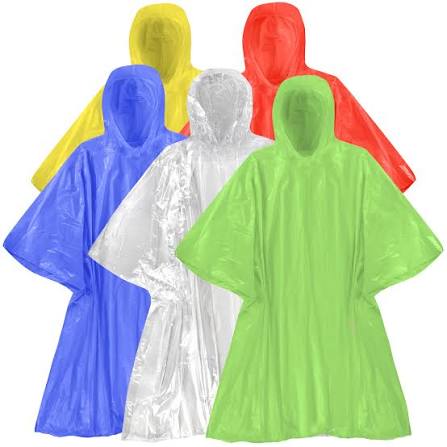
Rain gear sellers in parts of Lagos are counting losses as fewer rainstorms and the August break combine to weaken demand for umbrellas and raincoats.
For traders who stocked heavily in anticipation of frequent rainfall, the prolonged dry spells have turned what appeared to be a profitable season into a struggle to recover invested capital.
A visit by correspondents to Orile, Oshodi and Agege markets on Thursday showed low customer traffic around shops selling raincoats, umbrellas and nylon covers.
At Orile Market, Mrs Funmi Bashir, a raincoat seller, said she was worried about her unsold stock after investing heavily when demand was high.
“I pray for the rain to come back so I can exhaust all the 5,000 pieces of raincoats tying down my money,” she said.
Bashir said she bought the 5,000 raincoats shortly before the last rainfall after noticing that sales were moving rapidly.
“I bought that quantity because I saw that the market was moving and the gain was massive,” she said.
She said selling the stock was necessary to recover her capital and purchase other goods for her shop.
Similarly, Ganiyu, a wheelbarrow nylon seller at the market, said he stocked more raincoats than nylon covers because he expected them to sell quickly.
“I bought more raincoats than the actual nylons because I know I will sell everything within a short period,” he said.
He, however, said the August break had left him with unsold raincoats that would have moved faster before the holiday.
“But the break has me stuck with the items,” he said.
Another trader, Mrs Mary Dada, said customers’ choice between umbrellas and nylon raincoats depended largely on convenience and purchasing power.
Dada said students generally preferred nylon raincoats because they were cheaper and easier to carry in their school bags.
“Nylon raincoat is much easier to wear because students find it easier to put inside their bags,” she said.
She said adults tended to prefer umbrellas, adding that rainfall remained crucial in determining the level of demand.
“The sales aren’t massive anymore, unlike the way it was before the August break,” Dada said.
Aisha Mohammed, a major distributor of nylon raincoats in Orile, said the August break had significantly affected patronage.
“The break has really affected my customers patronising me, and customers prefer raincoats to umbrellas because it is cheaper,” she said.
She said demand usually picked up whenever rainfall occurred, but fewer people were currently buying from the area.
Another trader, Iya Samad, said her sales had remained fairly stable, although lower than before the August break.
She said umbrellas appeared to be more popular among her customers during the period.
At Oshodi Market, Mrs Chidimma Ajaegbo, a rain gear seller, said the August break had also affected her business.
“You can see that I don’t have a shop. I sell anything that is moving in the market, and this has been one of them,” she said.
Ajaegbo said customers were now concentrating on items they considered immediately necessary.
“Since the break, I haven’t made any reasonable sales because customers only buy what they need,” she said.
She said the poor sales could force her to borrow money and switch to other products to survive the dry weeks.
Similarly, Amirat Habeeb, a shop owner in Agege, said unsold rain gear had tied down her capital and increased pressure to reduce prices.
Habeeb said clearing the stock would enable her to recover her investment and purchase faster-moving goods.
In spite of the slow sales, the traders expressed hope that renewed rainfall and the resumption of schools would revive demand and help them clear their remaining stock.
For now, however, their fortunes remain closely tied to the skies, with every dark cloud offering the prospect of both rain and much-needed sales.
