


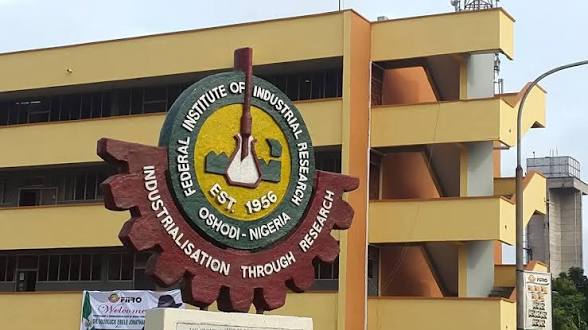
The Federal Ministry of Innovation, Science and Technology has challenged the Federal Institute of Industrial Research, Oshodi (FIIRO) to reposition itself as a major problem-solving institution for Nigerian industries.
Dr Mukhtar Muhammad, the Permanent Secretary of the Federal Ministry of Innovation, Science and Technology, gave the charge during a visit to the institute on Wednesday in Lagos, along with other senior ministry officials.
The permanent secretary stressed that FIIRO, with its 70-year history and more than 700 staff, must move beyond conducting research that remained on laboratory shelves and ensure that decades of research translated into commercially viable products and solutions.
He said the visit was part of efforts to strengthen engagement between the ministry and its agencies, noting that some agencies had not received sufficient attention from the ministry’s leadership over the years.
According to him, the ministry is undergoing a period of renewal, refocusing and recalibration, with a renewed emphasis on innovation, industrial development and the commercialisation of research outputs.
“All the products and research that have been done by agencies, including FIIRO, must see the light of day.
“It can no longer be business as usual for research institutions to develop products that remain in laboratories or are produced only on a limited scale,” Muhammad said.
He described research as fundamentally a process of identifying and solving problems, urging researchers to focus on challenges with practical relevance to industries and society.
While acknowledging the academic qualifications and expertise available at FIIRO, the permanent secretary expressed concern that Nigeria had produced large numbers of PhD holders and professors without corresponding levels of technological and industrial innovation.
He said researchers must move beyond pursuing academic publications and instead direct their knowledge towards solving real-life problems.
“An artisan, mechanic, electrician or other skilled worker who solves everyday problems can make more immediate contributions to society than highly trained academics whose research does not produce practical solutions,” he said.
Muhammad particularly challenged FIIRO to strengthen its relationship with industries, asking why Nigerian manufacturers and companies were not consistently approaching the institute to solve their technical and production challenges.
“If you solve somebody’s problem, they will pay for it,” he said, adding that research institutions could generate revenue by providing industries with research services, technical solutions, equipment support and staff training.
The permanent secretary said Nigeria’s industrial research institutions must become more responsive to the needs of manufacturers and other businesses.
He noted that industrial development depended on the ability of researchers to address challenges facing companies.
He also raised concerns about gaps in Nigeria’s technical and industrial capacity, citing the employment of thousands of foreign workers on major industrial projects as evidence that more needed to be done to develop local expertise.
According to him, research institutions have a critical role to play in helping Nigeria build the technical capacity required for industrialisation and reduce dependence on foreign expertise.
Dr Muhammad said he would engage FIIRO’s management and staff to identify factors limiting the institute from fully achieving the vision for which it was established.
He also promised to inspect the institute’s facilities and equipment as part of efforts to assess its capacity and determine the support required to strengthen its operations.
The ministry, he said, was determined to ensure that FIIRO lived up to its mandate as an industrial research institution by focusing on solutions that supported industries, created economic value and contributed to national development.
The visit, according to the permanent secretary, is intended not only to familiarise the ministry with the institute and its workforce but also to challenge its researchers and management to leave their comfort zones and embrace a more results-driven approach to industrial research.
He stressed: “Industrial research must solve industrial problems. The institute must take advantage of its expertise, facilities and strategic location in Lagos to become a trusted partner for Nigerian industries.”
Also speaking at the event, the Director-General of FIIRO, Dr Jummai Tutuwa, described the permanent secretary’s visit as a major source of encouragement and an opportunity to strengthen the relationship between the ministry and the institute.
She said the institute was established to address Nigeria’s need for coordinated industrial research and to promote research and development capable of supporting industrialisation and economic growth.
According to her, the institute originates from recommendations of a World Bank economic mission to Nigeria in 1953, which identified fragmentation and lack of coordination in industrial research activities in the country.
“The Federal Institute of Industrial Research was subsequently established in 1956 to conduct and promote research and development for industrialisation and socio-economic development.
“The institute’s mandate includes identifying and developing appropriate technologies in food and agro-allied processing and other industrial areas.
“It supports the transfer and utilisation of such technologies by local manufacturing industries, as well as undertaking project feasibility studies and consultancy services,” she said.
The FIIRO director-general noted that it currently operated several technical and non-technical departments and had six zonal offices across the country in addition to its headquarters in Lagos.
Tutuwa added that the zonal offices had been moved to their permanent sites since the current management assumed office in 2022, with their laboratories equipped to conduct research on bioresources available within their respective regions.
She noted that the zonal offices had exceeded management’s expectations, with several of them producing and developing locally made products and innovations that had been showcased at national exhibitions.
Tutuwa also disclosed that the institute operated 55 laboratories and workshops where research and innovation activities are carried out, saying that some of the facilities required urgent renovation and structural intervention due to their age.
Despite the infrastructure challenges, the FIIRO boss said its research efforts had continued to receive national recognition, having clinched first position at the annual Science Expo organised by the Federal Ministry of Innovation, Science and Technology in both 2022 and 2023.
She further showcased a range of recent research breakthroughs and innovations developed at its headquarters and zonal offices, including products and technologies for food processing, health management, renewable energy, agriculture and industrial applications.
“Some of the innovations include pharmaceutical and natural products, low-glycemic food products, locally sourced flour and confectionery materials, organic fertiliser, medicinal products, wines and other value-added agricultural products.
“Also, machines have been designed and fabricated to support employment and industrial development,” she said.
She said many of the research outputs had been patented, while others were at different stages of the patenting process.
Tutuwa reaffirmed the institute’s commitment to professionalism, accountability, innovation and excellence, pledging continued support for the policies and directives of the ministry and the Federal Government.
The director-general said the institute had maintained partnerships with several local and international organisations, including regulatory agencies, standards bodies and professional institutions.
She added that it had partnerships with manufacturers, small and medium-scale enterprises and development partners.
She expressed optimism that the visit by the ministry’s leadership would deepen cooperation and provide greater support for the institute to fulfil its mandate as Nigeria’s foremost industrial research institution.
The ministry’s delegation is also expected to tour FIIRO’s laboratories and workshops to gain first-hand knowledge of the research, technologies and innovations being developed by the institute.
