


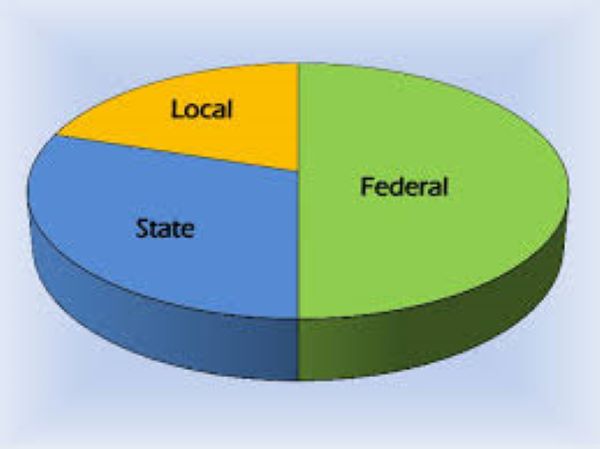
The Federation Account Allocation Committee (FAAC) on Tuesday shared N3.007 trillion among the Federal Government, the 36 states and 774 Local Government Councils as revenue for July.
The allocation was approved at FAAC’s monthly meeting in Owerri, Imo State, which was held on the sidelines of the National Council of Federation and Economic Development (NACOFED), according to the Director of Press and Public Relations at the Office of the Accountant-General of the Federation, Bawa Mokwa.
Mokwa said the July distribution followed an improvement in gross statutory revenue, which rose to N4.359 trillion. He said the figure was N658.087 billion higher than the N3.700 trillion recorded in June, representing an increase of 17.8 per cent.
He explained that the rise in statutory revenue was supported by stronger receipts from Petroleum Profit Tax, Hydrocarbon Tax, Companies Income Tax, Capital Gains Tax, Stamp Duty Tax, petroleum royalties, mineral royalties, excise duty and gas-flaring penalties.
However, gross Value Added Tax revenue dipped slightly to N793.968 billion in July, down by N5.778 billion or 0.7 per cent from the N799.746 billion recorded in June.
FAAC said the gains in statutory revenue were partly offset by declines in VAT, import duty, CET levies, rental of gas-flaring fees and miscellaneous oil revenue.
The committee said it would continue working with revenue-generating agencies to close collection gaps and strengthen remittance discipline, while also insisting on transparent and timely remittance of collectible revenues into the Federation Account.
It stressed the need to expand Nigeria’s revenue base beyond oil through ongoing tax reforms and non-oil revenue mobilisation efforts.
FAAC also highlighted the importance of closer coordination between the Federal Government and state governments through NACOFED on fiscal policy, revenue sharing and wider economic development priorities.
Mokwa said solid minerals and other non-oil royalty streams remained key areas with strong potential for boosting federation revenue, while urging Ministries, Departments and Agencies to sustain discipline in revenue collection and remittance.
