


This piece was first published in May 2022. It remains as pertinent today as it was then, given the worsening insecurity currently facing the country. Sovereignty, this eleven-lettered word, is a political concept. The concept defines dominant power. Or the supreme authority. Wikipedia says “it is the defining authority within individual consciousness, social construct or territory. That it entails hierarchy within the state, as well as external autonomy for states.”
Sovereignty, as a concept in political theory, has a clear-cut definition. The state or quality of being sovereign refers to a territory or geographical area that is self-governing, with recognition from other world powers and international bodies. It is autonomous and free from external control. Sovereignty means that a territory has a symbolic body having all-encompassing authority over it. Could be a king in a kingdom, a sheikh in a sheikhdom, a president in a country, etc. It could even be a parliament or a praesidium. Whatever it is, such a symbol exercises sovereignty over the sovereign territory.
The sovereign is always intensely jealous and so does not share sovereignty with anyone or anything. It guards its territory from any encroachers and brooks no partners. Many countries have gone to war when their sovereignty is threatened, just as many sovereigns have ruined other sovereigns who questioned their sovereignty. Ask Volodymyr Zelensky. He tried Vladimir Putin, and with the benefit of hindsight, he would respect his nemesis’s sovereignty.
Nigeria. But do we understand what sovereignty is? When a government cedes control of parts of its territory, it automatically shares sovereignty with whoever it cedes to. In the north of Nigeria, there are roads that security agencies have ceded to Boko Haram and, in some cases, to other Boko Haram, camouflaging as bandits. In the North East, especially Borno and Yobe, the moment it is six pm, the army, not to talk of the police or civil defence, all retreat. Nigeria has the road between 6 am and 6 pm, while the “big boys” and “sovereignty partners” have their say between 6 pm and 6 am.
But such big boys are not only Borno- or Yobe-bound. They have split into the North Central and North West. Take Katsina, a state in the North West, for instance. Most of the state’s roads have been ceded to Boko Haram’s alter egos – the bandits. These overlords do not pretend, and so they do not share theirs with Nigeria. They are a jealous lot. Zurmi – Jibia, Yankara – Faskari, Jibia – Batsari and Sheme – Kankara roads are completely under their sovereignty. And so also are the Kankara – Dustin Ma, the Yan Tumaki – Dan Musa, and the Jibia – Gurbi – Kaura Namoda roads, which link Katsina and Zamfara states. But it does not stop at “just” roads, because all the villages, towns, and people along such roads now pay homage to another sovereign.
Some parts of Kaduna and Niger states now belong to Boko Haram (aka bandits). They have full sovereignty over a large swathe of territory, and they don’t brook partners. As a result, they have sent all security agencies packing. Take the case of Kaduna town. The road to its airport and the airport itself are no-go areas. The authorities have cancelled flights to and from the airport because the terrorists have taken over the sovereignty of that zone.
Again, the sharing of sovereignty does not stop only at these. While only sovereignty imposes and collects taxes, these outlaws also do the same. But of course it is their “right”. In some areas of Borno, they mount roadblocks and collect revenue as taxes. They even give out receipts. In parts of the North West and North Central, they do the same. Some collect taxes to allow residents to farm or harvest farm produce.
Therefore, in some areas of the North West and North Central, there is no contention or doubt about who has sovereignty over the land and the people. Because there is a weak presence of Nigeria or its total absence, submitting to the sovereignty of the renegades is the beginning of wisdom. Boko Haram terrorists, aside from seeing the tail of Nigerian security agencies where they hold sway, are eliminating the bandits that will not submit to their authority. And so, to the forced admiration of the communities under them, they have become protective shields for them against independent bandits.
The terrorists ride on motorcycles in military uniforms across the communities, and some locals feel secure having them around to help fight against those bandits. According to Zubairu Abdurra’uf, a journalist and a community leader in Birnin Gwari, “If you look at Giwa and Birnin Gwari, the Ansaru (Boko Haram) presence is still there; nobody knows their motive. In some areas, the Ansaru are patrolling the roads, and you’ll see them with their arms and even in military fatigues…If you go from Maganda in Birnin Gwari LGA to old Birnin Gwari up to Funtua, you would see these people (terrorists)…”
He revealed the terrorists are in charge in some areas like the eastern part of Birnin Gwari and some parts of Giwa LGA, “notably in six wards – Kidandan, Galadimawa, Katarge, Yaka Wada and to some extent Bangoya and on some roads and that if they spot any armed bandit…they chase them away. He said, “those roads are more secure than the Kaduna to Birnin Gwari Road because the Ansaru is in charge.” The saddest part is that the people are okay with the arrangement because the locals, who are being indoctrinated, are forced to choose between the two evils of the terrorists and (uncontrolled) bandits, but they would rather pick the terrorists who seem “friendlier”.
What any citizen in the right frame of mind should be afraid of is that the population, territory and audacity of the lawless are on the increase. The sovereignty of Nigeria is being shrunk daily. It is as if Nigeria is being overwhelmed. The security forces, gallant officers who have been paying the supreme price amidst poor welfare, stagnant morale and lack of necessary equipment, are being daily buffeted from all angles by different hues of criminals.
But what is the way out, you may ask? Dr Ukasha Ismail, a security expert who teaches security-related courses at the Federal University, Dutse, opined that “The glaring lawlessness in Nigeria began with the politicisation of the law enforcement/security sector; weak and dependent law enforcement institutions give rise to criminal enterprises and insecurity. Nigeria is in a sorry state.”
It is time for national healing, sincerity in governance, the fulfilment of agreements and justice and fairness to all, irrespective of status, creed, tribe, political affiliation or region. No crime should be left unpunished, and no lawbreaker should go scot-free.
On the 26 of October 2020, writing under the headline #EndSARS and a Revolution that never was, I wrote: “In December 2015, Shiites were ‘dealt’ with for “blocking a road” (never mind that terrorists do so, pick who they want and unchallenged, go back to their dens), not for violence or killing any civilian or a law officer. No. The president, in a media chat, said one of them ‘touched the chest of a general’. What a grave crime! Here, where protesters blocked Abuja roads, including public buildings and the airport, those who think the punishment against road blockage is a military onslaught will wonder why the same law was not applied. It’s been two years now (eight, today) since a general was kidnapped, slaughtered, cannibalised, and his remains thrown into a well. If the president’s law book says touching a general’s chest is punishable by death, what is the same law book saying about those who killed a general? People see things happening, and they ask: Where is justice? Where is fairness?
Though this is just a drop in the ocean, we need to start somewhere: “Let our president and other political chief executives pay for their food and upkeep with their legitimate earnings and let the nation’s resources be applied to providing excellent health facilities for common use by both the political class and the ordinary citizen. This means world-standard hospitals should be built here. Let the ordinary man’s son be able to go to the same school here in Nigeria that a leader’s son goes to. I went to a primary school in Maiduguri and, in my class, was Mairo, daughter of Brigadier Musa Usman, then governor of the North East, and there was also Musa whose father was a driver in one of the state ministries.”
A kingdom (nation) can endure with unbelief, but it cannot endure with injustice, so said Sheikh Usman Dan Fodio in his book, Bayan Wujub ul-Hijrah alal Mukallafi.
To be continued
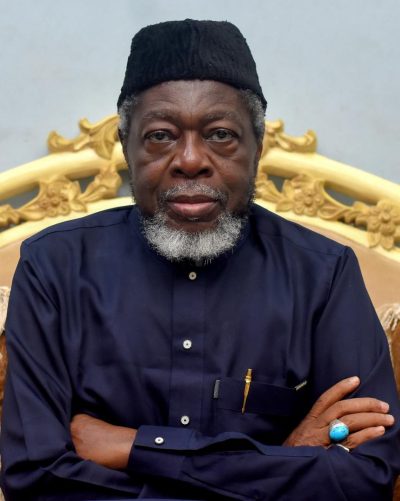
Hassan Gimba, ANIPR, is the Publisher and CEO of Neptune Prime.
