


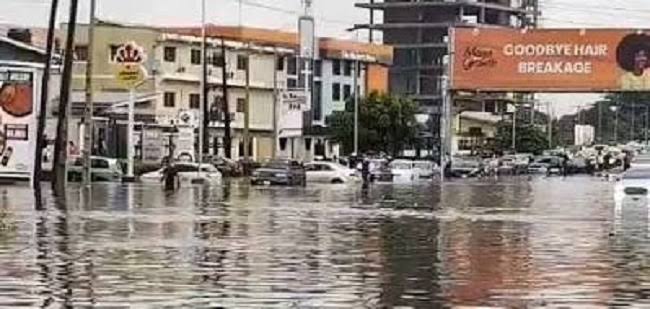
Residents of flood-prone communities in Lagos have blamed rapid urbanisation, inadequate drainage infrastructure, and poor urban planning for the worsening floods across the state. An environmental advocate also warned that climate change is compounding the risks.
The residents spoke in separate interviews on Sunday.
In communities such as Surulere, Agege, Lekki, and Mafoluku, recurring floods have trapped people indoors, damaged homes and businesses, and disrupted movement during heavy rainfall.
Their concerns come as the Nigerian Meteorological Agency (NiMet) listed Lagos among 27 states at high risk of flash flooding in the first dekad of July, following heavy rains in June that left soils saturated.
Mr Chigozie, a Surulere resident, said flooding had become so severe that he now wears rain boots whenever it rains.
“Once the rain starts, our streets disappear under water. Without long rain boots, I cannot leave home or get to my shop,” he said. “Many people remain trapped indoors, and businesses suffer as a result.”
In Agege, Mrs Amanda Amos said floodwater now enters residential compounds.
“The flood doesn’t stop on the road anymore. It enters our compound, forcing us to move furniture and spend hours bailing out dirty water,” she said.
A Lekki resident, who requested anonymity, blamed inadequate drainage and an unfinished canal project for the persistent flooding.
In Mafoluku, Miss Chiazo Williams attributed the problem to a blocked drainage canal.
“Once it rains, the entire area is quickly flooded. The canal should carry the water away, but it no longer does,” she said.
Environmental advocate Mr Friday Oku, President of the Association of Scraps and Waste Pickers of Lagos, said Lagos’ flood challenges stem from urban growth outpacing infrastructure development.
“Flooding is becoming more severe because urban growth is occurring faster than critical infrastructure can keep pace,” he said. “As more land is covered with concrete, rainwater has fewer places to infiltrate, leading to increased runoff.”
Oku warned that encroachment on wetlands had weakened the city’s natural flood defences and urged the government to invest in resilient drainage systems, protect wetlands, and plan for future climate conditions.
NiMet has warned that low-lying, coastal, and poorly drained communities remain highly vulnerable as the peak of the rainy season approaches. The agency advised residents to clear drains, avoid floodwaters, and monitor weather forecasts.
The Lagos State Government has repeatedly warned against dumping refuse in drainage channels, which significantly worsens flooding.
Residents, however, say the recurring floods are no longer just a seasonal issue but a consequence of poor urban planning. They are calling for improved drainage systems, wetland protection, and stricter enforcement of urban development regulations.
